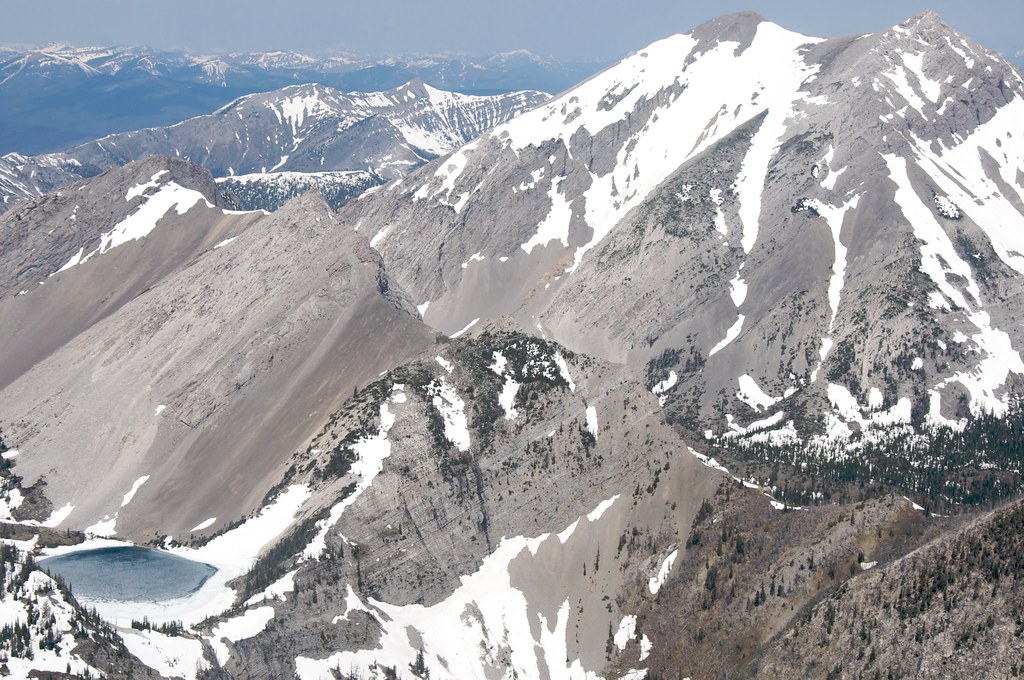
Tears of a Clown
- 5 routes
- 5.7 – 5.10a
- Sport
- May–Sep
- best months
Is Tears of a Clown open right now?
Alert in the area
The Forest Service lists an alert for Rocky Mountain Ranger District.
Camp Creek Fire Trail Closure
Agency alert covering Rocky Mountain Ranger District · Order 01-10- · USFS · Rocky Mountain Ranger District
As of · Source: USFS · Rocky Mountain Ranger District. Agencies don't list every closure — check before you go.
Tears of a Clown is a climbing area in the Rocky Mountain Ranger District of Helena-Lewis and Clark National Forest in western Montana. The Forest Service manages the land. Summer is the most comfortable time to visit. Typical averages from the nearby Blackleaf weather station show July and August highs around 80°F with lows in the mid-40s, while winter highs sit in the upper 30s. Indian Head Rock lies just 0.1 mile away, and Clary Coulee is about 0.6 mile off. Cave Mountain Campground is 0.7 mile away, and the North Fork Teton River offers paddling about 3.8 miles out.
 Indian Head RockHikingPhoto: Sam Beebe, CC BY 2.0 (via Flickr)0.1 mi
- Clary CouleeHiking0.6 mi
- Cave Mountain CampgroundCamping0.7 mi
- ROUTE CREEK PASSHiking1.2 mi
- Green Gulch Dispersed Camp CampgroundCamping2.5 mi
- North Fork Teton RiverCanoeing3.8 mi
- Blow-Hard WallRock climbing8.5 mi
- Dentist AreaRock climbing8.5 mi
Source: Roamze catalog (indexable pages within 10 miles, PostGIS distance)
Best time to visit Tears of a Clown
Best months: May–September. Best months have typical highs of 55–85 °F, lows of 30 °F or warmer (32 °F where the station doesn't record snow), at most one snowy day and no more than 12 wet days.
Jan
37° / 9°
Feb
38° / 10°
Mar
44° / 17°
Apr
53° / 27°
May
63° / 33°
Jun
69° / 41°
Jul
80° / 46°
Aug
80° / 44°
Sep
70° / 37°
Oct
56° / 27°
Nov
44° / 18°
Dec
37° / 11°
Typical high / low (°F) and days with rain or snow, 1991–2020. Measured at Blackleaf, MT, 15.8 mi away at 4,235 ft. The station sits about 900 ft lower than this place, so expect it a little cooler here. This station doesn't record snowfall. Source: NOAA NCEI U.S. Climate Normals 1991–2020.