

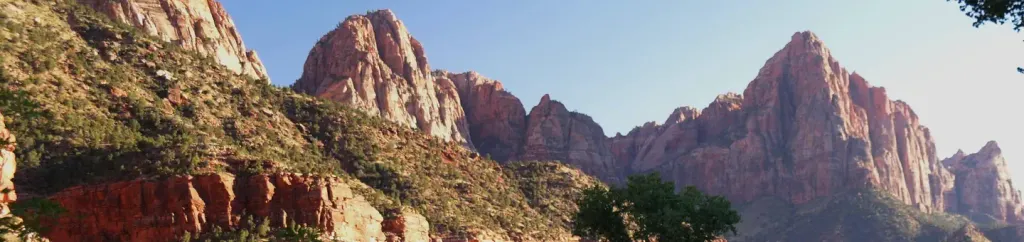

Zion Outfitter
Hiking business nearby (under a mile away) — hasn't claimed their Roamze page yet
Pa'rus - Footprints in Time
Free — you'll pick up right here.
Watch this trail
Sign up to watch it — saving subscribes you to gate, closure and report changes.
Utah
We won't guess. Here is exactly what we do and don't know.
What we do know
Inside Zion National Park
National Park unit boundary is mapped — agency alerts for it feed this page automatically.
Boundary data
What's missing
No access route mapped
We don't yet know which road reaches this trailhead, so we can't tell you if it's gated.
Nobody's filed a report here yet — be the first.
Pa'rus - Footprints in Time
AI-suggested draft · review before you go
No elevation data on file for this trail.
No permit or access details on file for this trail — check with the local land manager before you go.
<h2>Footprints in Time</h2> <h3>Learn</h3> <p>The Museum Collections and Archives at Zion National Park include archival documents, artifacts, photos, and ethnographic objects that help us understand how humans survived and adapted in the Zion area. Natural history specimens such as Zion’s herbarium, are also part of the collection's and help us understand the plants and animals which call the canyon landscape home. </p> <p lang="EN-US" paraeid="{f601804b-f490-4b63-a4a8-297cc98aeebd}{231}" paraid="1147715975" xml:lang="EN-US">Zion’s herbarium provides snapshots of the park’s vegetation at different points in time. There are over 3,100 plant specimens dried and pressed plants that represent over 95% of the confirmed plant taxa in the park. The preserved plants represent the variety of plant life in Zion National Park and reveal how the park’s first naturalists explored and documented living things. The earliest specimens in the herbarium were collected in the 1920s, additions and updates to this resource continue today. Collecting is prohibited in the park, but herbarium specimens are processed by park staff or researchers with permits. </p> <p lang="EN-US" paraeid="{574c8daa-357c-40ab-8a49-66e5b2cb1578}{1}" paraid="1781873021" xml:lang="EN-US">The herbarium collection is a useful tool in monitoring human impacts and ecological shifts within this protected area. As time passes, the collection becomes an increasingly valuable resource that will undoubtedly be useful in the future management and protection of Zion’s abundant biological diversity. </p> <h3>Look</h3> <p>Along the Pa’rus trail you may notice areas roped off and signage to stay on the trail and give plants a chance. Vegetation and living soil along the Pa’rus trail like desert grasses and cacti play an important role in soil stabilization and erosion control. </p> <h3>Connect</h3> <p>What impact do humans have on the environment today? You can have a positive impact on the environment here at Zion National Park by staying on designated trails, packing out what you pack in, leaving what you find, and respecting wildlife. </p>
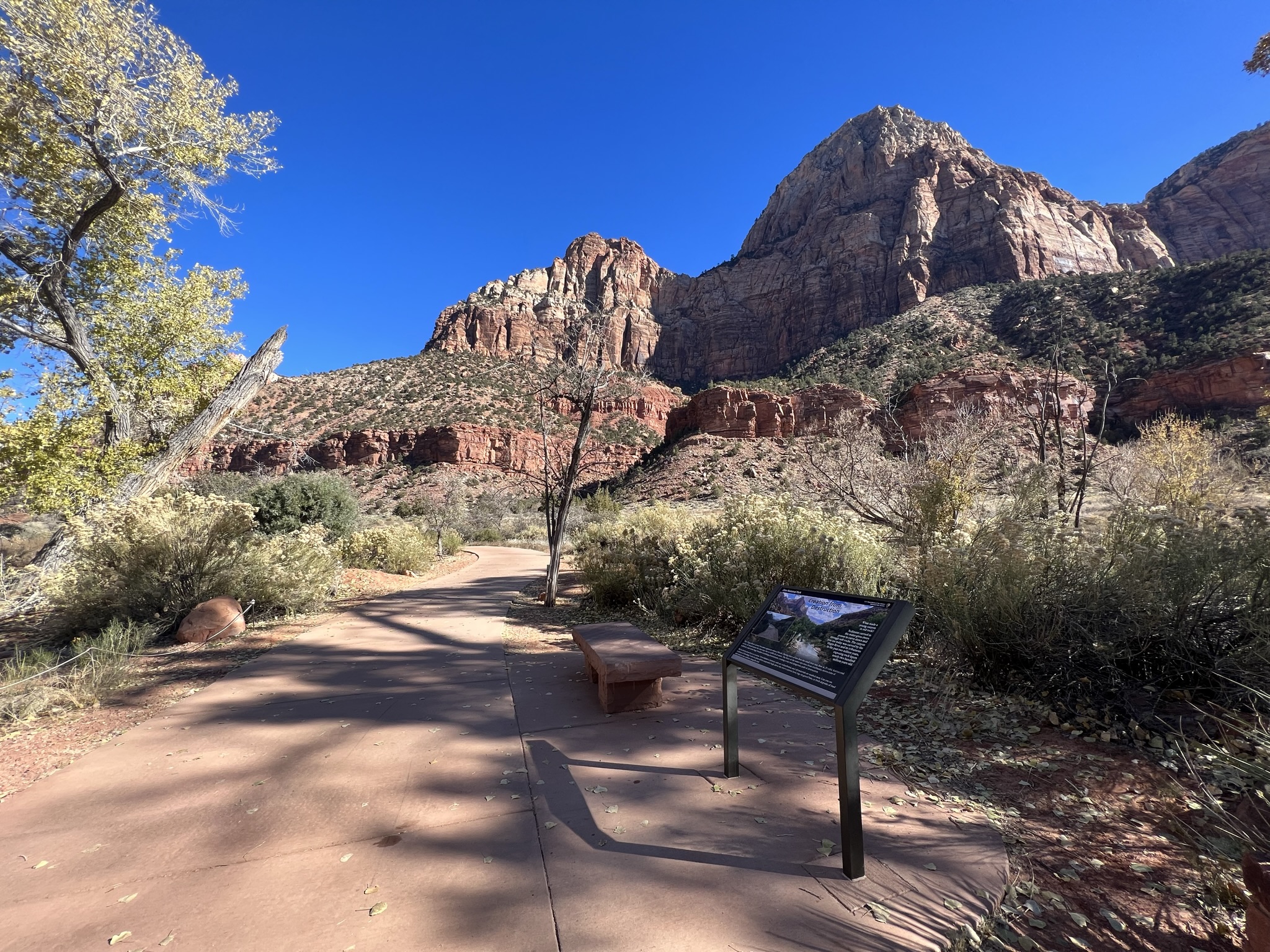
Pa'rus - Creation from Destruction
~0 min drive
<h2>Creation From Destruction</h2> <h3>Learn </h3> <p lang="EN-US" paraeid="{75f09f85-8dff-40ae-830d-60e08ccbd3ad}{3}" paraid="593015807" xml:lang="EN-US">The Virgin River is the primary agent of erosion that continues to carve and shape Zion. The North Fork of the Virgin Rive…
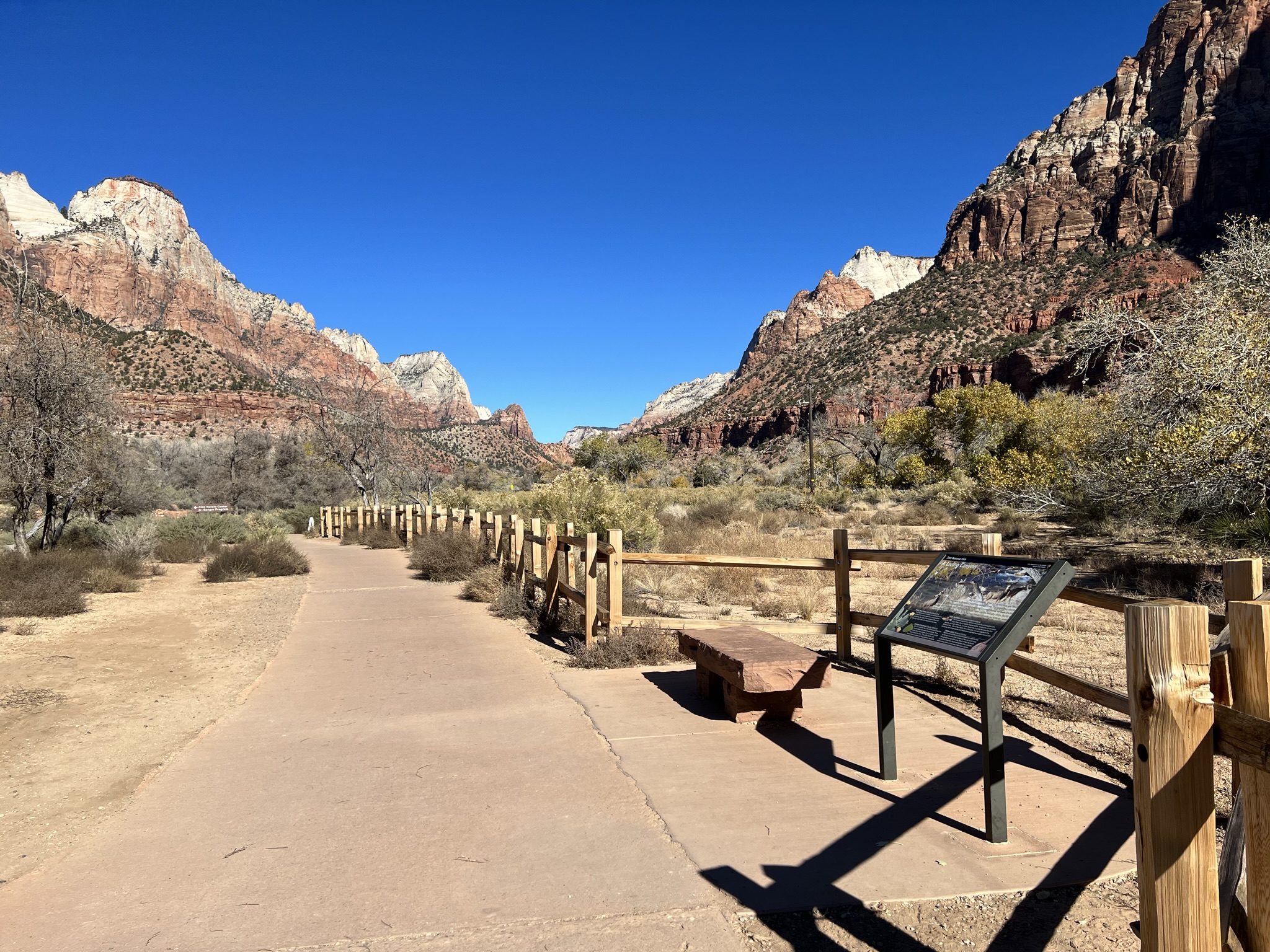
Pa'rus - A Living Canyon
~0 min drive
<h2>A Living Canyon</h2> <h3>Learn</h3> <p lang="EN-US" paraeid="{00b4822e-e9f3-4c1b-833a-97eab8aad75b}{58}" paraid="1020860196" xml:lang="EN-US">Zion's diverse topography leads to a diversity of habitats and species. Along the Virgin River, the riparian area is home to plants…
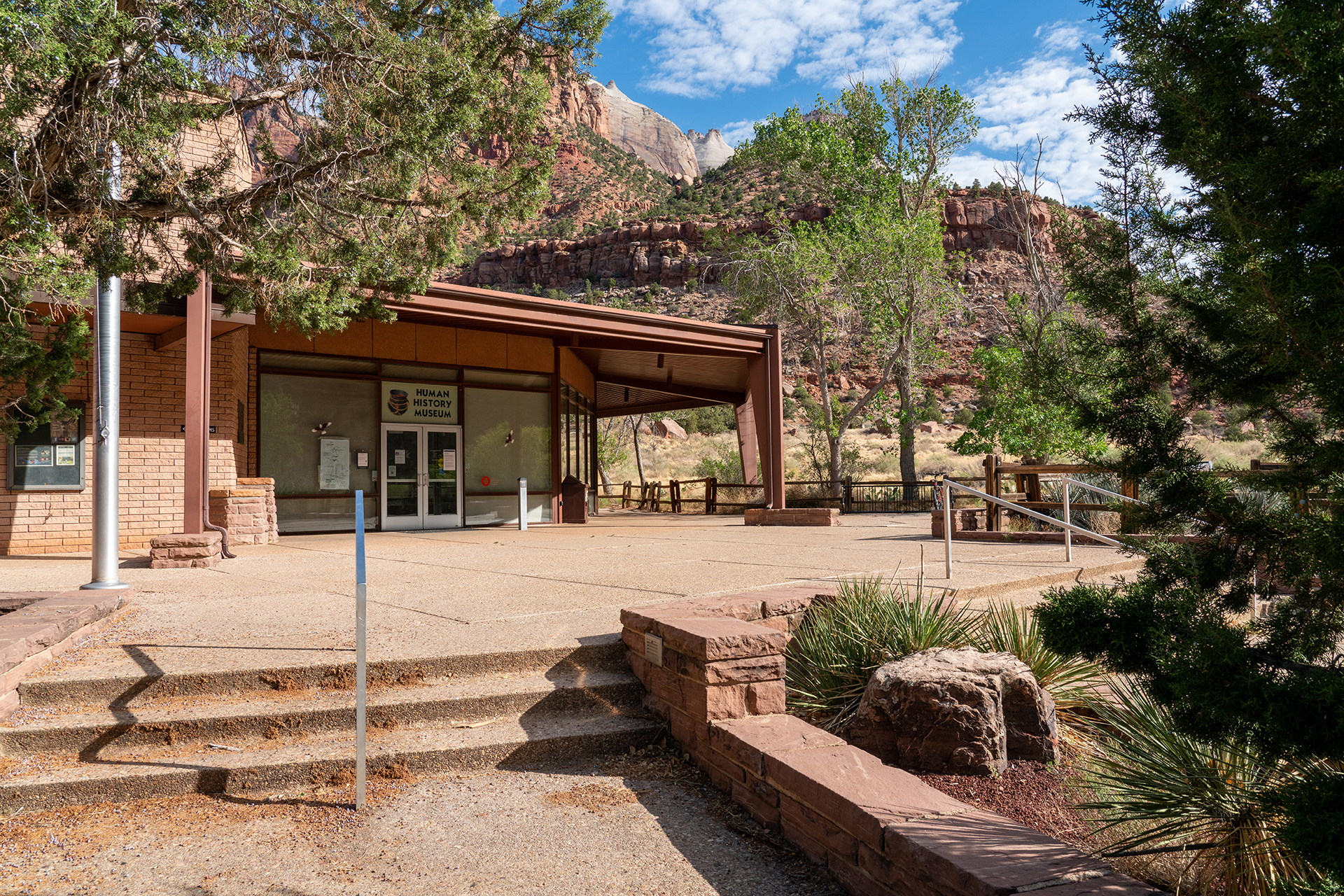
Zion Human History Museum
~0 min drive
<h2><b>Zion Human History Museum </b></h2> <p>Once the park’s main visitor center, the museum houses indoor exhibits focused on the human history of Zion. Step out to the back patio for a dramatic view of the West Temple and the Towers of the Virgin. In front of the building e…
Pa'rus - Changing Landscapes
~0 min drive
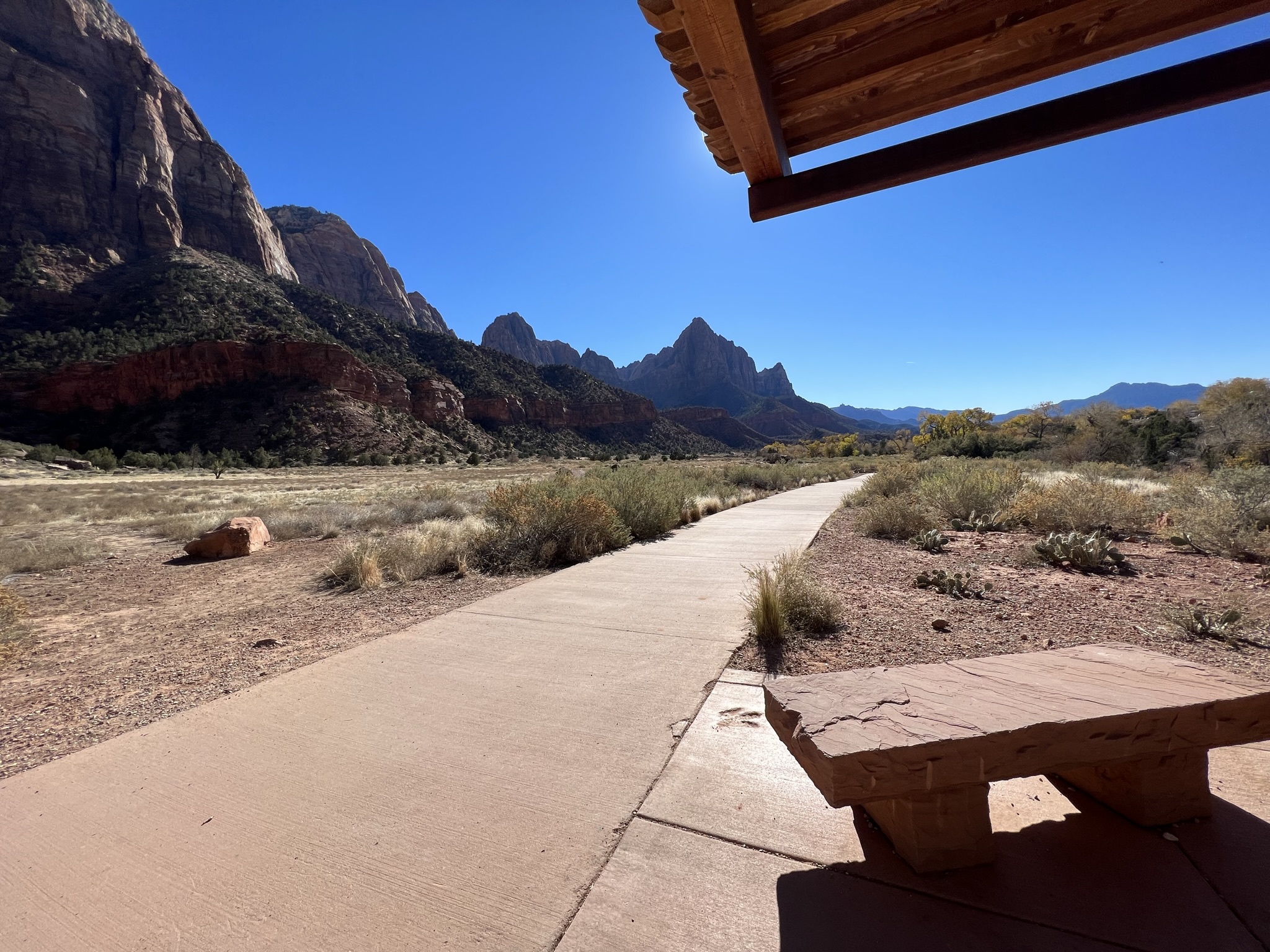
<h2>Changing Landscapes</h2> <h3>Learn </h3> <p>Rock layers of Zion Canyon are arranged in a way that allows water to travel through them. The desert sand dunes that formed the Navajo Sandstone layer contain wind-blown sand particles that have space in-between them. The ancien…
Pa'rus - Virgin River Wayside
~1 min drive
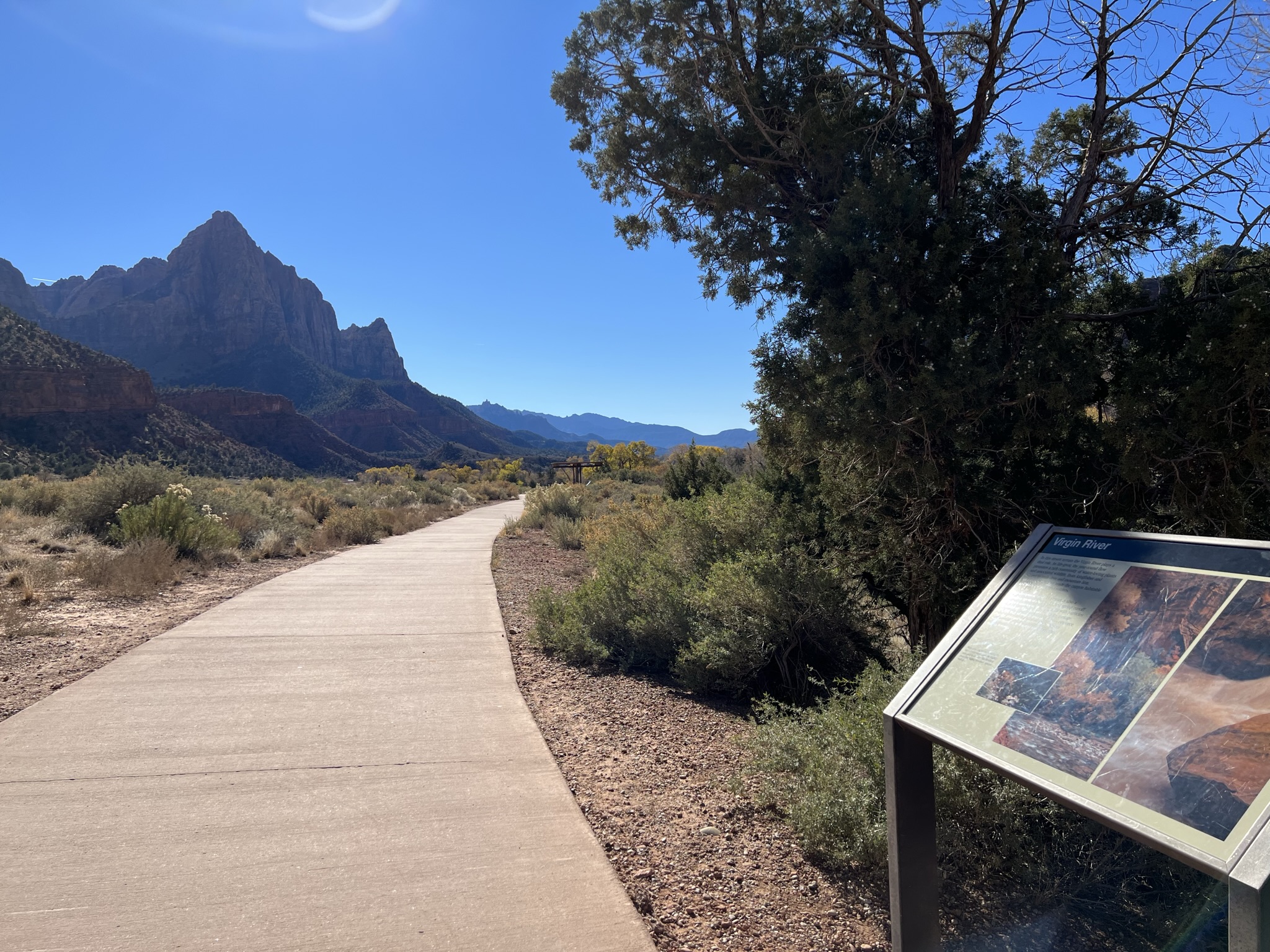
<h2>Virgin River</h2> <h3>Learn</h3> <p lang="EN-US" paraeid="{2ef88670-689d-4415-9072-eeec5cfc3bb6}{147}" paraid="852227924" xml:lang="EN-US">In July of 2020, the Utah Department of Environmental Quality’s (DEQ) Division of Water Quality (DWQ) and the National Park Service (N…
Pa'rus - Diversion Dam
~1 min drive
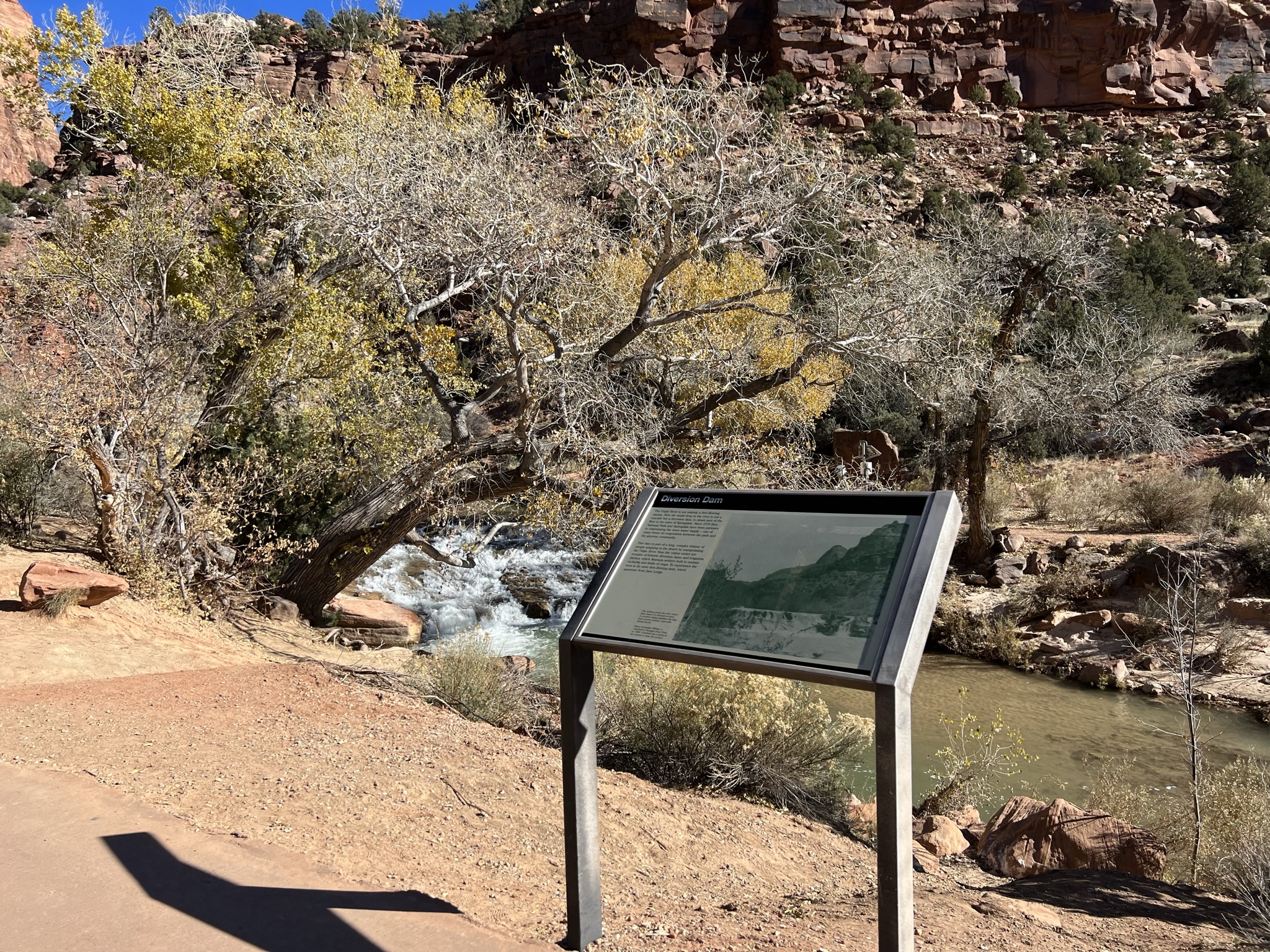
<h2>Diversion Dam</h2> <h3>Learn</h3> <p paraeid="{054fc00e-a6b4-4eb9-b20c-8d81f1c7f960}{75}" paraid="1507013341">On March 30, 2009, the upper section of the Virgin River and its tributaries were designated as <a href="https://www.nps.gov/zion/learn/nature/wildandscenicriver.h…
Pa'rus - The Master Sculptor
~1 min drive
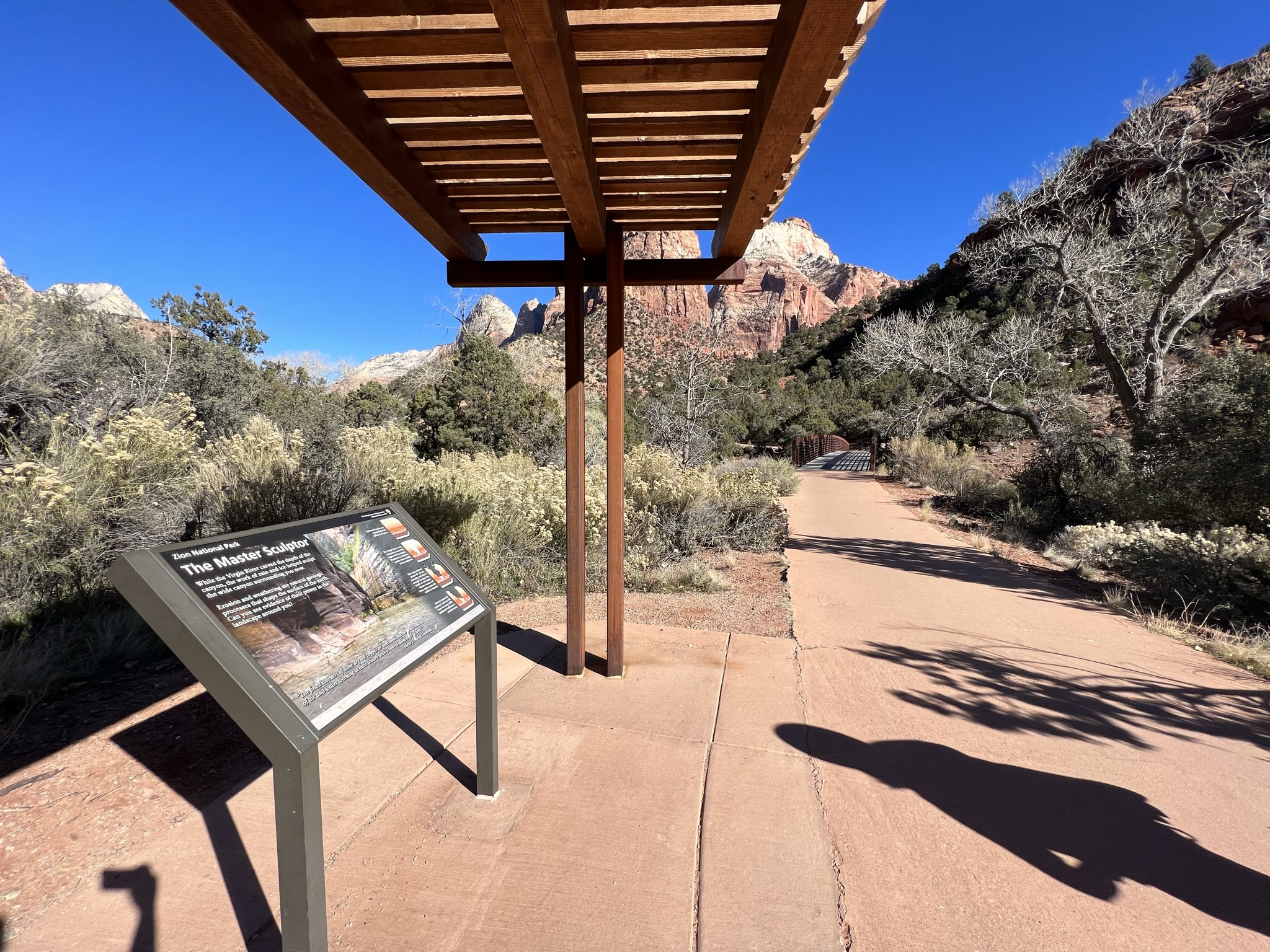
<h2>The Master Sculptor</h2> <h3>Learn </h3> <p>The power of wind, water, and gravity have shaped Zion Canyon over time. Erosion and weathering also play a role forming natural arches in the park. A natural arch is formed when deep cracks penetrate into a layer of sandstone. E…
Court of the Patriarchs
~4 min drive
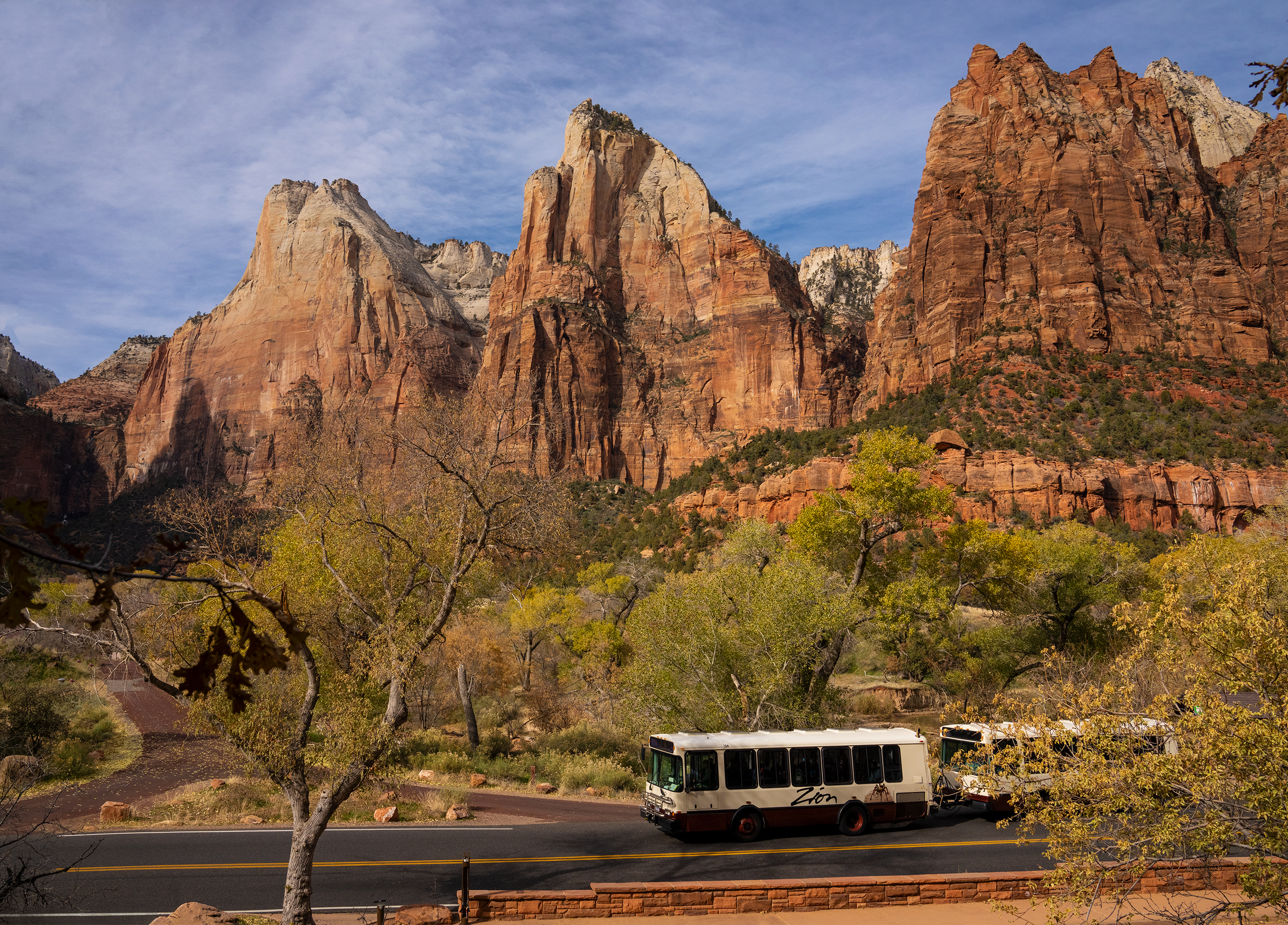
<h2><b>Court of the Patriarchs </b></h2> <p>Enjoy spectacular views of the three patriarchs: Abraham, Isaac, and Jacob. The three peaks were named in 1916 by a Methodist Minister, Dr. Frederick Vining Fischer, and two local boys from Southern Utah. They were so inspired and st…
The Zion Grotto
~7 min drive
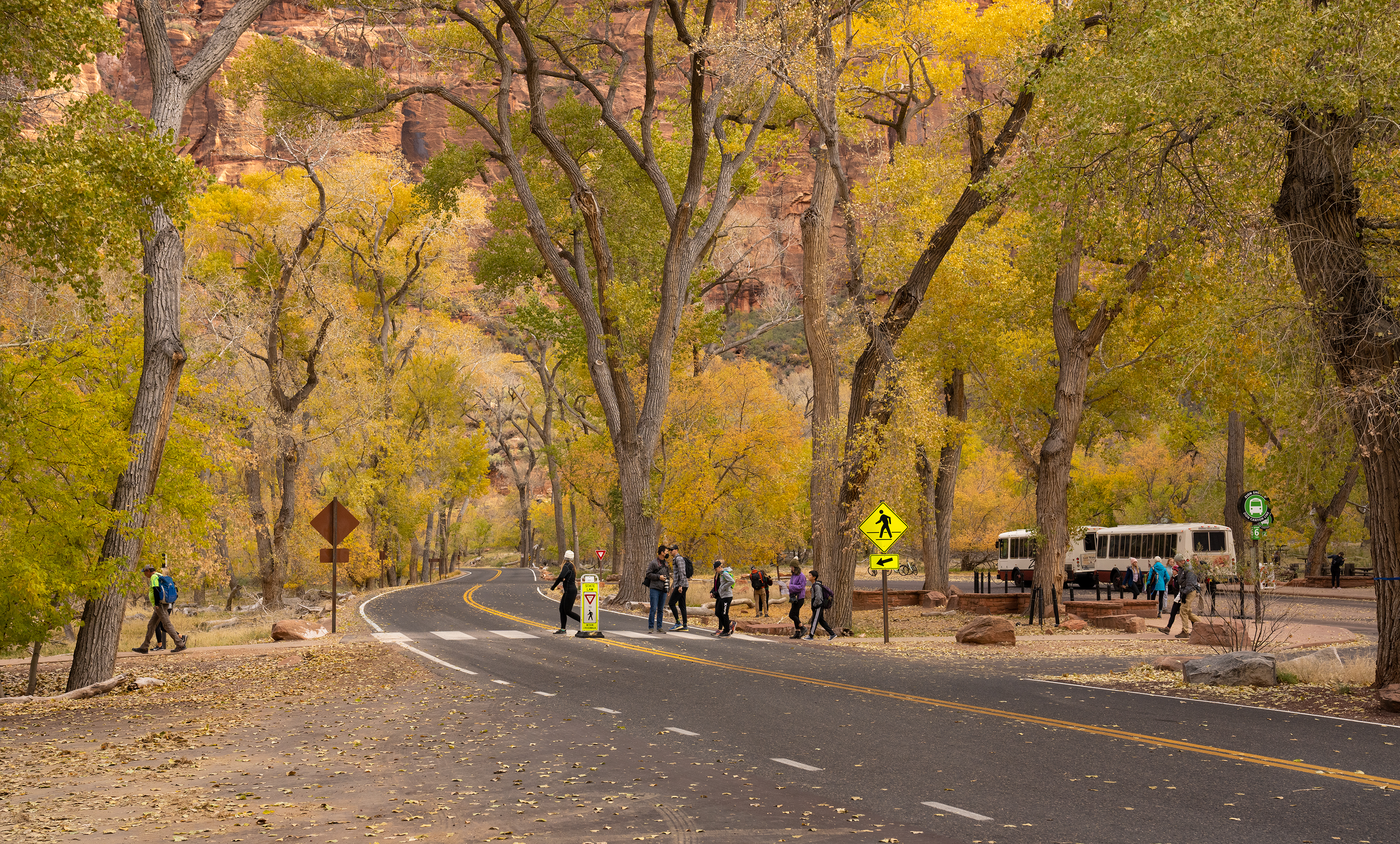
<h2>The Grotto</h2> <p>In the early 1920s this area marked the end of the road into Zion Canyon. At that time there was a campground, named Grotto, built by the young men of the Civilian Conservation Corps (CCC) in this location. The CCC was developed by President Franklin D.…
Watchman Trail
~1 min drive
Short, scenic climb with expansive Zion Canyon views.
Local operatorsoffering guided trips. You book directly with them — Roamze doesn’t take a cut.
Zion Outfitter
Hiking business nearby (under a mile away) — hasn't claimed their Roamze page yet
Zion Guru
Hiking business nearby (~2 mi away) — hasn't claimed their Roamze page yet
Zion Ponderosa Ranch Resort
Hiking business nearby (~7 mi away) — hasn't claimed their Roamze page yet