Loading…

Minerva Terrace
Free — you'll pick up right here.
Watch this trail
Sign up to watch it — saving subscribes you to gate, closure and report changes.
Wyoming
We won't guess. Here is exactly what we do and don't know.
What we do know
Inside Yellowstone National Park
National Park unit boundary is mapped — agency alerts for it feed this page automatically.
Boundary data
What's missing
No access route mapped
We don't yet know which road reaches this trailhead, so we can't tell you if it's gated.
Nobody's filed a report here yet — be the first.
Minerva Terrace
AI-suggested draft · review before you go
No elevation data on file for this trail.
Activity shifts dramatically around this terrace, named for the Roman goddess of artists and sculptors. The cascades of travertine beside the boardwalks were formed in the 1990s. Some years, they are dry. In dry areas, you can clearly see the many layers and the varying depths. Mammoth Hot Springs A network of fractures and fissures form the plumbing system that allows hot water from underground to reach the surface at Mammoth Hot Springs. Small earthquakes may keep the plumbing open. The water comes from rain and snow falling on surrounding mountains and seeping deep into the earth where it is heated. The volcanic heat source for Mammoth Hot Springs remains somewhat of a mystery. Scientists have proposed two sources: the large magma chamber underlying the Yellowstone Caldera or a smaller heat source closer to Mammoth. For hundreds of years, Shoshone and Bannock people collected minerals from the Mammoth Hot Springs terraces for white paint. Travertine Terraces Travertine terraces are formed from limestone (calcium carbonate). Water rises through the limestone, carrying high amounts of dissolved calcium carbonate. At the surface, carbon dioxide is released and calcium carbonate is deposited, forming travertine, the chalky white rock of the terraces. Due to the rapid rate of deposition, these features constantly and quickly change. Color & Heat Lovers Hydrothermal features are also habitats in which microscopic organisms survive and thrive. They are called thermophiles: "thermo" for heat and "phile" for lover. Although they are too small to be seen with the naked eye, trillions are grouped together and appear as masses of color. They are nourished by energy and chemical building blocks. Colorless and yellow thermophiles grow in the hottest water. Orange, brown, and green thermophiles grow in cooler waters. Imagine living in near-boiling temperatures, in hydrothermal features with the alkalinity of baking soda, or in water so acidic that it can burn holes in clothing. Microorganisms in Yellowstone need these extremes to survive. Accessibility The trail from the Lower to Upper terraces includes steep boardwalks and several hundred stairs. This strenuous trail is not recommended for people with heart, lung, or other health conditions. Consider driving to the Upper Terrace Drive for an alternate view of the area. Use Caution in Hydrothermal Areas Stay on boardwalks and designated trails. Hydrothermal water can severely burn you. Never run, push, or shove. Supervise children at all times. Do not scratch hydrothermal mats. You are responsible for your safety. Think safety, act safely. Yellowstone is a dangerous place.
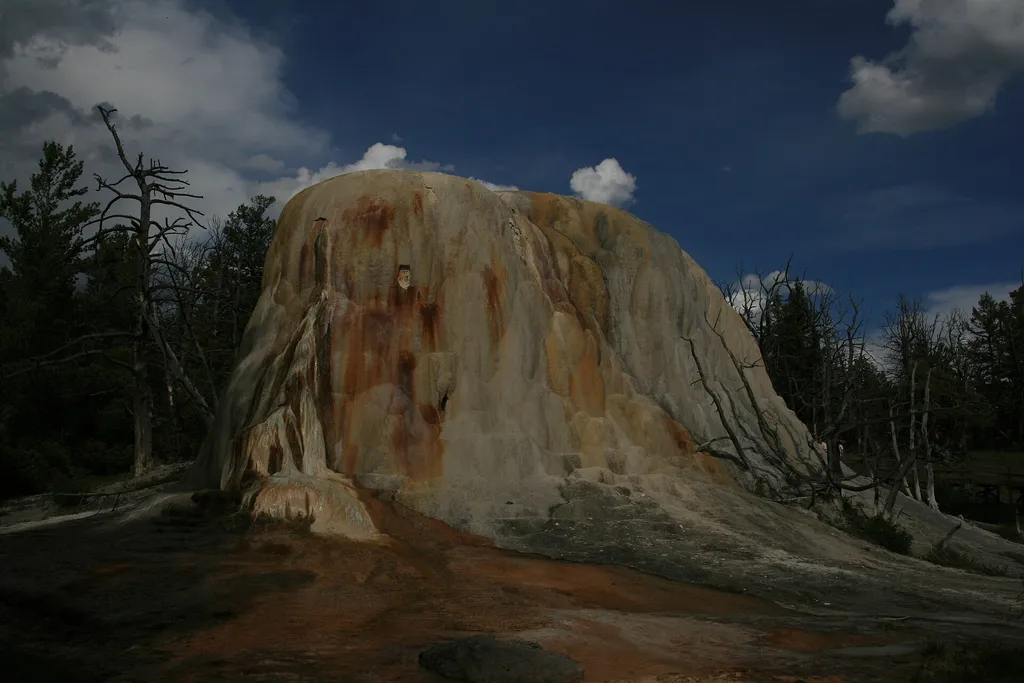
Liberty Cap
~0 min drive
<p>Liberty Cap is 37 feet (11 m) tall. It was created by a hot spring that was active in one location for a long time. Its internal pressure was sufficient to raise the water to a great height, allowing mineral deposits to build slowly and continuously for perhaps hundreds of…

Osprey Falls Trail
~2 min drive
7.8 mi · Moderate
Yellowstone River
~8 min drive
Scenic 5.5-mile riverside hike with steady elevation gain in the Yellowstone region.
Beattie Gulch
~13 min drive
Challenging 11-mile gulch hike with 2,900 ft elevation gain in remote Montana.
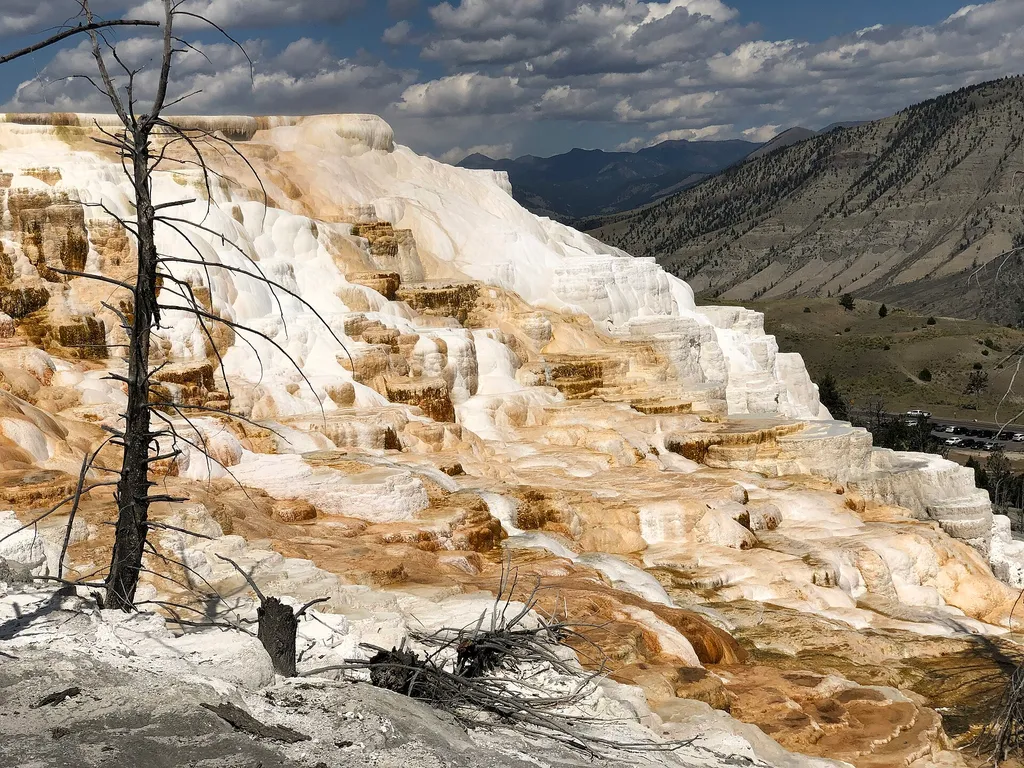
Old Mammoth Horse Corral Vault Toilet
~1 min drive
A worthwhile stop near Wyoming.
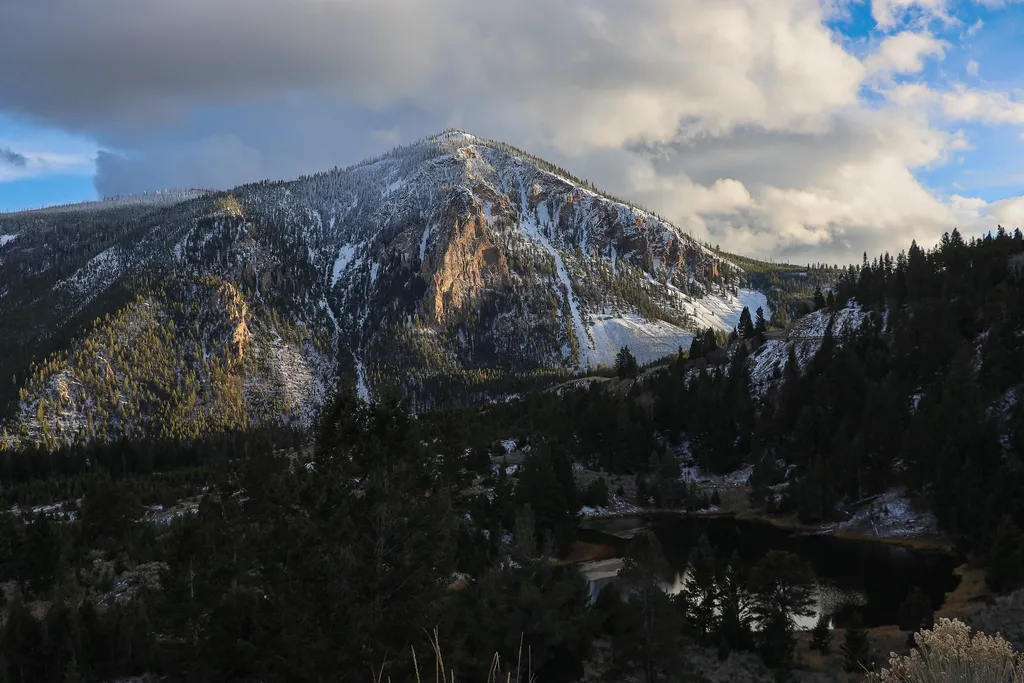
Bunsen Peak Overlook
~2 min drive
<p>Bunsen Peak prominently sits south of Mammoth Hot Springs. From this trailhead, you can embark on the following trails:</p> <ul> <li>Bunsen Peak Trail</li> <li>Bunsen Peak Road Trail</li> <li>Osprey Falls Trail</li> </ul> <p>Parking is limited. Winter trailhead access requi…
Maiden Falls
~12 min drive
Easy waterfall hike with modest elevation gain near Maiden Falls, Montana.
Low Specimen
~14 min drive
23-mile backcountry trek with steady elevation gain through remote Montana wilderness.
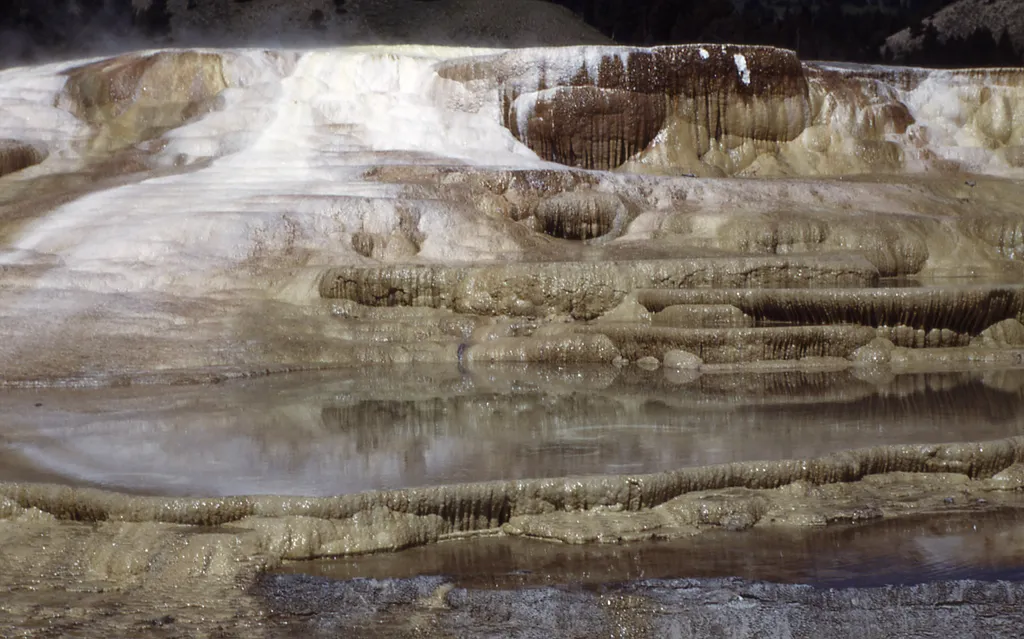
Angel Terrace
~1 min drive
Considered the "Gem of the Mammoth formations" in the 1920s and 1930s, Angel Terrace has recently reawoken and has periods of dramatic hot spring activity with large volumes of water cascading down the thermophile-draped terraces.

Beaver Ponds Trail
~3 min drive
5.3 mi · Moderate
