Loading…

Lamar Valley - Trophic Cascades
Free — you'll pick up right here.
Watch this trail
Sign up to watch it — saving subscribes you to gate, closure and report changes.
Wyoming
We won't guess. Here is exactly what we do and don't know.
What we do know
Inside Yellowstone National Park
National Park unit boundary is mapped — agency alerts for it feed this page automatically.
Boundary data
What's missing
No access route mapped
We don't yet know which road reaches this trailhead, so we can't tell you if it's gated.
Nobody's filed a report here yet — be the first.
Lamar Valley - Trophic Cascades
AI-suggested draft · review before you go
No elevation data on file for this trail.
The reintroduction of wolves created the chance to observe how a top predator influences its plant-eating prey and how changes in those prey influence plants. By reducing the abundance of herbivores or changing their feeding behavior, predators free plants from being eaten. This series of effects is called a “trophic cascade.” It is too soon to know for sure if this trophic cascade is actually happening, and how extensive it might be—or if it is just one of many factors at work. Ongoing, long-term scientific research will continue to examine the complex fabric of the Greater Yellowstone Ecosystem. Effects of Wolves Accumulated studies show that the loss of wolves from the food web on the northern range in the 1930s led to a loss of willows and other woody plants by allowing excessive grazing by elk. Most researchers agree that reintroduced wolves have caused elk to change their behavior and many studies have shown a correlation between the presence of wolves and increased growth in willows. However, not all scientists agree that this relationship is causal. For example, some researchers say elk don’t linger in willow or aspen areas where visibility is poor and that this behavioral change prevents them from eating as much willow or aspen. Other scientists argue that fluctuations in the availability of groundwater explain the growth patterns in woody vegetation. Ecologists have documented a substantial rise in temperature in the northern range: from 1995 to 2005, the number of days above freezing increased from 90 to 110. Changes in precipitation and effects of global climate change are also affecting vegetation growth. Wildlife Watching The northern range of Yellowstone is one of the best places in the world to watch wolves. Animals are Dangerous Do not approach or feed any animal. Bison and elk have injured people. Stay 100 yards (91 m) from bears and wolves. Stay 25 yards (23 m) from all other animals. You are responsible for your safety. Think Safety, Act Safely. Yellowstone is a Dangerous Place.
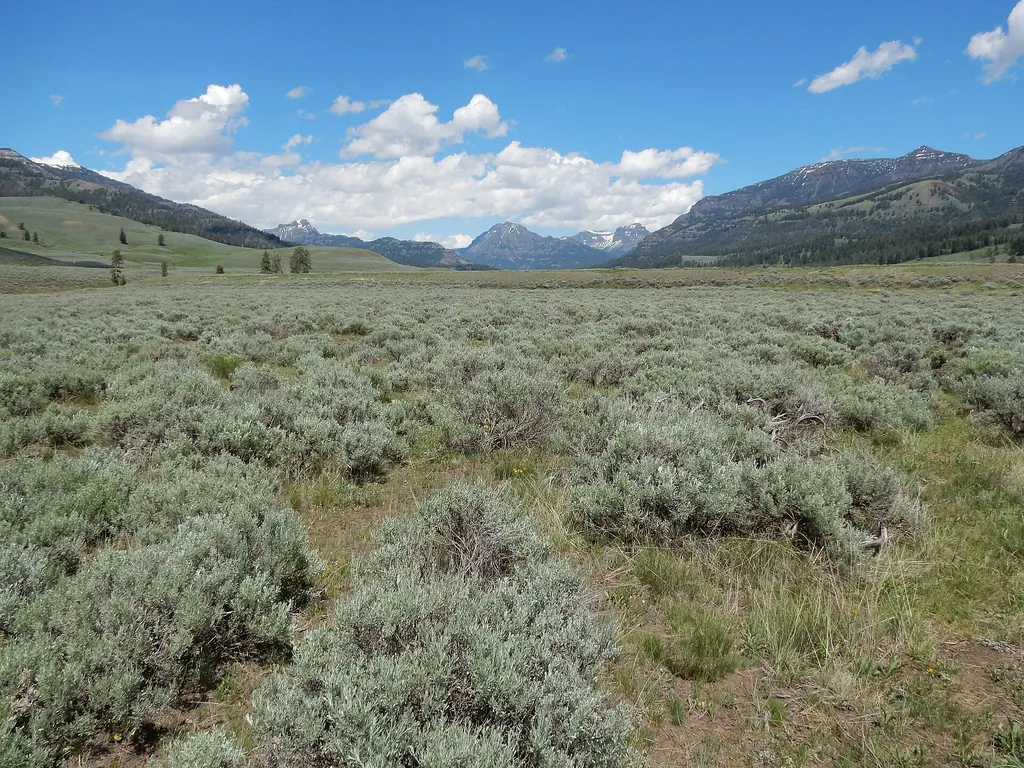
Lamar Valley - Wolf Watching
~4 min drive
<p>Wolves are highly social animals and live in packs. The pack is a complex social family with older members (often the alpha male and alpha female) and subordinates. Each member has its own personality traits and roles within the pack.</p> <p>Packs defend their territory fro…
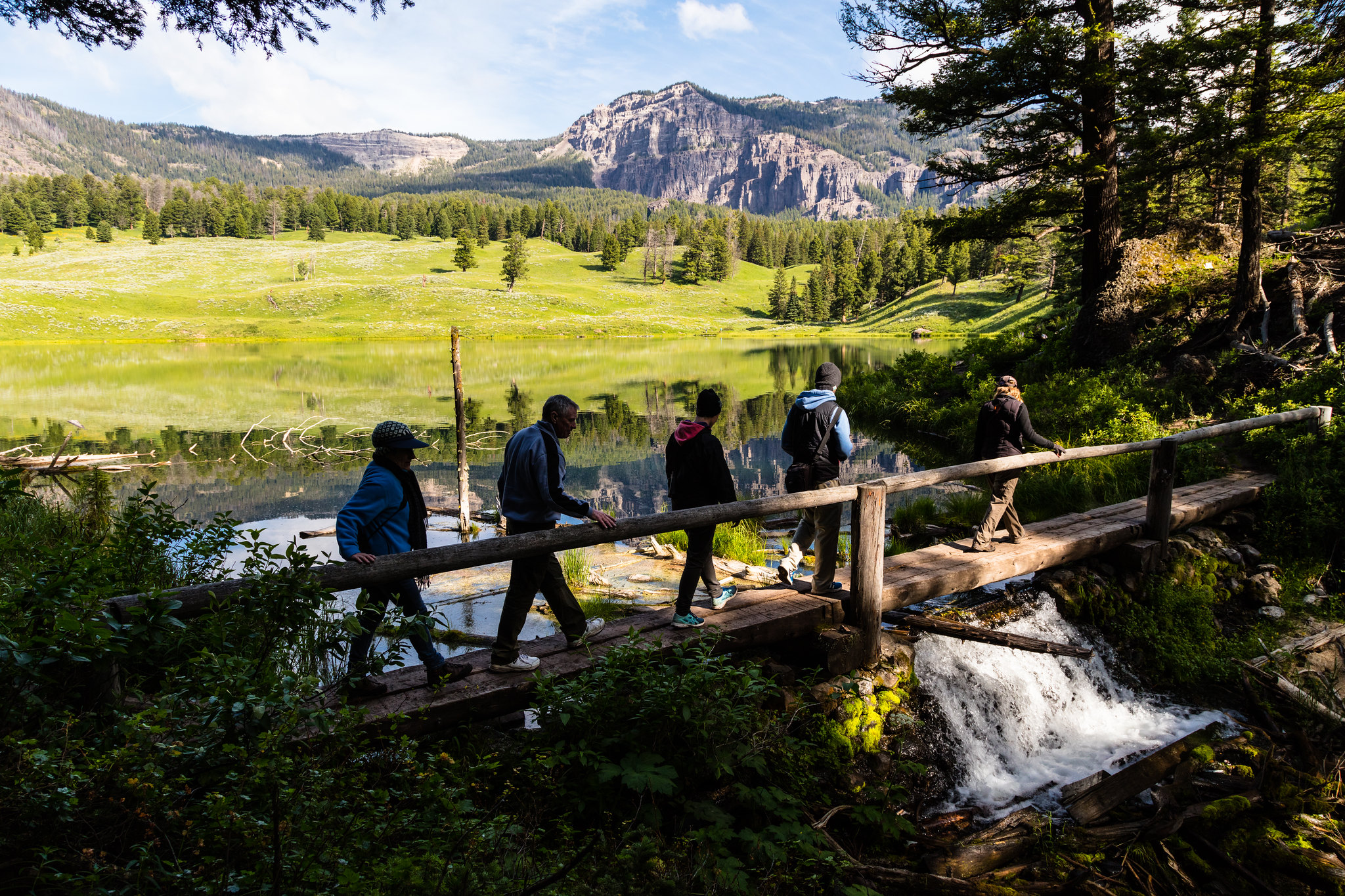
Trout Lake Trailhead
~8 min drive
From this trailhead you can embark on this trail: Trout Lake Trail Parking is available at the trailhead. However, this is a popular hike, so parking can be limited. Trout Lake Trail This is a moderately steep 1.2-mile (1.9-km) lollipop loop trail that begins and ends at t…
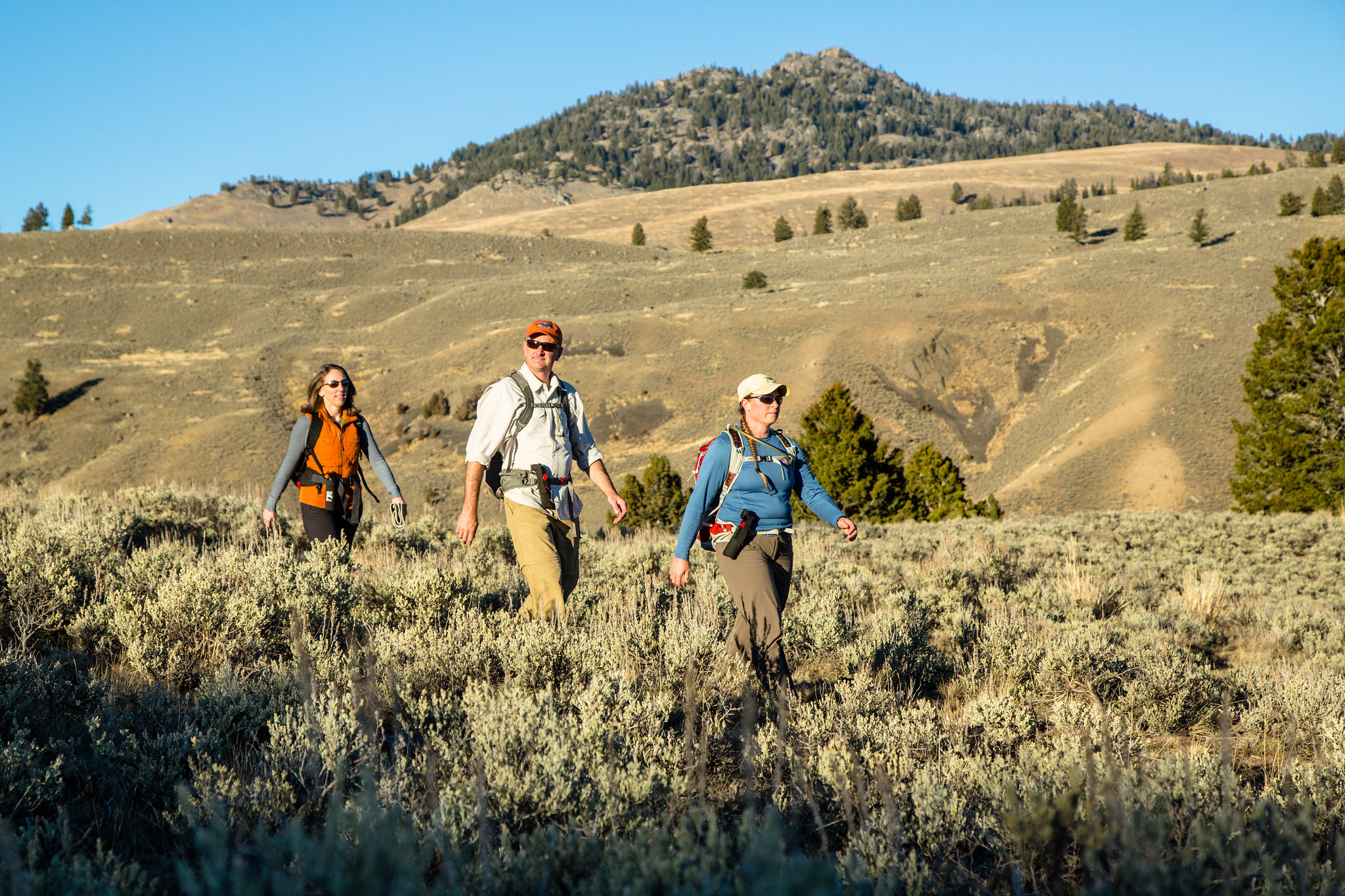
Garnet Hill Loop Trailhead (2K2)
~18 min drive
Situated in Pleasant Valley near Tower Junction, this trailhead provides access to the following trail: Garnet Hill Loop Trail There is very limited parking at this trailhead. However, a large parking lot is located at the Tower Junction Trailhead just to the south. Garnet…
Poacher
~25 min drive
Moderate 13.23-mile backcountry trail with 1,855 ft elevation gain.
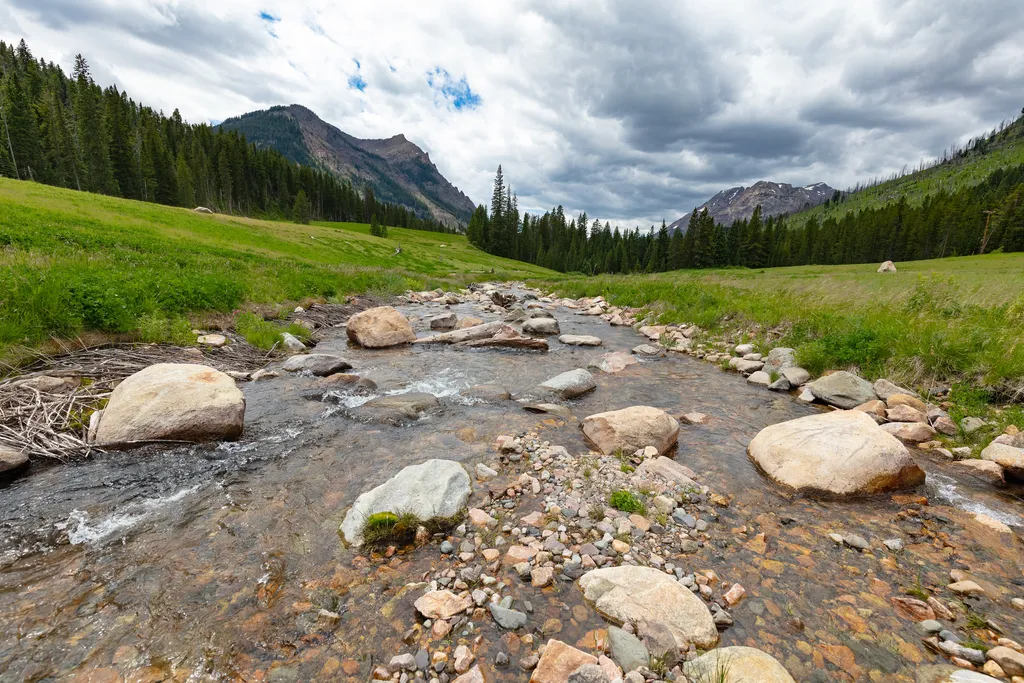
Soda Butte Creek
~5 min drive
<p>Soda Butte Creek is located near the park boundary, approximately 5 miles (8 km) downstream of the former location of the McLaren Mine. It joins the Lamar River it flows across the northern range to the outflow of Yellowstone Lake.</p> <p>As a result of metal contamination…
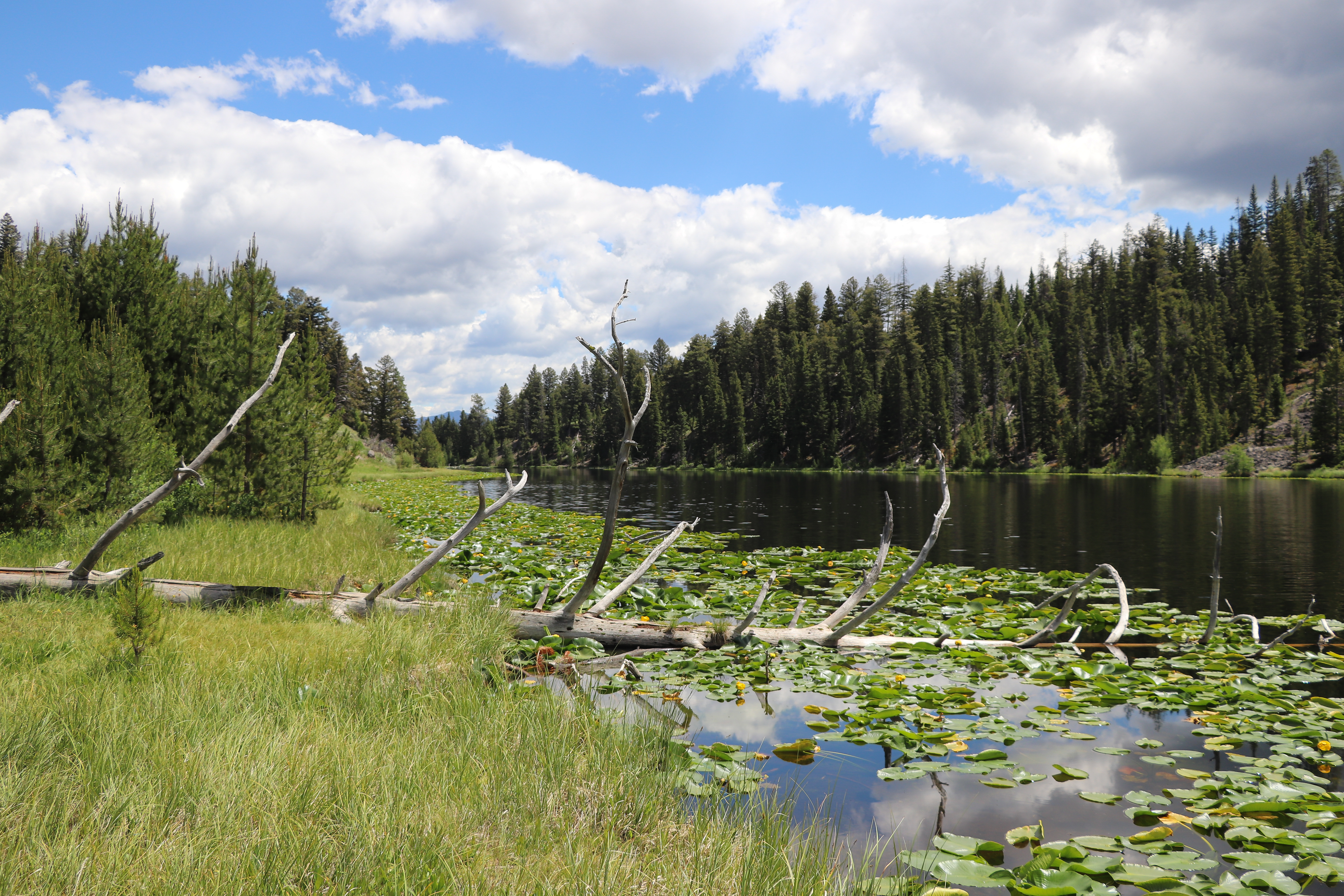
Lost Lake Loop
~18 min drive
Round trip 2.8 miles (4.6 km), moderate. The trail climbs 300 feet up a forested hillside. At the junction, veer right (west). You reach Lost Lake in 0.2 miles (0.3 km). From there, follow the trail through a ravine to the Petrified Tree parking area. From the parking lot, th…

Lost Lake
~18 min drive
6.6 mi · Moderate
Slough Creek
~26 min drive
24-mile backcountry trek through Yellowstone region meadows and forest.
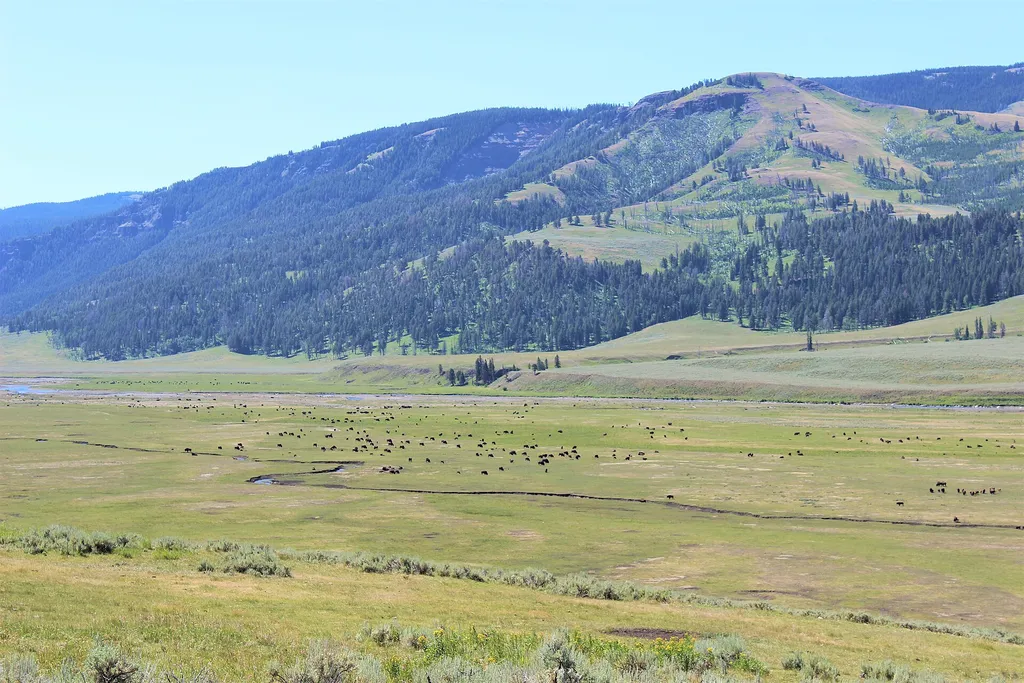
Lamar Valley - Predators and Prey
~5 min drive
<p>Wolves eat a wide variety of prey, large and small. They efficiently hunt large prey that other predators cannot usually kill.</p> <p>In Yellowstone, 90% of their winter prey is elk. In the summer, 10 to 15% of their summer prey is deer. They also can kill bison.</p> <p>Man…

Chittenden Road - Mount Washburn Trail
~21 min drive
5.7 mi · Easy