Camp May
Campground
Campground · 6.1 mi from the trail
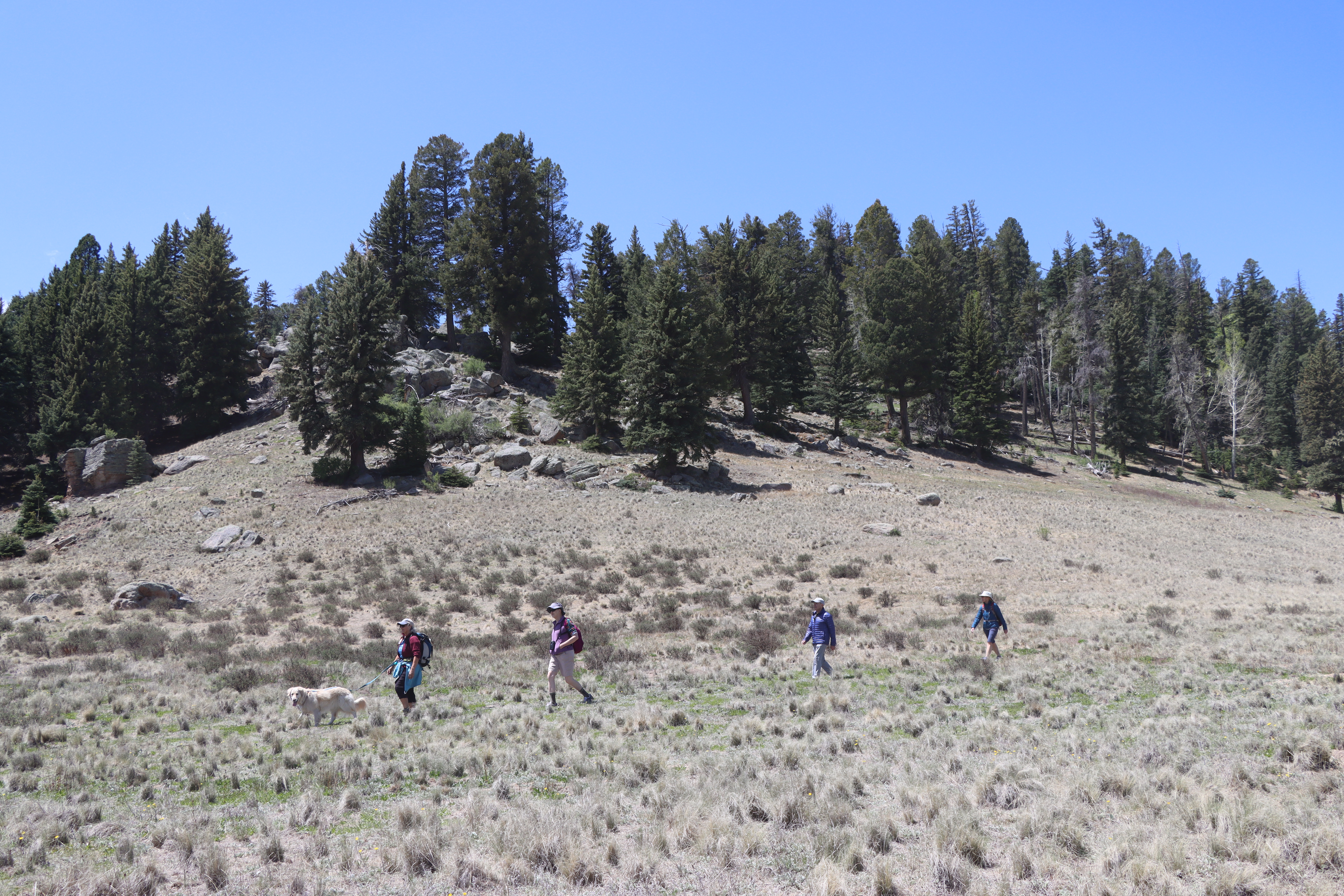 Photo: NPS
No closures listed
The National Park Service lists no closures for Valles Caldera National Preserve.
As of · Source: NPS · Valles Caldera National Preserve. Agencies don't list every closure — check before you go.
Did you notice that prairie dogs make this area their home? They like to make chirping noises to warn each other of people in the area, so they are difficult to miss! What they are also doing is trying to make future trace fossils. A trace fossil is a record of life that isn’t the animal or plant itself, but is a sign that life was there – such as a footprint or burrow. Not all footprints or burrows will be preserved in rock, but some will be preserved as trace fossils. If conditions are right, some prairie dog burrows may be preserved in the rock record. So, will the volcano erupt again? Well, it is possible! We know there is still magma about 4.5 miles beneath part of the Preserve. When might it erupt? Good question – we don’t know, but we do know that there would be plenty of warning signs first, so no eruption today, or this month. If the volcano wakes up again, it will let us know! There would be lots of small earthquakes, and the ground temperature and the temperature of water in the springs would increase. There would be lots of excitement at Valles Caldera National Preserve as scientists rush to study it! This is the end of the Cerro La Jara Trail tour. We hope you learned some interesting facts about the geology of this beautiful Preserve. ¿Te has dado cuenta de que los perros de la pradera han hecho de esta zona su hogar? Les gusta emitir chirridos para avisarse unos a otros de la presencia de personas en la zona, ¡es difícil no verlos! Lo que también están haciendo es intentar crear futuros fósiles de huellas. Un fósil de huellas es un registro de vida que no es el animal o la planta en sí, sino una señal de que hubo vida allí, como una huella o una madriguera. No todas las huellas o madrigueras se conservarán en la roca, pero algunas se conservarán como fósiles de huellas. Si las condiciones son adecuadas, algunas madrigueras de perros de la pradera pueden conservarse en el registro rocoso. Entonces, ¿volverá a ver una erupción volcánica? ¡Bueno, si es posible! Sabemos que todavía hay magma a unos 7,2 km bajo parte de la reserva. ¿Cuándo podría entrar en erupción? Buena pregunta, no lo sabemos, pero sí sabemos que primero habran muchas señales de advertencia. Por eso sabemos que no habrá erupción hoy ni este mes. Si el volcán vuelve a despertar, ¡nos lo hará saber! Habrían muchos pequeños terremotos y la temperatura del suelo y del agua de los manantiales aumentaría. ¡Habría mucho entusiasmo en la Reserva Nacional Valles Caldera, ya que los científicos se apresurarían en venir a estudiarlo! Aquí termina el recorrido por el sendero del Cerro La Jara. Esperamos que haya aprendido algunos datos interesantes sobre la geología de esta hermosa reserva natural.
Camp May
Campground
Stone Kiva Restaurant
American restaurant
Places © Overture Maps Foundation
More in Santo Domingo Pueblo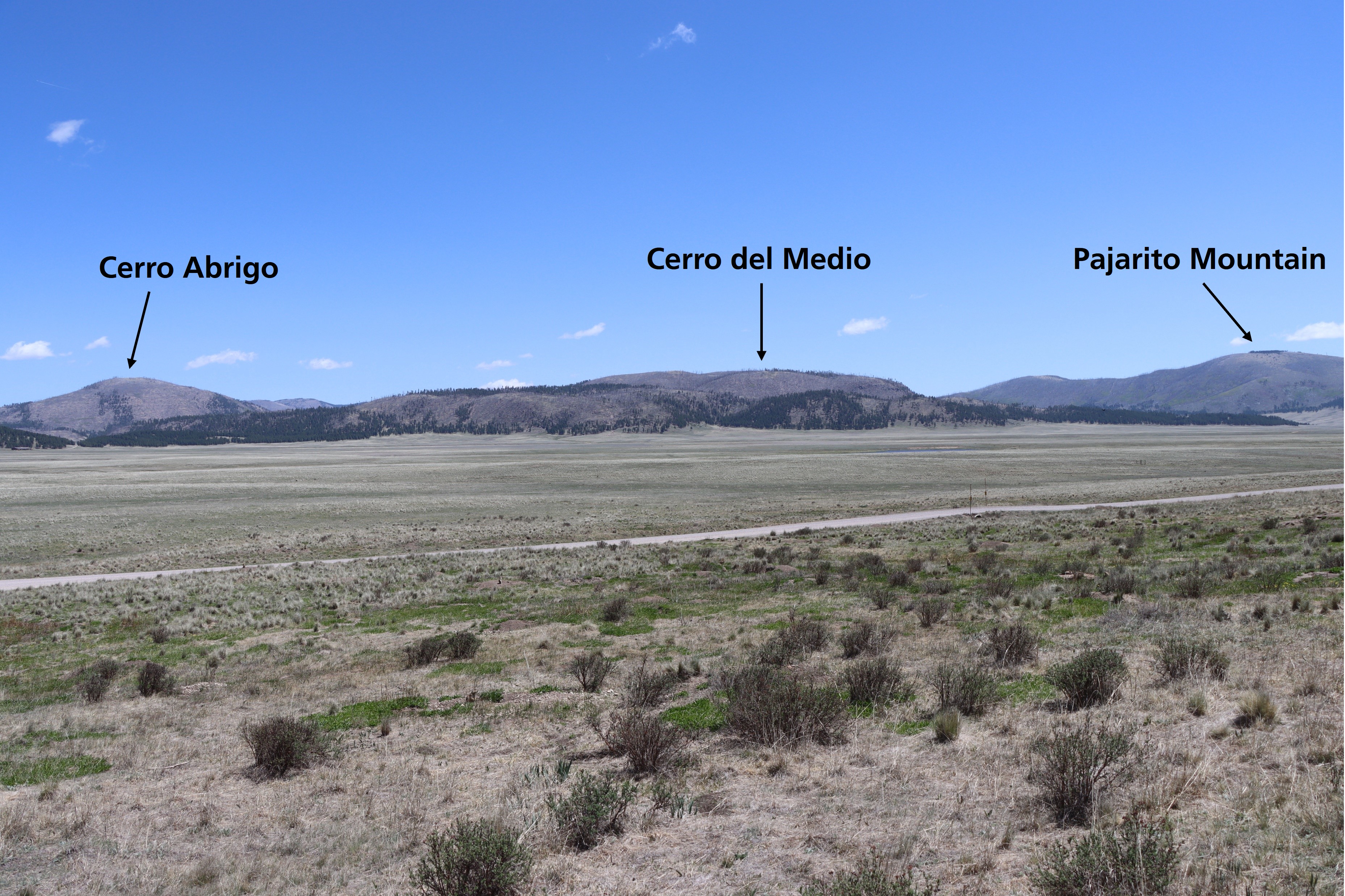 Cerro La Jara Stop 7HikingPhoto: NPS0.1 mi
 Cerro La Jara TrailHikingPhoto: Ken Lund from Reno, Nevada, USA, CC BY-SA 2.0 (via Wikimedia Commons)0.1 mi
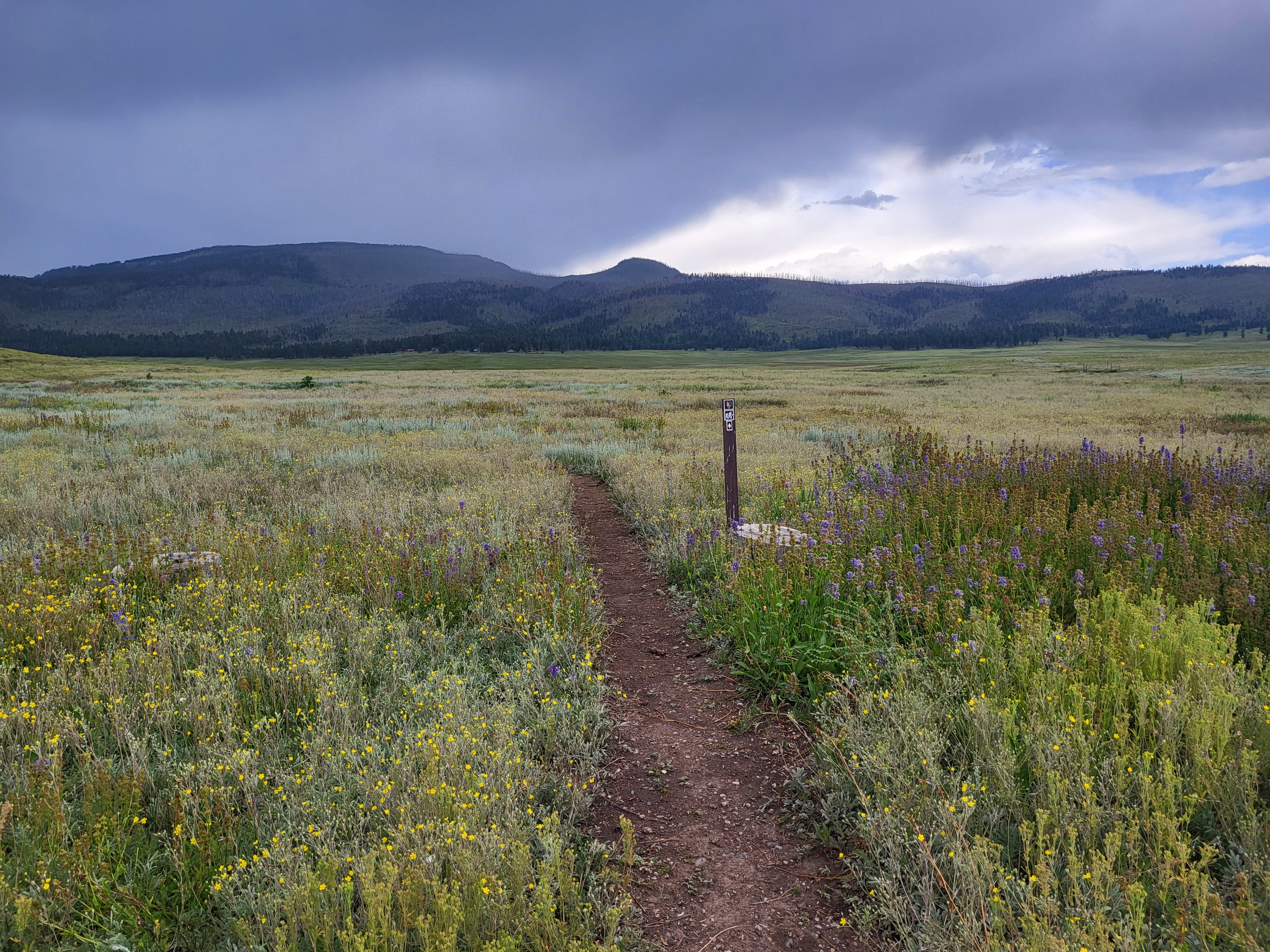 Cerro La Jara Stop 1HikingPhoto: NPS0.2 mi
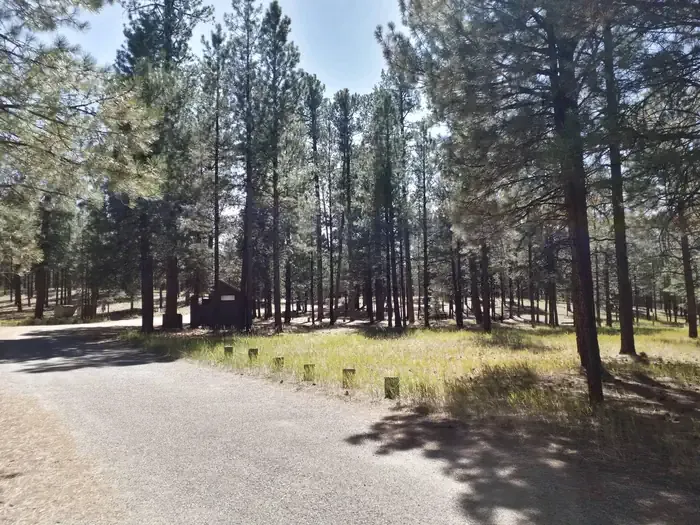 Jemez Falls CampgroundCampingPhoto: Recreation.gov (RIDB) / public domain6.9 mi
Source: Roamze catalog (indexable pages within 10 miles, PostGIS distance)
Cerro La Jara TrailHiking · Next doorPhoto: Ken Lund from Reno, Nevada, USA, CC BY-SA 2.0 (via Wikimedia Commons) Coyote Call TrailHiking · ~3 min drivePhoto: Paul and Jill, CC BY 2.0 (via Flickr)
 Pond TrailHiking · Next doorPhoto: cogdogblog, CC0 (via Wikimedia Commons)
Best months: May–June and September. Best months have typical highs of 55–85 °F, lows of 30 °F or warmer (32 °F where the station doesn't record snow), at most one snowy day and no more than 12 wet days.
Jan
36° / 9°
9 wet
Feb
38° / 12°
9 wet
Mar
44° / 20°
9 wet
Apr
52° / 25°
8 wet
May
62° / 32°
8 wet
Jun
72° / 39°
8 wet
Jul
74° / 45°
15 wet
Aug
71° / 43°
15 wet
Sep
66° / 35°
11 wet
Oct
57° / 26°
7 wet
Nov
45° / 17°
6 wet
Dec
36° / 9°
9 wet
Typical high / low (°F) and days with rain or snow, 1991–2020. Measured at Los Alamos 13 W, NM, 1.5 mi away at 8,716 ft. This station doesn't record snowfall. Source: NOAA NCEI U.S. Climate Normals 1991–2020.
