Loading…

Gneiss Creek (WK7)
Free — you'll pick up right here.
Watch this trail
Sign up to watch it — saving subscribes you to gate, closure and report changes.
Montana
We won't guess. Here is exactly what we do and don't know.
What we do know
Inside Custer Gallatin National Forest
2 managing-area boundaries mapped — agency alerts for them feed this page automatically.
Boundary data
What's missing
No access route mapped
We don't yet know which road reaches this trailhead, so we can't tell you if it's gated.
Nobody's filed a report here yet — be the first.
Gneiss Creek (WK7)
AI-suggested draft · review before you go
No elevation data on file for this trail.
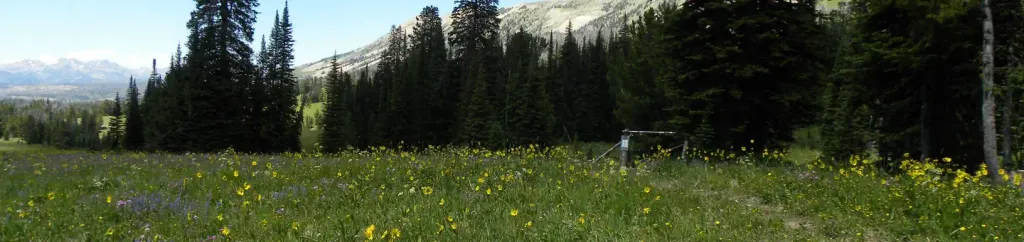
This trailhead along Highway 191 in the western part of the park provides access to one trail: Gneiss Creek Trail Gneiss Creek Trail This moderate 13.9-mile (22.4-km) one-way hike that can start at either the Gneiss Creek Trailhead along Highway 191 and the western boundary of the park or at the Seven Mile Bridge Trailhead along the West Entrance Road. The trail is relatively flat and crosses open valleys in the western part of the park that can be frequented by bison, elk, and grizzly bears. NOTE The northern stretch of the trail goes through a bear management area, so from March 10 through June 30 no off-trail travel is allowed to reduce encounters between humans and bears. Backcountry Regulations Permit required for fishing, boating, riding, and overnight camping. More information at the Center Backcountry Office: (307) 344-2160. Hiking Hike in groups of 3 or more; keep your group together. Tell someone where you are going and when you expect to return. Know your route, carry a map, and be able to navigate. Do not hike after dark. Stay on established trails; off-trail travel prohibited in thermal areas. Fishing and Boating Aquatic Invasive Species (AIS) inspection required for all watercraft including boats, float tubes, and stand up paddle boards. Felt soles prohibited. Riding and Packing Proof of negative Coggins test within last 12 months required. Food Storage and Camping These regulations apply to ALL backcountry users. Sleep 100 yards (91 m) from your food storage and cooking areas. Do not leave food, trash, toiletries, backpacks, coolers, water bottles, or any potential attractant unattended. Store food in an approved bear resistant container or hang on a food pole 10 feet (3 m) above the ground and 4 feet (1 m) from sides. Carry a minimum of 35 feet (11 m) of rope. Campfires allowed only in designated campsites within established fire rings. Extinguish campfires completely before leaving site. Follow LEAVE NO TRACE travel and camping techniques. Enjoy the backcountry and help keep it clean for others to enjoy. Bury human waste and toilet tissue in a 6–8 inch (15–18 cm) deep “cat hole” at least 100 feet (30 m) from water and trails. River Crossings Park waters are swift and cold. Swimming in park rivers is not recommended. River crossings are hazardous. Lightning Safety During thunderstorms, descend to lower elevation, avoid open areas and isolated tall trees. Assume lightning position: feet together, crouch on foam pad or sit on pack, hands over ears. Regulations Leave What You Find: Do not collect anything from the park. No Pets: No pets on trail. Obtain service animal regulations at backcountry offices. No Hunting: No hunting or discharge of firearms. No Motorized Vehicles: No motorized vehicles on trails. Wheeled Vehicles Restricted: No bicycles, strollers, or wheeled vehicles (except wheelchairs), except where specified. In an emergency, dial 9-1-1 or contact the nearest ranger station. Animals are Dangerous Do not approach or feed any animal. Bison and elk have injured people. Stay 100 yards (91 m) from bears and wolves. Stay 25 yards (23 m) from all other animals. Be Prepared for a Bear Encounter Grizzly and black bears inhabit all of Yellowstone National Park. Be Alert: Watch for signs of bear activity: scratches in trees, tracks, scat, or dig sites. Avoid dead animals. Make Noise: Avoid surprising a bear by calling out and clapping your hands at regular intervals to make your presence known. Carry Bear Spray: Carry bear spray and know how to use it. Keep it immediately available, not inside your pack. Hike in Groups: Travel in groups of 3 or more is recommended. Stay with your group at all times. What to do... If You Encounter a Bear: Stay calm, do not run. Quietly detour or back away; stop if this seems to agitate the bear. Stay at least 100 yards (91 m) from bears. Do NOT feed bears or other animals. If a Bear Charges You: Stand still, do not run. Stand your ground and use your bear spray. Spray when the bear is 60 feet (18 m) away or closer. If a bear charges, it may be a bluff charge. If a Bear Makes Contact: Drop to the ground; play dead. Lie face down and clasp your hands over the back of your neck; stay still and silent. Wait several minutes after the bear leaves before getting up and leaving the area.
Riverside Ski Trails Trailhead (WK9)
~16 min drive
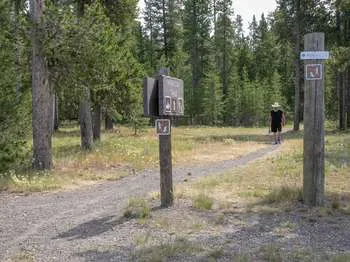
The Riverside Ski Trail provides several easy options to ski along the Madison River and enjoy views of both the Gallatin and Madison mountain ranges. Boundary Street to loops: 1 mile (1.6 km) Downriver loop, full: 3.5 miles (5.6 km) Downriver loop, short: 2.2 miles (3.5 km) U…
Whits Lake
~4 min drive
Moderate alpine lake hike with 643 ft elevation gain near Whits Lake, Montana.
Big Sky South (Snowmo)
~4 min drive
23-mile snowmobile trail with 1,745 ft gain near Big Sky.
Johnson Lake
~5 min drive
Moderate 5.46-mile hike to Johnson Lake with 1,040 ft elevation gain.
Fawn Pass Trailhead (WK5)
~19 min drive
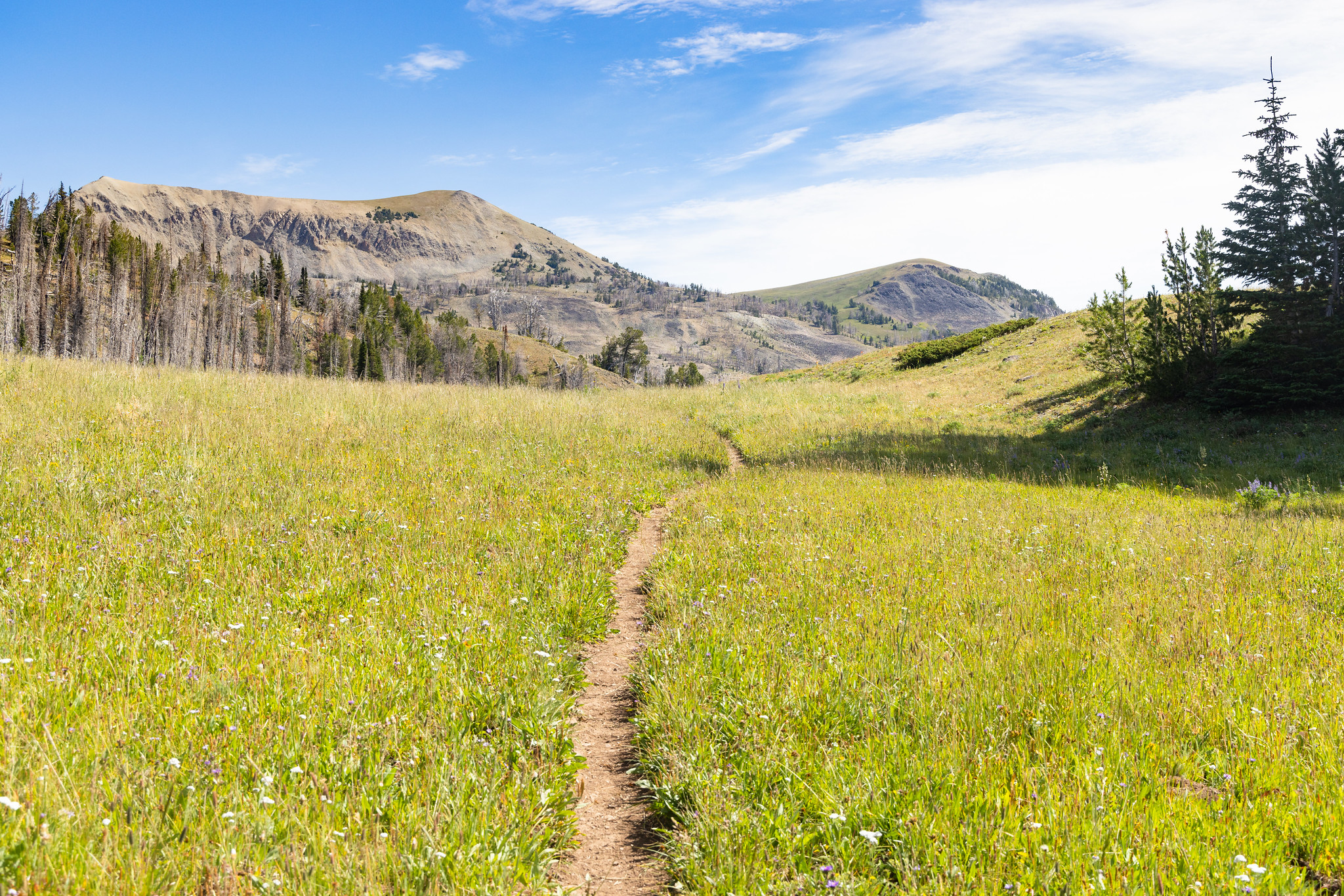
The Fawn Pass trailhead is on the northwest side of Yellowstone near U.S. Highway 191. From this trailhead, you can embark on the following trail: Fawn Pass Trail Fawn Pass Trail This trail can either be a there and back 18-mile (28.9 km) strenuous hike to the top of Fawn P…
Boundary Trail (Xc)
~15 min drive
Moderate 4.58-mile cross-country backcountry route through Montana wilderness.
Cougar Creek (Snowmo)
~9 min drive
Long, gentle 15.66-mile trail through Cougar Creek with minimal elevation gain.
Dutchman Basin
~6 min drive
Short, easy basin trail with gentle elevation gain near Dutchman Basin.
Bacon Rind Trailhead (WK4)
~19 min drive
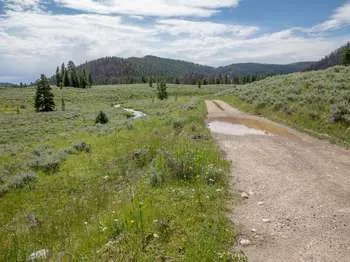
The Bacon Rind trailhead is on the northwest side of Yellowstone near U.S. Highway 191. From this trailhead, you can embark on the following trail: Bacon Rind Trail Bacon Rind Trail A strenuous 10.2-mile (16.4 km) there-and-back trail that climbs 2,400 feet (731 m) through…
Lionhead (Snowmo)
~18 min drive
Moderate snowmobile trail with gentle climbing and scenic winter views.