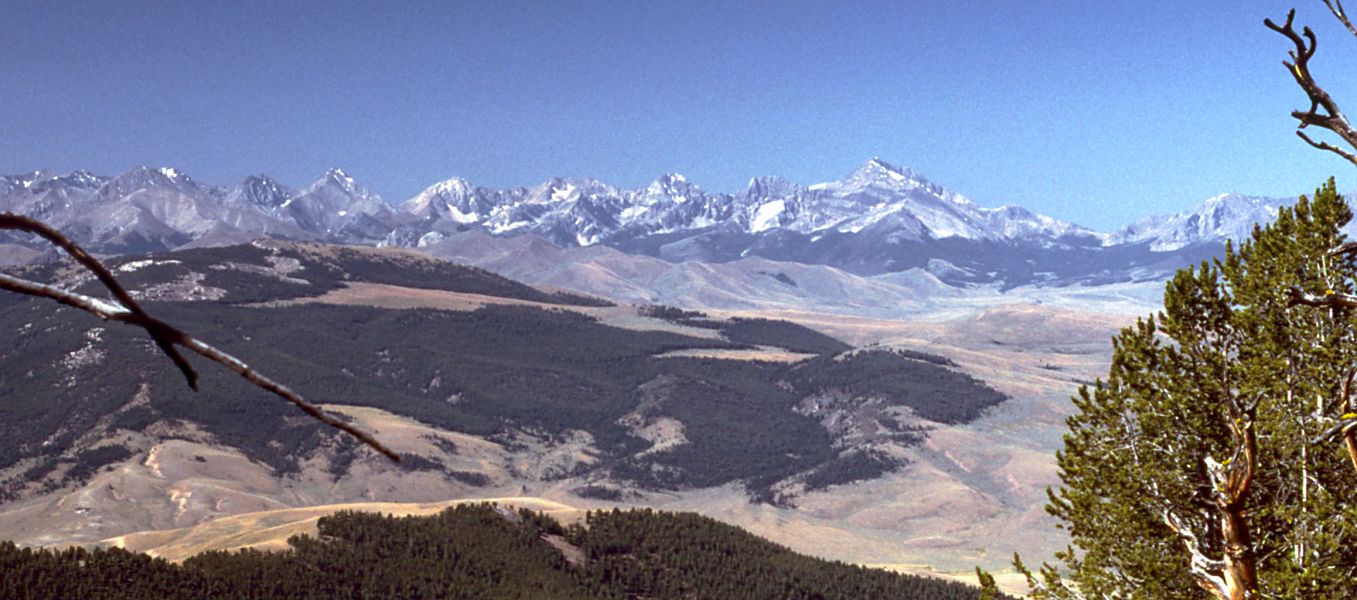
Stone Temple
Stone Temple in Idaho has 8 sport climbing routes across 6 difficulty grades.
- 8 routes
- 5.9 – 5.12b
- Sport
Is Stone Temple open right now?
Alert in the area
The Forest Service lists an alert for Salmon-Challis National Forest.
Stoddard Bridge Construction Closure
Agency alert covering Salmon-Challis National Forest · Order 0413-07-17 · USFS · Salmon-Challis National Forest
As of · Source: USFS · Salmon-Challis National Forest. Agencies don't list every closure — check before you go.
Best time to visit Stone Temple
Best months: April–June and August–October. Best months have typical highs of 55–85 °F, lows of 30 °F or warmer (32 °F where the station doesn't record snow), at most one snowy day and no more than 12 wet days.
Jan
30° / 7°
5 wet · 3 snow
Feb
35° / 12°
4 wet · 2 snow
Mar
46° / 23°
4 wet · 1 snow
Apr
57° / 30°
5 wet · 1 snow
May
67° / 39°
6 wet
Jun
76° / 46°
4 wet
Jul
87° / 52°
2 wet
Aug
85° / 50°
3 wet
Sep
75° / 41°
4 wet
Oct
60° / 31°
4 wet
Nov
43° / 19°
4 wet · 1 snow
Dec
31° / 9°
5 wet · 2 snow
Typical high / low (°F) and days with rain or snow, 1991–2020. Measured at Arco, ID, 12.6 mi away at 5,325 ft. The station sits about 1,500 ft lower than this place, so expect it a little cooler here. Source: NOAA NCEI U.S. Climate Normals 1991–2020.
Stone Temple is a climbing area in Idaho's Salmon-Challis National Forest, within the Lost River Ranger District. The Forest Service manages the land, and the area sits among several other climbing spots, including Cannonball Wall, Wonderwall and Dark Side of the Moon, all about 0.1 mile away. The climbing here is sport, with eight routes spread across a range from 5.9 to 5.12-. The median grade is 5.10. Among the routes are Creep at 5.9, Papa Was a Rolling Stone at 5.10 and Perdida at 5.12-. Summer is the most comfortable time to climb. Typical averages from a nearby weather station in Arco, about 13 miles away, show July highs around 87°F with lows near 52°F, while winter highs stay near freezing. That station sits roughly 1,500 feet lower than the climbing area, so temperatures at the crag run cooler.
Routes (8)
Keep exploring — more climbs worth the drive
Rock of Ages
~0 min drive
Rock of Ages in Idaho has 12 sport climbing routes across 10 difficulty grades.
Classic Rock
~0 min drive
Accessible Idaho climbing area with routes for developing climbers.
Solar Inversion Wall
~1 min drive
Solar Inversion Wall in Idaho has 6 sport climbing routes across 6 difficulty grades.
Mothership Sector
~1 min drive
9 sport climbing routes at Mothership Sector in Idaho.
The Fins
~1 min drive
Fins, The in Idaho has 5 sport climbing routes with 5 distinct difficulty grades.
The Head Wall
~1 min drive
Versatile Idaho crag with routes for multiple ability levels.
Yellow Cake
~1 min drive
Yellow Cake is a sport climbing area in Idaho with 6 routes.
Solstice
~1 min drive
Solstice in Idaho has 6 climbing routes with 6 difficulty grades, offering sport and trad options.
James Bond Wall
~22 min drive
James Bond Wall in Idaho offers 5 sport and trad climbing routes across 5 difficulty grades.
Box Canyon
~22 min drive
Box Canyon in Idaho has 19 sport climbing routes with 12 difficulty grades.