City of Rocks Bouldering
City of Rocks Bouldering in Idaho has 3 bouldering routes at 3 difficulty grades.
 Photo: cifraser1, CC BY 2.0 (via Flickr)
- 3 routes
- V2 – V7
- Bouldering
Is City of Rocks Bouldering open right now?
No closures listed
The National Park Service lists no closures for City of Rocks National Reserve.
As of · Source: NPS · City of Rocks National Reserve. Agencies don't list every closure — check before you go.
Best time to visit City of Rocks Bouldering
Best months: April–June and August–October. Best months have typical highs of 55–85 °F, lows of 30 °F or warmer (32 °F where the station doesn't record snow), at most one snowy day and no more than 12 wet days.
Jan
35° / 16°
8 wet
Feb
39° / 19°
7 wet
Mar
48° / 27°
6 wet
Apr
55° / 33°
7 wet
May
65° / 41°
9 wet
Jun
75° / 50°
6 wet
Jul
86° / 59°
5 wet
Aug
85° / 57°
6 wet
Sep
74° / 48°
5 wet
Oct
60° / 35°
5 wet
Nov
45° / 24°
6 wet
Dec
35° / 17°
8 wet
Typical high / low (°F) and days with rain or snow, 1991–2020. Measured at Rosette, UT, 24 mi away at 5,685 ft. The station sits about 800 ft lower than this place, so expect it a little cooler here. This station doesn't record snowfall. Source: NOAA NCEI U.S. Climate Normals 1991–2020.
City of Rocks Bouldering is a bouldering area within City of Rocks National Reserve in Idaho, managed by State Park and Recreation. It sits among a cluster of climbing areas, with Creekside and The Office both about 0.1 mile away and Anteater - West and Anteater - East about 0.2 mile off. The reserve's boulders make for a compact, close-together destination for climbers. The climbing here is all bouldering, with three routes listed: The Nest at V2, American Standard at V6-7 and Songbird at V7. The grades run from easy to challenging, so there is something for climbers of different abilities. For timing, late spring and early fall are the most comfortable. Typical averages from a nearby weather station in Rosette, Utah, show May highs around 65°F and September highs around 74°F, with July peaking near 86°F. That station sits about 770 feet lower than the reserve, so temperatures on the boulders run cooler. Independence Lakes Campground, about 10 miles away, is the closest place to camp.
Routes (3)
Keep exploring — more climbs worth the drive
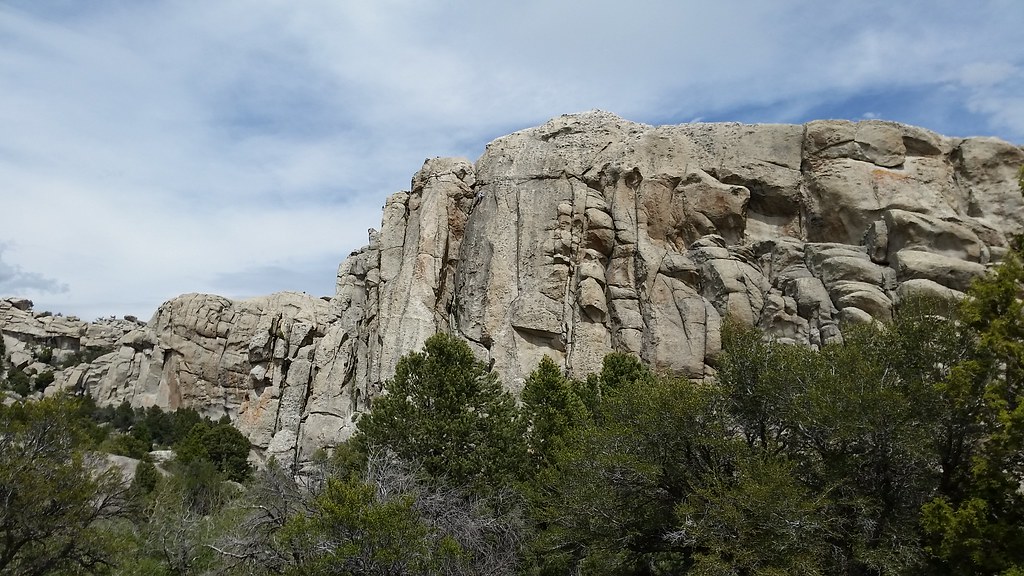 Photo: cifraser1, CC BY 2.0 (via Flickr)
Creekside
~0 min drive
Creekside in Idaho has 15 climbing routes across 9 grades, offering sport and trad styles.
Photo: cifraser1, CC BY 2.0 (via Flickr)The Office
~0 min drive
The Office is a climbing crag in Idaho with 5 routes.
 Photo: cifraser1, CC BY 2.0 (via Flickr)
Anteater - East
~0 min drive
Anteater - East in Idaho has 5 mixed climbing routes.
Photo: cifraser1, CC BY 2.0 (via Flickr)Anteater - West
~0 min drive
Anteater - West in Idaho has 7 climbing routes across 6 difficulty grades.
 Photo: photophat, CC BY 3.0 (via Wikimedia Commons)
Morning Glory Spire
~0 min drive
Morning Glory Spire in Idaho has 13 climbing routes across 11 grades, featuring mixed, sport, and trad styles.
 Photo: cifraser1, CC BY 2.0 (via Flickr)
The Drilling Fields
~0 min drive
Drilling Fields in Idaho has 5 routes across 4 grades, offering sport and trad climbing.
Photo: cifraser1, CC BY 2.0 (via Flickr)Bath Rock - East
~0 min drive
Bath Rock - East in Idaho has 8 trad routes on 4 difficulty grades.
Photo: photophat, CC BY 3.0 (via Wikimedia Commons)Parking Lot Rock - East
~0 min drive
Parking Lot Rock - East in Idaho has 7 climbing routes with sport and trad options.
Photo: cifraser1, CC BY 2.0 (via Flickr)Parking Lot Rock - West
~0 min drive
12-route climbing area in Idaho with mixed, sport, and trad styles.
Photo: cifraser1, CC BY 2.0 (via Flickr)Bath Rock - West
~0 min drive
Bath Rock - West in Idaho has 11 climbing routes across 8 grades, featuring mixed, sport, and trad styles.
Also worth it near here
