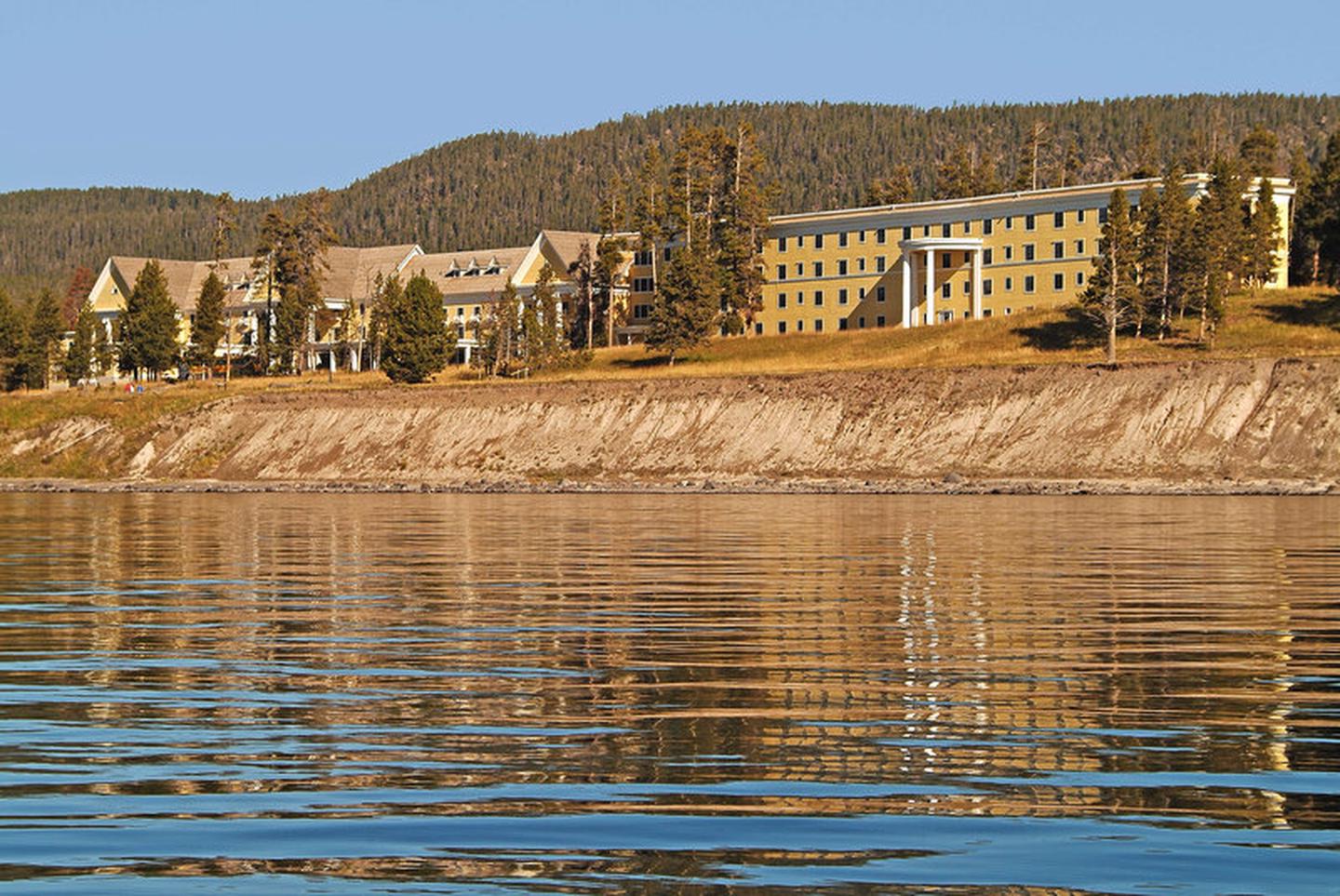
Loading…

LeHardys Rapids
Free — you'll pick up right here.
Watch this trail
Sign up to watch it — saving subscribes you to gate, closure and report changes.
Wyoming
We won't guess. Here is exactly what we do and don't know.
What we do know
Inside Yellowstone National Park
National Park unit boundary is mapped — agency alerts for it feed this page automatically.
Boundary data
What's missing
No access route mapped
We don't yet know which road reaches this trailhead, so we can't tell you if it's gated.
Nobody's filed a report here yet — be the first.
LeHardys Rapids
AI-suggested draft · review before you go
No elevation data on file for this trail.
Located on the Yellowstone River, the longest undammed river in the contiguous United States. In spring, you might be able to see Yellowstone cutthroat trout leaping upstream at LeHardys Rapids. Yellowstone cutthroat trout are the most widespread native trout of the park and were the dominant fish species here prior to Euroamerican settlement. Some scientists consider LeHardys Rapids to be the geologic northern boundary of Yellowstone Lake because the periodic rise and fall of the rapids appears to control lake outflow. Yellowstone Cutthroat Trout Require cold, clean water in streams or lakes. Spawn in rivers or streams in early May through mid-July. Most important foods are aquatic insects (mayflies, stoneflies, caddisflies, etc.) and other small aquatic animals, plus terrestrial insects that fall into the water. Also eat smaller fish, fish eggs, small rodents, frogs, algae and other plants, and plankton. In the 1960s, fisheries managers determined that angler harvest was excessive and negatively impacting the fishery. Increasingly restrictive angling regulations were put into place, which helped restore cutthroat trout population numbers and age structure. Whirling disease and illegally introduced lake trout in Yellowstone Lake now pose a serious threat to the cutthroat trout population. They provide an important source of food for an estimated 20 species of birds, and mammals including bears, river otters, and mink. In the recent past, fishing for cutthroat trout has supported a $36 million annual sport fishery. Fishing Permits Fishing permits are required in Yellowstone, state-issued fishing permits are not valid within the park. Permits are available at visitor centers, ranger stations, general stores, and other locations outside of the park. Visit https://www.nps.gov/yell/planyourvisit/fishing.htm for more information. Be Prepared to Encounter Bears Carry bear spray and know how to use it. Hike in groups of three or more people. Make noise to avoid surprise encounters. Slowly back away from any bears, for they have an instinct to chase. Accessibility Visitors with wheelchairs may require assistance due to uneven ground. The southern part of boardwalk has stairs.
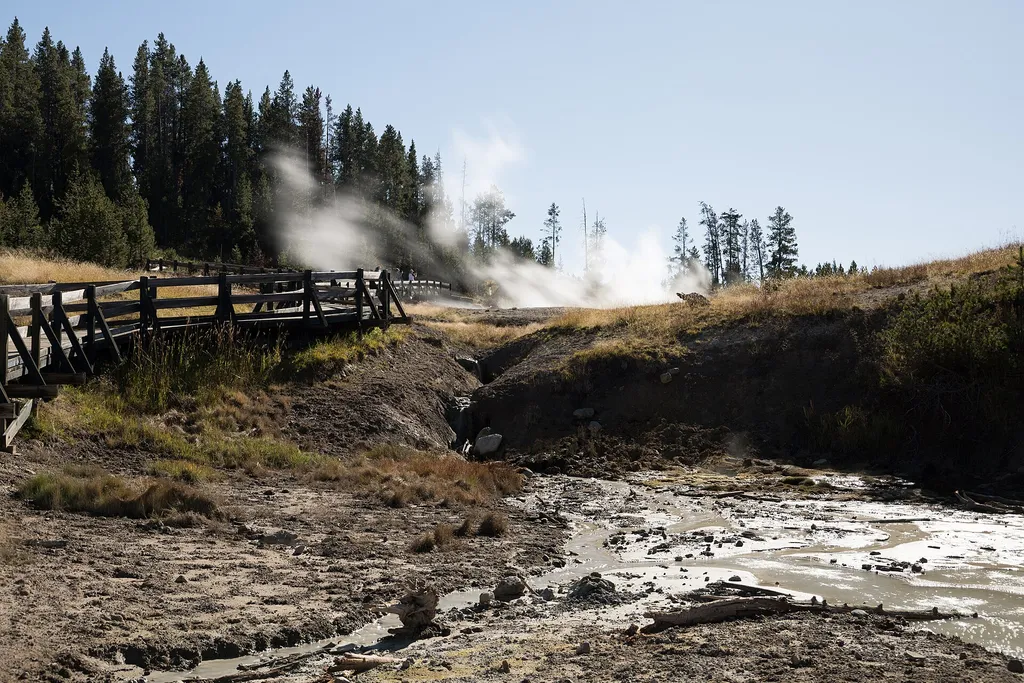
Sizzling Basin
~5 min drive
<p>A hot spring that has existing activity much like grease on a hot frying pan.</p>
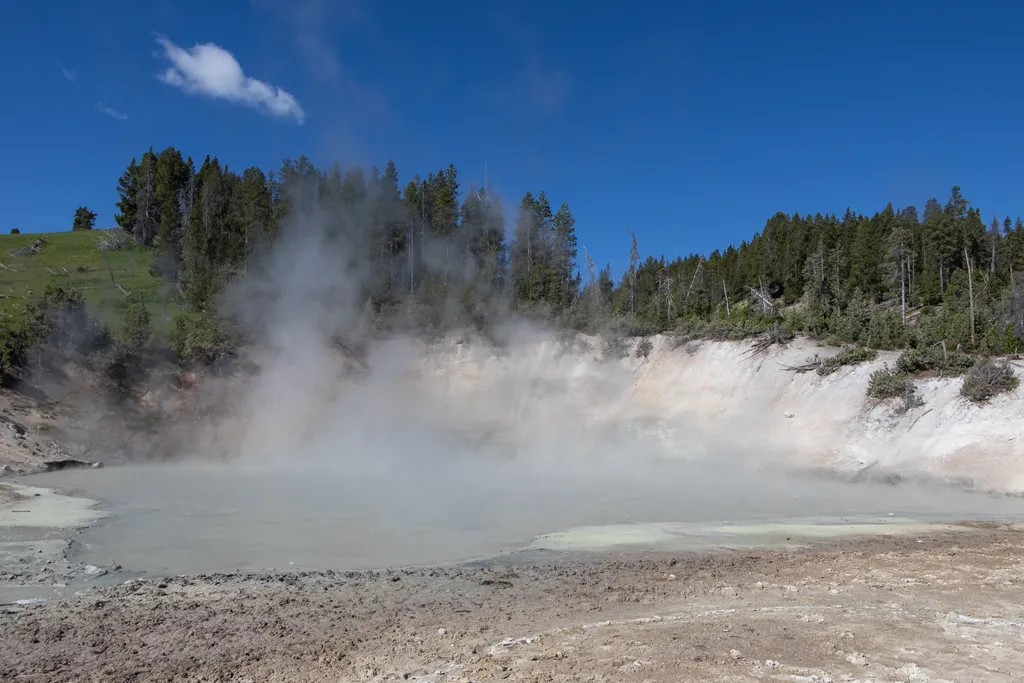
Mud Caldron
~5 min drive
<p>A large mudpot located near the parking area.</p>

Seven Mile Hole Trail
~16 min drive
9.9 mi · Moderate
Mount Washburn Spur Trail
~16 min drive
17 mi · Hard
Cooking Hillside
~5 min drive
<p>The trees on this hillside are cooked by steam.</p> <p>In 1978, an earthquake swarm occurred at Mud Volcano. The intense swarm lasted about seven months. This hillside experienced increased heat, causing the vegetation to die.</p> <p>Researchers are able to study tree rings…

Pelican Creek Nature Trail
~6 min drive
1.3 mi · Easy

Observation Peak Trail
~19 min drive
9.4 mi · Moderate

Howard Eaton Trail
~25 min drive
22 mi · Hard
Black Dragon's Caldron
~5 min drive
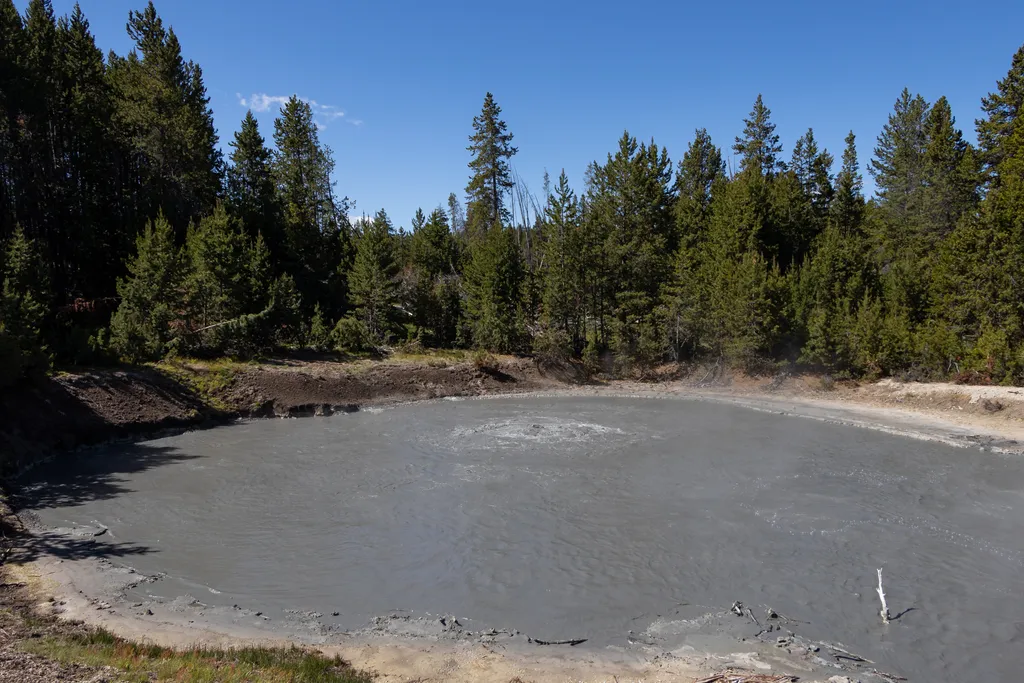
<p>In 1948, Black Dragon’s Caldron burst through a crack in the earth. It uprooted and coated nearby trees with thick mud.</p> <p>Since then, this mudpot moved south 200 feet (60 m) along the crack. The spring feeding nearby Sour Lake was much more active before Black Dragon’s…

Elephant Back Mountain Trail
~6 min drive
5.8 mi · Easy