Jenny Lake Campground
Campground
Campground · 0.2 mi from the trail
 Photo: inkknife_2000 (7.5 million views +), CC BY-SA 2.0 (via Wikimedia Commons)
Alert in the area
The National Park Service lists 2 alerts for Grand Teton National Park.
Construction in the South End of the Park
Park alert covering Grand Teton National Park · NPS · Grand Teton National Park
Construction on HWY 26/89/191
Park alert covering Grand Teton National Park · NPS · Grand Teton National Park
As of · Source: NPS · Grand Teton National Park. Agencies don't list every closure — check before you go.
Planning Your Trip A trip into the backcountry requires advance planning. When planning a backcountry camping trip in Grand Teton National Park, backpackers should expect to travel no more than 2 miles per hour. Add an additional hour for every 1,000 feet of elevation gain. Trip planning that requires going over more than one pass in a day is not recommended. All backcountry camping requires a permit. Backcountry camping permits are issued on a first-come, first-served basis no more than one day before the start of your trip. Apply for a permit at the Colter Bay Visitor Center, the Craig Thomas Discovery and Visitor Center, or the Jenny Lake Ranger Station. Climbing permits are NOT required, but backcountry camping permits are required for all climbing that involves overnight camping. Backcountry camping permits while climbing or mountaineering must be obtained at the Jenny Lake Ranger Station during the summer. Park-approved bear canisters must be used in the backcountry. The park provides canisters free of charge for use in the park. Visit the backcountry reservations page to learn more about the reservation process and submit a reservation. To learn more about current conditions visit the Jenny Lake Ranger Station or call 307-739-3399 to talk to a ranger. Backcountry Video Watch the park's video to help plan your adventure to the high country in Grand Teton National Park. Learn about safe travel, camping in bear country, clean camping practices and summer weather. Fees A fee is charged for all backcountry permit if ordered online or in person. Check the backcountry page for the latest information. Bears in the Backcountry Bear-proof canisters are required for overnight stays Backpackers are required to carry approved bear-resistant canisters except where food storage boxes are provided. On some specific alpine routes where a climber is bivouacing on a high rocky ledge where bears cannot go, park-approved bear canisters may not be required. Bear-resistant canisters are provided by the park or visitors may use any of the following approved canisters during the overnight stays in the park backcountry. Watch our video podcast about food storage. To find out which food storage canisters are currently approved by the Interagency Grizzly Bear Committee, go to the safety in bear country page. Reservations Requests for advance reservations are only accepted beginning in January of each year, for the specific date this opens visit the backcountry page. All reservations are processed through Recreation.gov in real-time. To facilitate your reservation experience, please establish an account on Recreation.gov prior to the advance reservation season. Some camping zones fill quickly. Individual party reservations can consist of up to six people. Groups of 7-12 people must camp in designated group sites indicated on the brochure map. View maps of the backcountry camping zones. Backcountry Regulations Pets, bicycles, and vehicles are not allowed on trails or in the backcountry. All overnight camping requires a permit. Carry out all of your garbage. Prevent erosion by hiking on established trails. Cutting switchbacks causes soil erosion. Horses have the right-of-way. Step off the trail and remain quiet while horses pass. Observe and photograph wildlife from a safe distance. Do not approach or feed animals. Prevent contamination of waterways by burying feces in a hole 6-8 inches deep at least 200 feet from streams and lakes. Pack out used toilet paper, tampons, sanitary napkins and diapers in sealed plastic bags. Do not bury or burn them. All backpackers must carry and use an approved bear-proof canister. For more information see the bear safety page. For Your Safety This is bear country. Make bears aware of your presence and avoid surprising them by making loud noises like shouting or singing. Please watch our "Which Bear Did I See?" and "Protect Wildlife, Keep Your Food Safe" videos. Carry drinking water. Bring tablets or water filtration devices to purify water in the backcountry. Be prepared for rapid weather changes; bring rain gear and extra clothing. Thunderstorms occur frequently during the summer. High elevation may cause breathing difficulties; pace yourself. The best cure for altitude sickness is retreating to a lower elevation. Snow melts gradually, leaving valley trails by mid-June, canyon trails by late July. Be careful crossing snowfields and streams. Do not attempt crossing steep snow without previous experience and the proper equipment. Tell someone where you are going and when you expect to return. Solo hiking and off-trail hiking are not recommended. Check with a ranger for current information on trail conditions. Avoid Crowds During July and August trailhead parking areas fill early, especially at South Jenny Lake, String Lake, Lupine Meadows, Death Canyon and Granite Canyon. Parking on natural vegetation results in permanent damage to plants; violators will be ticketed. In paved parking lots, parking illegally will also result in a ticket. An early start will help you avoid parking problems.
Jenny Lake Campground
Campground
Kelly Warm Springs
Hot spring
Places © OpenStreetMap contributors
More in JacksonNot on Roamze yet. Their page has how to reach them.
 Cutfinger RockRock climbingPhoto: Michael Kirsh, CC BY-SA 2.0 (via Flickr)0.2 miFalling Ant SlabRock climbingPhoto: Michael Kirsh, CC BY-SA 2.0 (via Flickr)0.2 mi
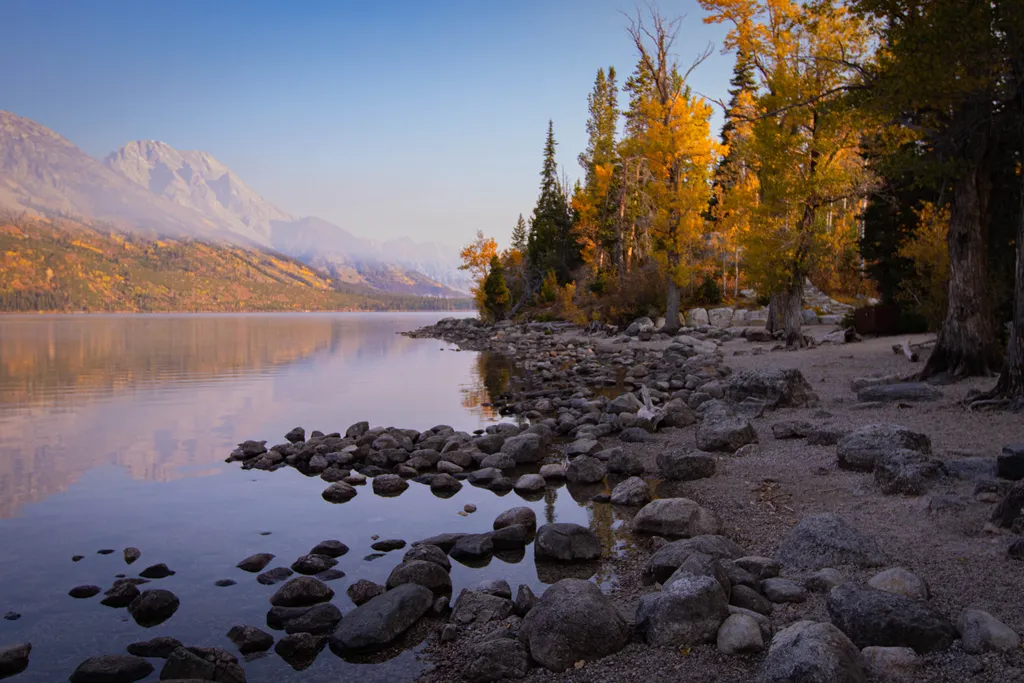 Rock BeachHikingPhoto: NPS / public domain0.2 mi
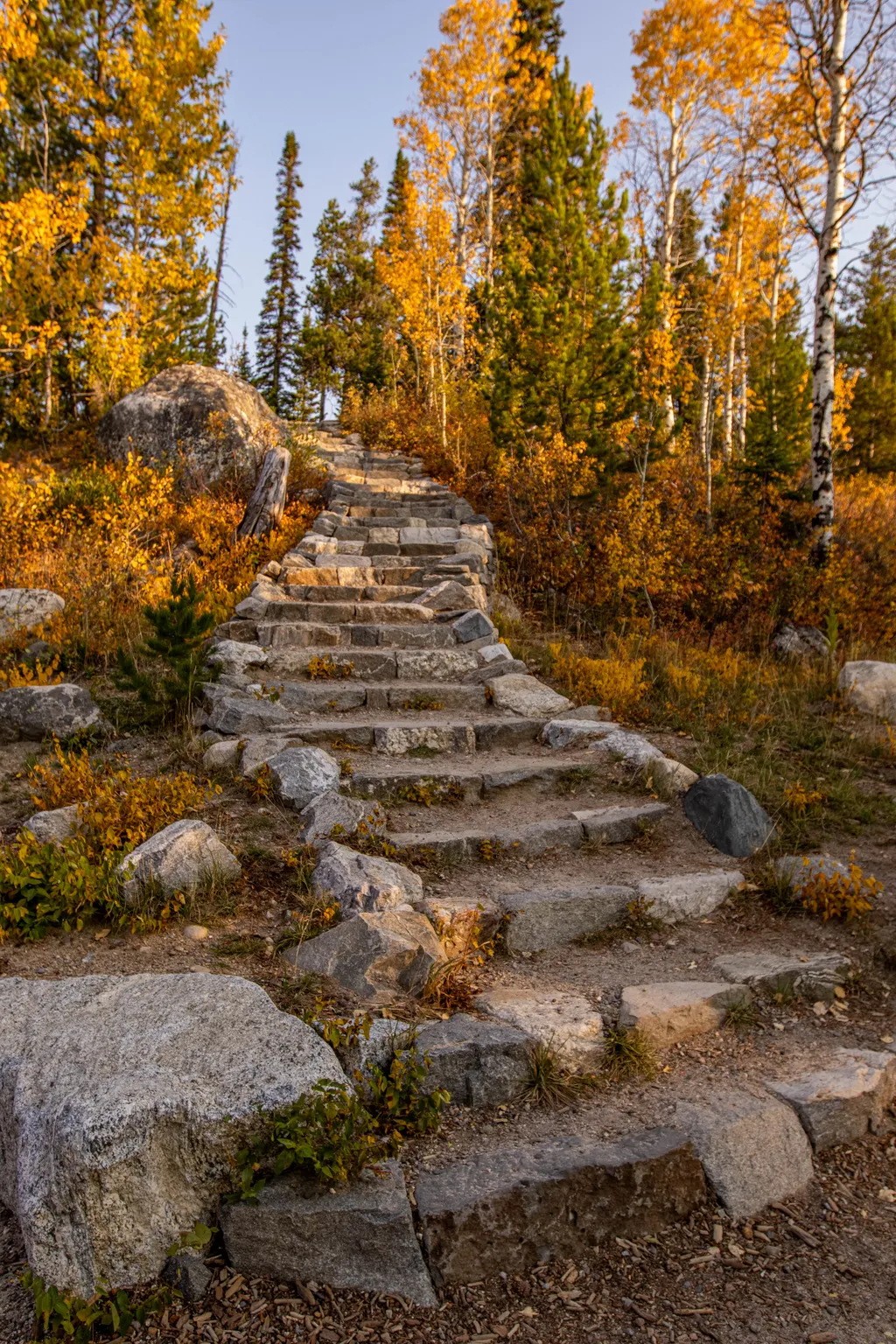 Aspen KnollHikingPhoto: NPS / public domain0.3 miDiscovery Spot: Gopher/MartenHikingPhoto: inkknife_2000 (7.5 million views +), CC BY-SA 2.0 (via Wikimedia Commons)0.3 mi
Source: Roamze catalog (indexable pages within 10 miles, PostGIS distance)
 S Jenny Lake Parking WalkwaysHiking · Next doorPhoto: inkknife_2000 (7.5 million views +), CC BY-SA 2.0 (via Wikimedia Commons)
 Teton Crest TrailHiking · ~4 min drivePhoto: Bas van Oorschot, CC BY-SA 3.0 (via Wikimedia Commons)South Jenny Lake WalkwaysHiking · Next doorPhoto: inkknife_2000 (7.5 million views +), CC BY-SA 2.0 (via Wikimedia Commons)
 Laurel Hill Climb TrailHiking · ~4 min drivePhoto: Cal Wolfe, CC BY-SA 3.0 (via Wikimedia Commons)
Also worth it near here
 Jenny Lake CampgroundCamping · Next doorPhoto: LikeGrantTookRichmond, CC BY-SA 3.0 (via Wikimedia Commons)Cutfinger RockRock climbing · Next doorPhoto: Michael Kirsh, CC BY-SA 2.0 (via Flickr)
Best months: June–September. Best months have typical highs of 55–85 °F, lows of 30 °F or warmer (32 °F where the station doesn't record snow), at most one snowy day and no more than 12 wet days.
Jan
24° / 2°
17 wet
Feb
28° / 7°
16 wet
Mar
38° / 15°
15 wet
Apr
47° / 24°
14 wet
May
60° / 32°
14 wet
Jun
69° / 37°
11 wet
Jul
79° / 43°
10 wet
Aug
78° / 41°
8 wet
Sep
68° / 35°
9 wet
Oct
53° / 25°
11 wet
Nov
36° / 15°
13 wet
Dec
25° / 3°
17 wet
Typical high / low (°F) and days with rain or snow, 1991–2020. Measured at Moose 1 Nne, WY, 6.4 mi away at 6,466 ft. This station doesn't record snowfall. Source: NOAA NCEI U.S. Climate Normals 1991–2020.
