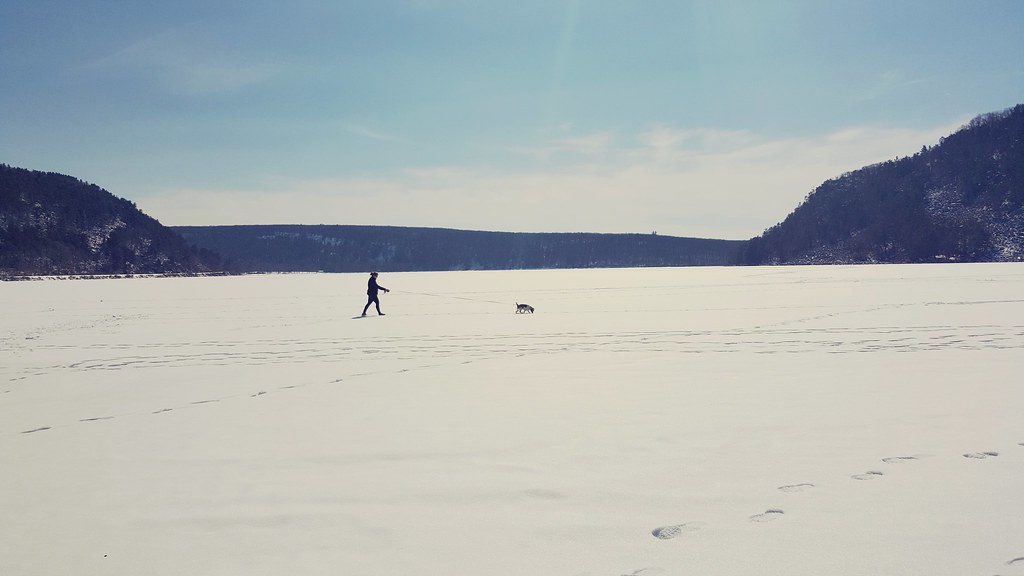
Devil’s Lake State Park Campgrounds
Campground
Campground · 0.5 mi from the trail
 Photo: Corey Coyle, CC BY 3.0 (via Wikimedia Commons)
Gom Jabbar is a bouldering area in Devils Lake State Park in Wisconsin, managed by the State Department of Natural Resources. It sits among a cluster of climbing areas, with Tree Tower, Above and Beyond and West Bluff 06 - West Bluff Towers all about 0.1 mile away. The climbing here is all bouldering, with 14 routes spread across the V1 to V10 range. The easiest is A Quiet Place at V1, and the hardest is Missionaria Protectiva at V10. Kitty is a V4, and Dune is a V7. The routes are listed with their grades and first ascents, including some by Ian CB and others by Ben Summay. Summer is the most comfortable time to visit. Typical averages from a nearby weather station in Baraboo show July highs around 83°F with lows near 60°F, while January highs average about 28°F. That station sits roughly 500 feet lower than the park, so temperatures at Gom Jabbar run a little cooler. The Iat - Devil's Lake-Baraboo Connection hike starts about 0.6 mile away, and the Iat - Devil's Lake Segment is about 2.6 miles off. Northern Trails and the Iat - Merrimac Segment are both within about 4 miles.
Devil’s Lake State Park Campgrounds
Campground
Railway museum in North Freedom, Wisconsin, USA
Places © OpenStreetMap contributors
More in Spring GreenTree TowerRock climbingPhoto: Corey Coyle, CC BY 3.0 (via Wikimedia Commons)0.1 miAbove and BeyondRock climbingPhoto: Corey Coyle, CC BY 3.0 (via Wikimedia Commons)0.1 mi West Bluff 06 - West Bluff TowersRock climbingPhoto: Corey Coyle, CC BY 3.0 (via Wikimedia Commons)0.1 mi
Source: Roamze catalog (indexable pages within 10 miles, PostGIS distance)
West Bluff 06 - West Bluff TowersRock climbing · Next doorPhoto: Corey Coyle, CC BY 3.0 (via Wikimedia Commons)One WordRock climbing · Next doorPhoto: Corey Coyle, CC BY 3.0 (via Wikimedia Commons) Pearly GateRock climbing · Next doorPhoto: Corey Coyle, CC BY 3.0 (via Wikimedia Commons)Happy Go Highball / Hidden TreasureRock climbing · Next doorPhoto: Corey Coyle, CC BY 3.0 (via Wikimedia Commons)Fire Rhoad BluffRock climbing · Next doorPhoto: Corey Coyle, CC BY 3.0 (via Wikimedia Commons)Hidden Treasure/ Reign of GiantsRock climbing · Next doorPhoto: Corey Coyle, CC BY 3.0 (via Wikimedia Commons)
Best months: April and June–October. Best months have typical highs of 55–85 °F, lows of 30 °F or warmer (32 °F where the station doesn't record snow), at most one snowy day and no more than 12 wet days.
Jan
28° / 10°
8 wet
Feb
32° / 12°
7 wet
Mar
44° / 23°
9 wet
Apr
57° / 34°
11 wet
May
70° / 46°
13 wet
Jun
79° / 56°
12 wet
Jul
83° / 60°
10 wet
Aug
81° / 58°
10 wet
Sep
74° / 50°
10 wet
Oct
61° / 38°
10 wet
Nov
45° / 28°
9 wet
Dec
33° / 17°
9 wet
Typical high / low (°F) and days with rain or snow, 1991–2020. Measured at Baraboo, WI, 2.5 mi away at 823 ft. The station sits about 500 ft lower than this place, so expect it a little cooler here. This station doesn't record snowfall. Source: NOAA NCEI U.S. Climate Normals 1991–2020.