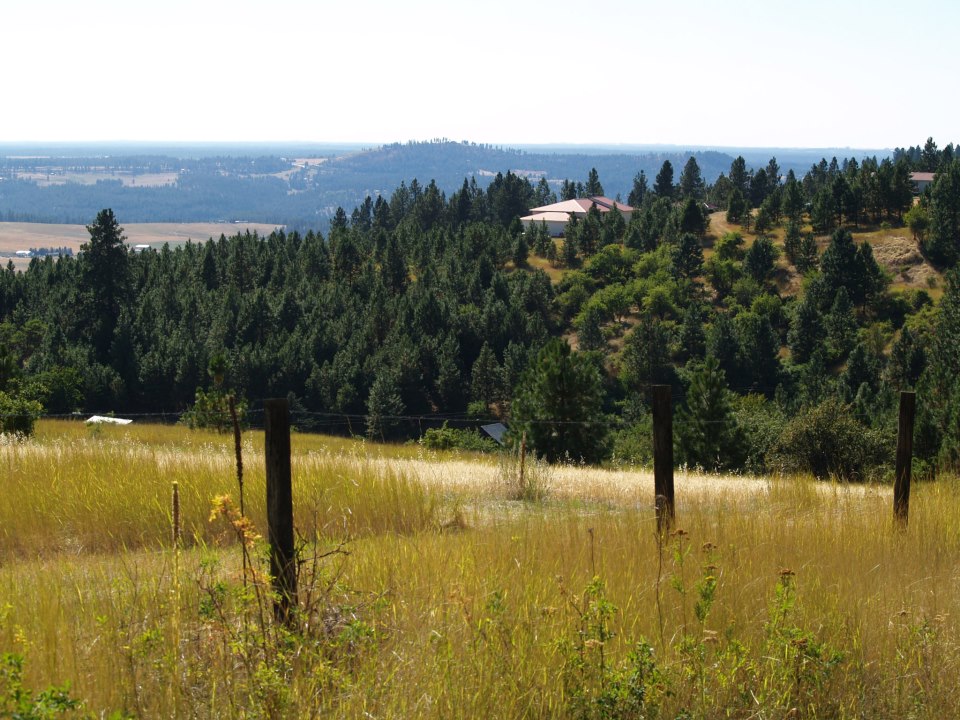
Don Quixote Face
Don Quixote Face in Washington has 9 climbing routes with 6 difficulty grades, offering mixed, sport, and trad styles.
- 9 routes
- 5.7 – 5.12d
- Trad · Mixed · Sport
Best time to visit Don Quixote Face
Best months: April–June and September–October. Best months have typical highs of 55–85 °F, lows of 30 °F or warmer (32 °F where the station doesn't record snow), at most one snowy day and no more than 12 wet days.
Jan
38° / 26°
14 wet
Feb
42° / 27°
12 wet
Mar
51° / 32°
13 wet
Apr
60° / 37°
11 wet
May
70° / 44°
10 wet
Jun
76° / 50°
8 wet
Jul
87° / 56°
4 wet
Aug
86° / 55°
3 wet
Sep
76° / 47°
6 wet
Oct
60° / 38°
10 wet
Nov
45° / 31°
13 wet
Dec
37° / 26°
15 wet
Typical high / low (°F) and days with rain or snow, 1991–2020. Measured at Spokane Felts Fld, WA, 0.4 mi away at 1,953 ft. This station doesn't record snowfall. Source: NOAA NCEI U.S. Climate Normals 1991–2020.
Don Quixote Face is a climbing area in Washington, sitting about a mile from the town of Parkwater. It's part of a cluster of climbing spots in the area, with Other Rocks, Secondary Face and UFO Wall all within a tenth of a mile. That makes it easy to link with other routes in a single visit. The climbing here runs the gamut from sport to trad and mixed styles, with the YDS grades ranging from 5.7 up to 5.12d. The hardest route is Synchronicity, a trad climb at 5.12d, and the easiest is Inside Corner, a sport route at 5.7. The trad route Don Quixote sits at 5.10d, and Western Front is a mixed climb at the same grade. Summer is the most comfortable time to visit. Typical averages from a nearby weather station in Spokane put July highs around 87°F and August around 86°F, with only three or four wet days a month. Winter is cold and wet, with highs in the upper 30s and lows near 26°F in December and January. The Granite Trail and Tire Trail both start within a mile. Paddlers can find Deadman Creek about 9.5 miles away.
Routes (9)
Keep exploring — more climbs worth the drive
 Photo: waterarchives, CC BY-SA 2.0 (via Flickr)
Outback Wall
~29 min drive
Outback Wall in Idaho has 12 climbing routes across 8 grades, offering sport and trad options.
Photo: waterarchives, CC BY-SA 2.0 (via Flickr)Death Fall Wall
~30 min drive
Idaho climbing crag with varied routes and natural appeal.
Photo: waterarchives, CC BY-SA 2.0 (via Flickr)Rocky Wall
~30 min drive
Rocky Wall in Idaho has 7 sport climbing routes with 6 difficulty grades.
Main Wall
~0 min drive
Main Wall in Washington has 36 climbing routes with 18 difficulty grades.
Minnehaha
~0 min drive
Minnehaha in Washington has 13 climbing routes across 9 grades, featuring bouldering pads and sport climbing.
Lichen Rock
~0 min drive
Lichen Rock is a 5-route bouldering crag in Washington.
Hallway Boulder
~0 min drive
6 bouldering routes at Hallway Boulder in Washington, ranging across 5 difficulty grades.
Billy Wall
~4 min drive
Billy Wall is a Washington climbing area with 9 sport routes spanning 7 difficulty grades.
Main Wall
~5 min drive
Main Wall in Washington has 31 climbing routes across 17 grades, offering bouldering and sport styles.
Little Dishman and Tiny Dishman
~5 min drive
Little Dishman and Tiny Dishman in Washington has 19 climbing routes.