

El Morro RV Park & Cabins
Hiking business nearby (~29 mi away) — hasn't claimed their Roamze page yet
Lava Falls Trail Stop #2
Free — you'll pick up right here.
Watch this trail
Sign up to watch it — saving subscribes you to gate, closure and report changes.
New Mexico
We won't guess. Here is exactly what we do and don't know.
What we do know
Inside El Malpais National Monument
National Park unit boundary is mapped — agency alerts for it feed this page automatically.
Boundary data
What's missing
No access route mapped
We don't yet know which road reaches this trailhead, so we can't tell you if it's gated.
Nobody's filed a report here yet — be the first.
Lava Falls Trail Stop #2
AI-suggested draft · review before you go
No elevation data on file for this trail.
No permit or access details on file for this trail — check with the local land manager before you go.
<h2>The Ground is Lava</h2> <p>Flowing lava creates different features and textures as it flows over, around, and under older, cooler lava flows. Gas bubbles trapped in the rock caused some areas to expand upward and outward. The speed and temperature of other lava flows caused surfaces to fold, fall, and fill in empty gaps. New lava can break through semi-solid rock, oozing across the path of <br /> <br /> As the lava completely cooled, it shrank or contracted, cracked, and broke apart. Although the cooling process is over, today's features still tell the story of how the ground was shaped by lava.<br /> <br /> See how many lava features you can find while you hike the trail today: </p> <ul> <li> <p>Squeeze-ups: Small mounds or thin ridges of lava from when still-hot lava was pushed up between two pieces of already-cooled lava. </p> </li> <li> <p>Lava Toes: These lobe-shaped features form when molten lava breaks out of semi-hardened rock. </p> </li> <li> <p>Ropy pahoehoe: Pronounced puh-HOY-hoy, this formation looks liike lines of rope lying next to each other. Pahoehoe forms when slow-moving lava folds against itself. You can re-create pahoehoe at home by laying a towel or blanket on a smooth surface and pushing it from one side. </p> </li> <li> <p>Pressure ridges: Large, rounded ridges of formed when sideways forces push pieces of cooled lava against each other. These pieces, sometimes large slabs, collided into each other, sometimes forcing each other upwards. Cracks are common directly down the middle from where these collisions took place. </p> </li> <li> <p>Collapse features: Sometimes called sinkholes, collapse features form when lava cools, shrinks, and breaks down into an opening below the surface of the cooled lava.</p> </li> </ul> <p>Now that you know what to look for, see how many features you can identify as you continue down the trail! </p>
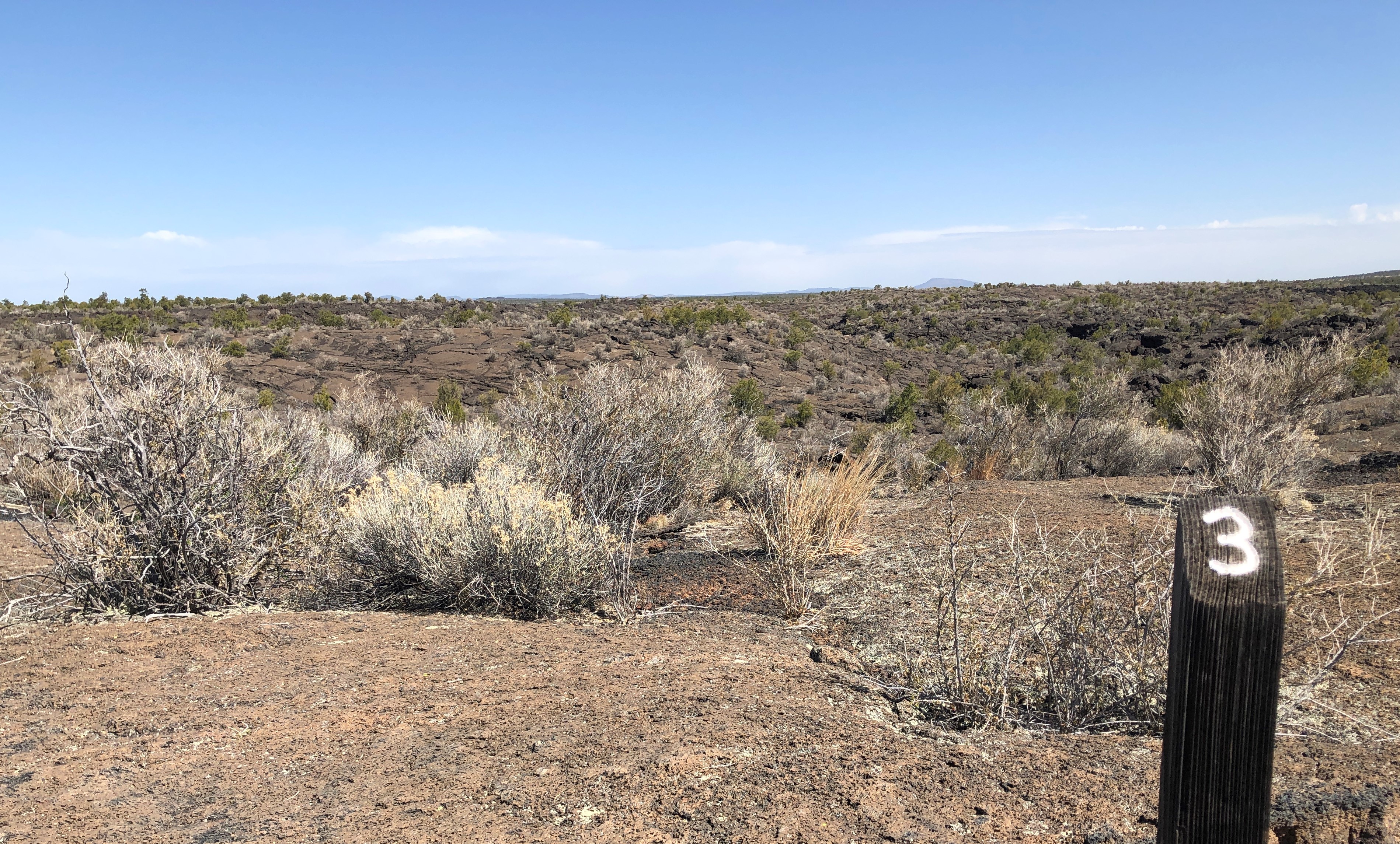
Lava Falls Trail Stop #3
~0 min drive
<h2>McCartys Crater </h2> <p>All lava erupts from somewhere, and in the case of the lava you are standing on, it erupted erupted from McCartys Crater. The crater had been a cinder cone volcano, which is the same feature as El Calderon within El Malpais and Wizard Island in the…
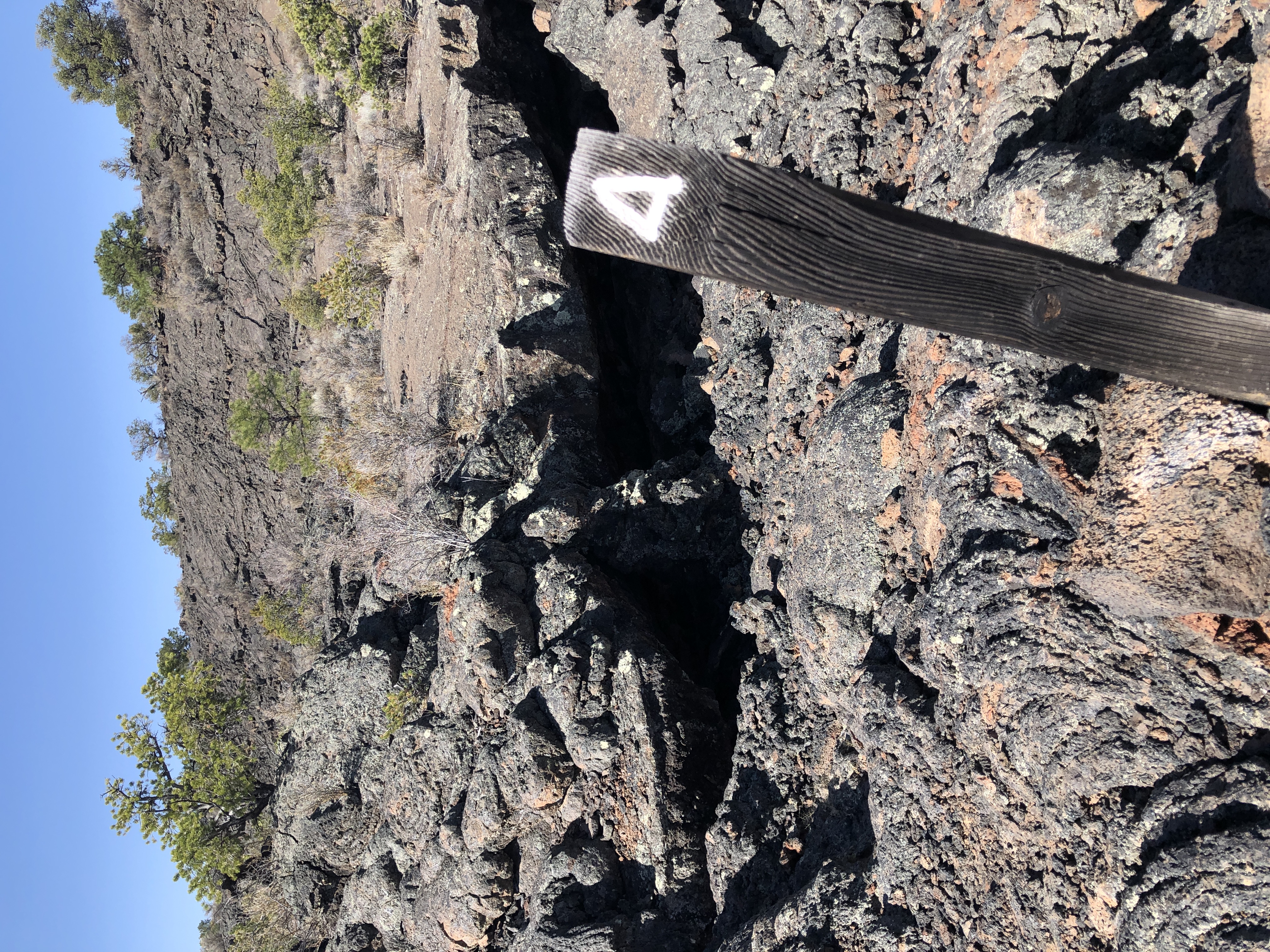
Lava Falls Trail Stop #4
~0 min drive
<h2>Lava Fall</h2> <p>Most lava is liquid during a Hawaiian-style volcanic eruption. Since liquid follows the path of least resistance--which is typically downhill--you are standing slightly downhill from McCartys Crater. <br /> <br /> Like any liquid, melted lava rock flows…
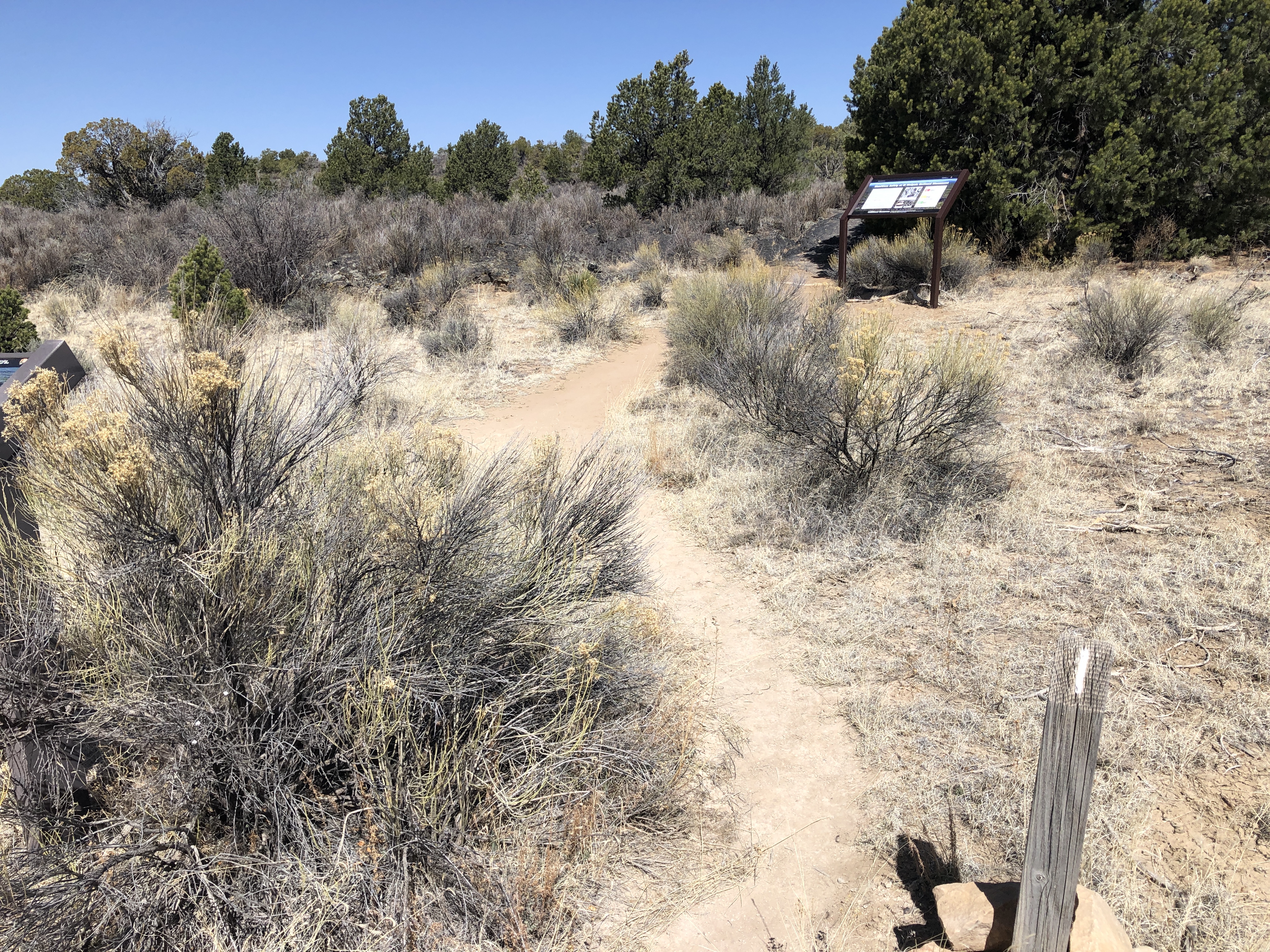
Lava Falls Trail Stop #1
~0 min drive
<h2>Hawaiian-Style in the High Desert</h2> <p>You will be hiking on is some of the youngest, if not the youngest, lava in the region from this point on. The McCartys lava erupted between 1,200 and 3,900 years ago. When compared to the Cretaceous-era sandstone cliffs you drov…
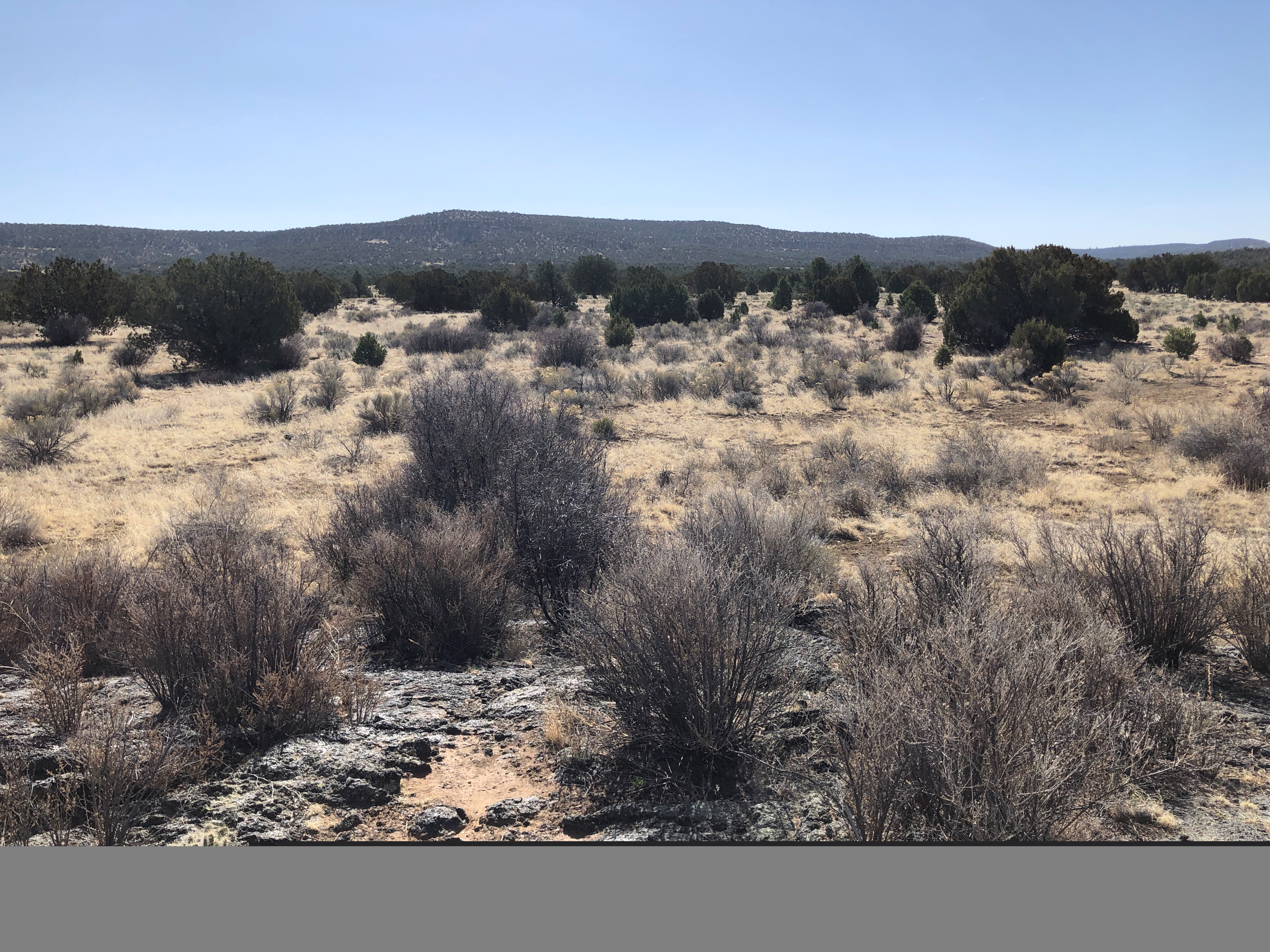
Lava Falls Trail Stop #9
~0 min drive
<h2>Connections Over Time</h2> <p><br /> The McCartys flow may be young by geologic standards, but it is old enough to be included in human history. It is very likely that ancestors of today's Acoma Pueblo, Zuni Pueblo, and Navajo Nation all witnessed the McCartys eruption.<br…
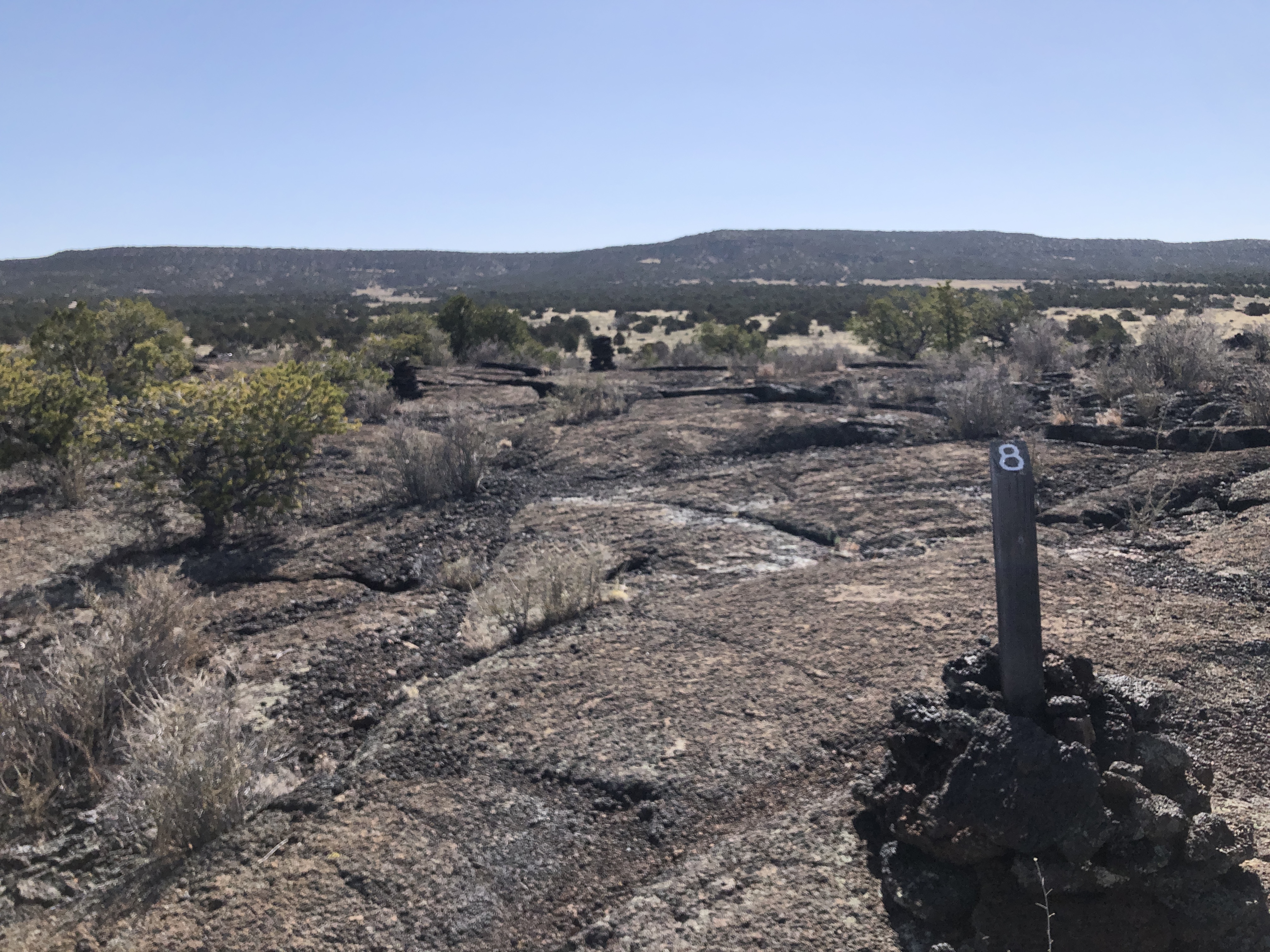
Lava Falls Trail Stop #8
~0 min drive
<h2>Wilderness: A Tricky Value to Define</h2> <p><br /> Most of El Malpais National Monument, including this trail, is managed as wilderness. Managing wilderness is a balance between maintaining an untrammeled and undeveloped area in a way that prevents future damage while als…
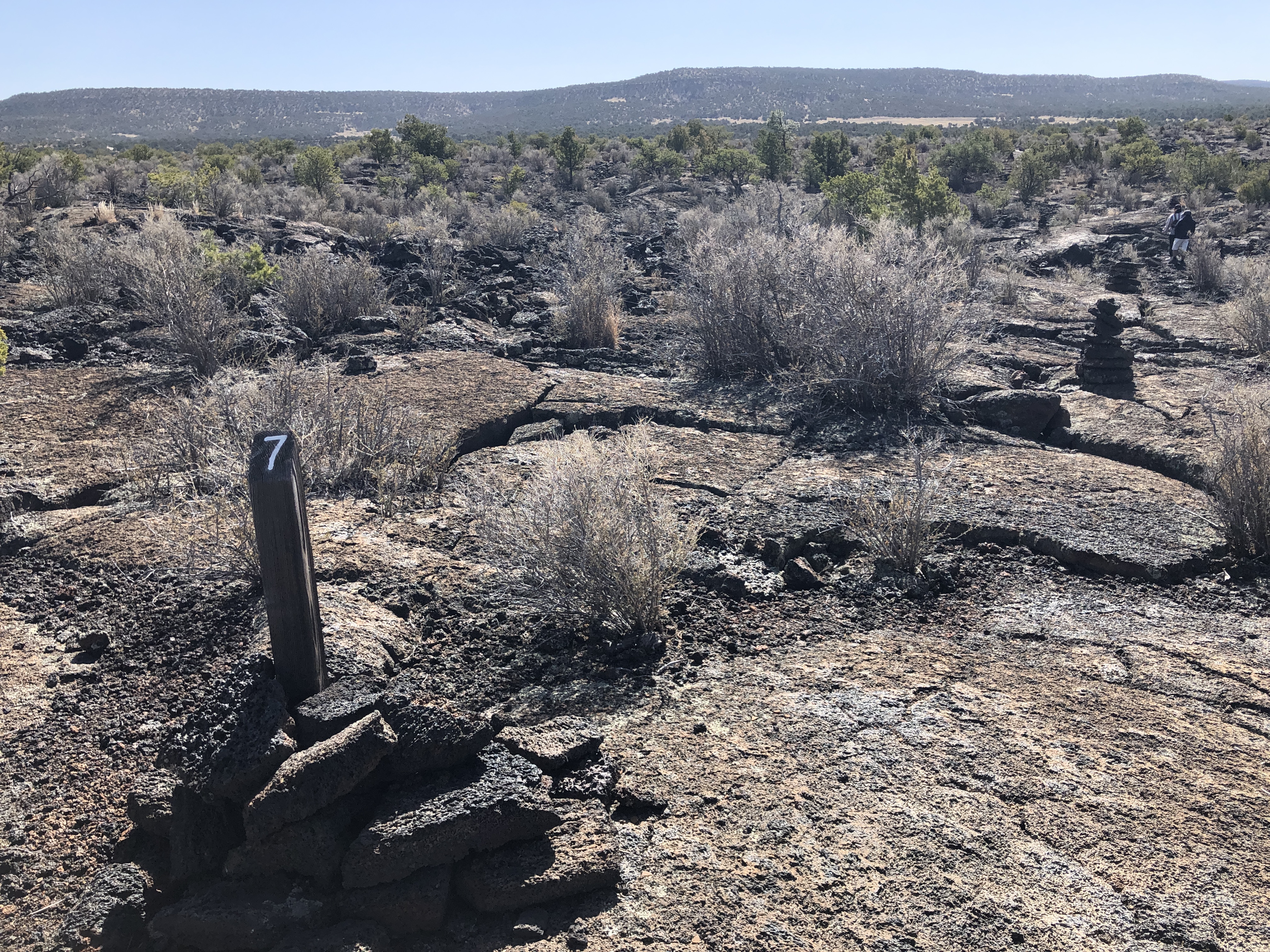
Lava Falls Trail Stop #7
~0 min drive
<h2>Pockets of Life</h2> <p>Lava does not always stay the same when it stops moving. As lava is exposed to outside air, it begins to cool. As lava cools, it contracts or shrinks, cracks, and sometimes falls apart. Rock may break apart and fall if there is nothing below a rock…
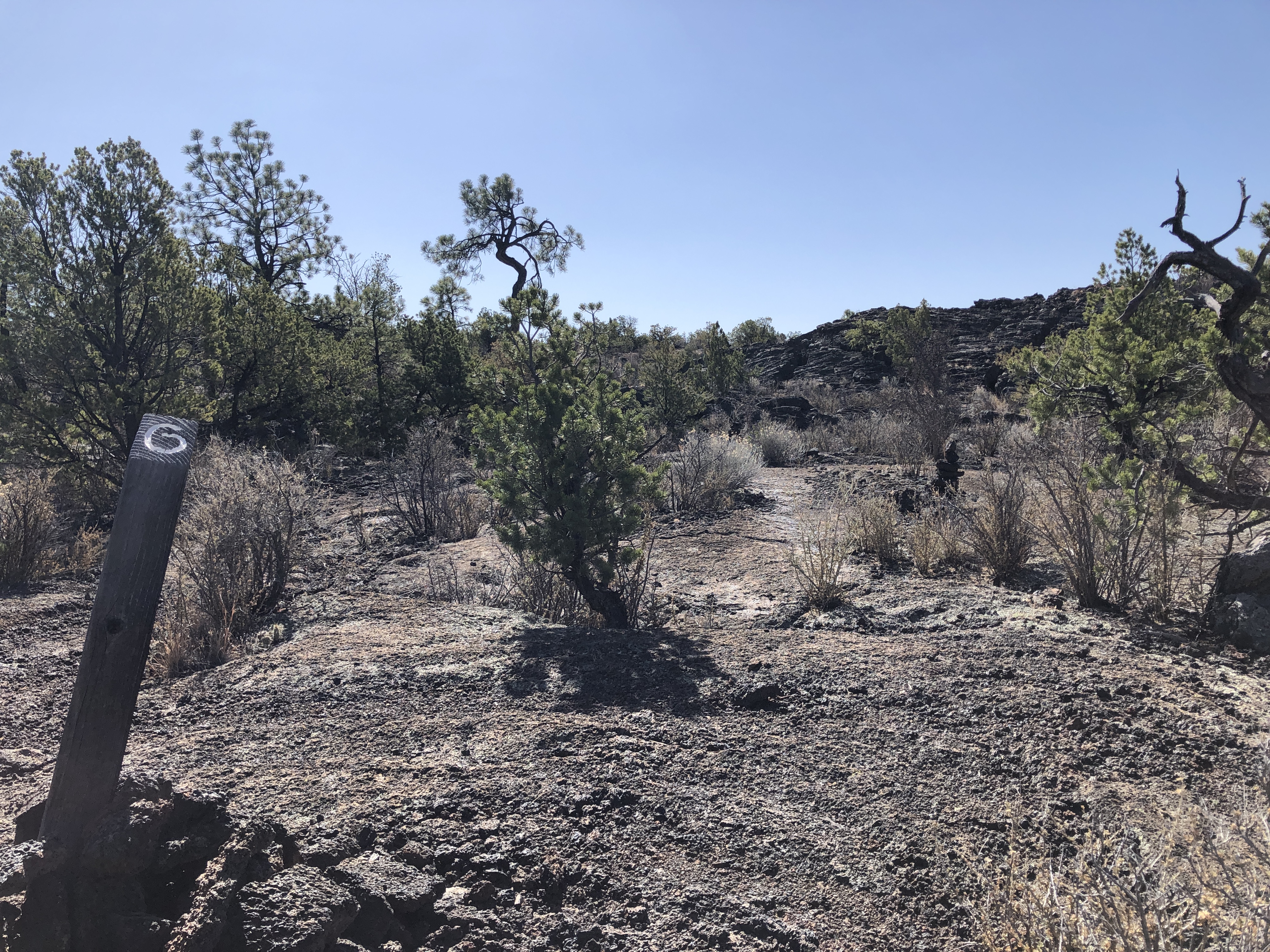
Lava Falls Trail Stop #6
~0 min drive
<p>Although lava rock does not have many nutrients for plants to use, the McCartys lava creates a reservoir of precious water plants need to survive. Water trickles through the cracks of the rock and collects beneath the lava while still protected from the intense sunlight and…
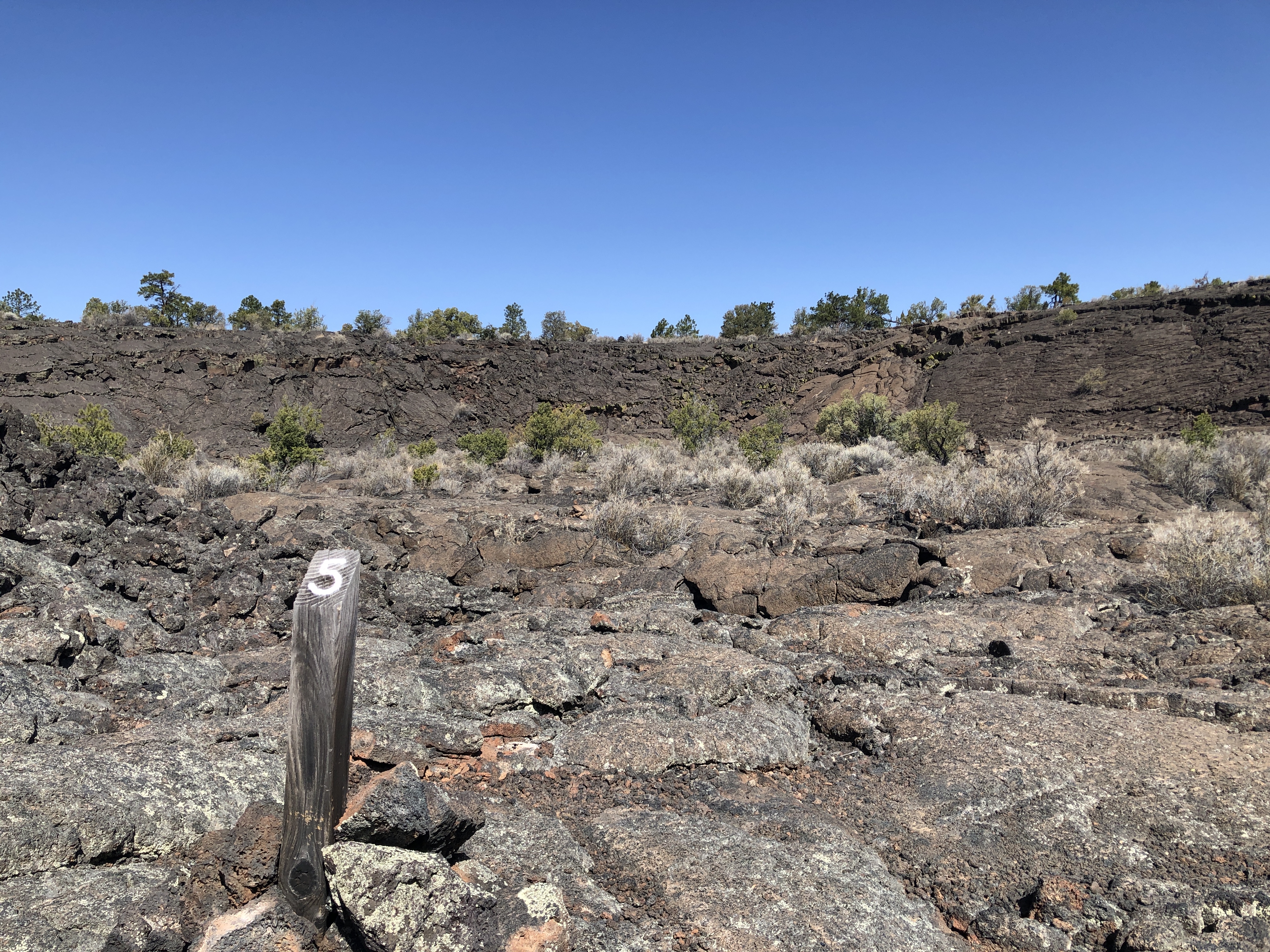
Lava Falls Trail Stop #5
~1 min drive
<h2>Hot Gases Rise</h2> <p>Although you are slightly downhill from McCartys Crater, the inflation ridges around you might look like the opposite. However, these ridges formed from the lava rising up, rather than tall, thick lava flows flowing down. <br /> <br /> Lava can hold…
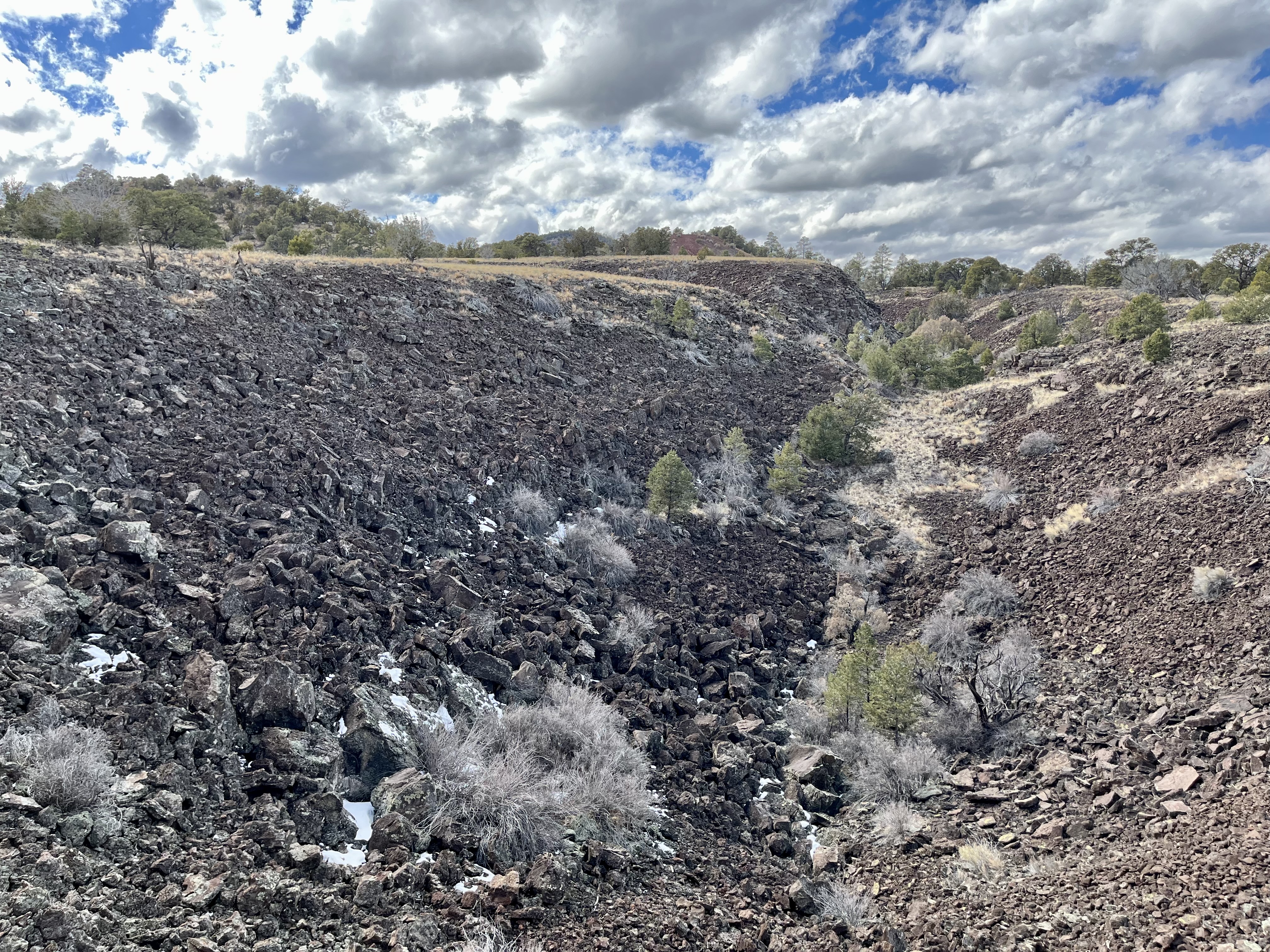
El Calderon Lava Trench
~26 min drive
<p>Along the trail to the cinder cone, look for a deep, winding trench that begins at the mouth of the cinder cone volcano up ahead. This trench was created by a river of lava that breached the side of the cinder cone and swept cinder and lava several miles to the southeast. L…
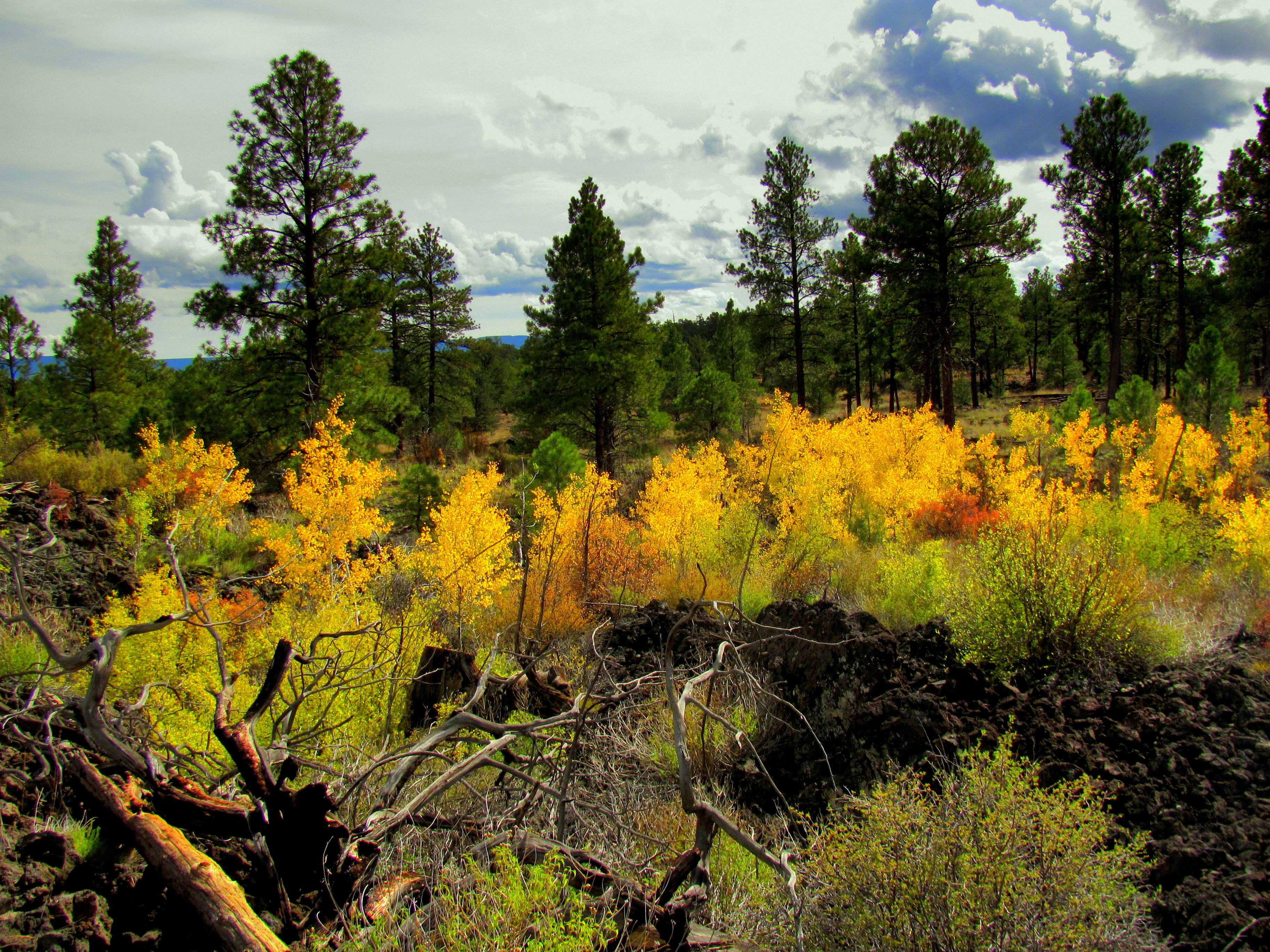
Life on the Edge
~27 min drive
Lava, though it may seem harsh and inhospitable, can create some unusual habitats. One of these habitats is actually found just along the edges of lava flows. Known as the "edge effect," dense vegetation seems to thrive along the lava's edge. Scientists hypothesize that rainwa…
Local operatorsoffering guided trips. You book directly with them — Roamze doesn’t take a cut.
El Morro RV Park & Cabins
Hiking business nearby (~29 mi away) — hasn't claimed their Roamze page yet
Pie Town RV Park
Hiking business nearby (~32 mi away) — hasn't claimed their Roamze page yet