Brush Lake
- 1.0 mi
- round trip
- 86 ft
- climb
- 7,203 ft
- high point
- Out and back
- route
- Jun–Aug
- best months
Is Brush Lake open right now?
Alert in the area
The Forest Service lists 5 alerts for Payette National Forest.
Over Snow Vehicle Closure
Agency alert covering Payette National Forest · Order 0412-638 · USFS · Payette National Forest
Brundage Mountain Resort Snowcat Route Closure
Agency alert covering Payette National Forest · Order 0412-637 · USFS · Payette National Forest
Lost Valley Log Hauling
Agency alert covering Payette National Forest · USFS · Payette National Forest
Granite Mountain Over Snow Vehicle Closure
Agency alert covering Payette National Forest · Order 0412-635 · USFS · Payette National Forest
Gordon Titus Upper Elevation Parking Lot Winter Restrictions
Agency alert covering Payette National Forest · Order 0412-543 · USFS · Payette National Forest
As of · Source: USFS · Payette National Forest. Agencies don't list every closure — check before you go.
Brush Lake is an easy out-and-back hike in Idaho's Payette National Forest, on the McCall Ranger District. The trail is about a mile long, rising about 86 feet from a low point of 7,122 feet to a high of 7,203 feet. It is managed by the Forest Service and is open from May 1 to October 1. The route is natural-surfaced and allows horses and bikes. It is not an accessible trail. Summer is the most comfortable time to go. Typical July and August highs reach about 79°F with lows in the mid-30s, based on averages from a nearby weather station at Warren, Idaho. That station sits roughly 1,300 feet lower, so temperatures on the trail run cooler. Nearby options include the Pearl Lake Trail, about 1.7 miles away, and the North Fork Payette River, about 2.8 miles away. Upper Payette Lake Campground is about 5 miles off, and the McCall Area climbing area is about 8 miles away.
Local outfitters
- Black Bear RV Park12 mi away
- Arrowhead RV Park38 mi away
Not on Roamze yet. Their page has how to reach them.
Best time to go · Jun–Aug
Best time to visit Brush Lake
Best months: June–August. Best months have typical highs of 55–85 °F, lows of 30 °F or warmer (32 °F where the station doesn't record snow), at most one snowy day and no more than 12 wet days.
Jan
35° / 7°
Feb
41° / 7°
Mar
46° / 17°
Apr
50° / 20°
May
59° / 27°
Jun
68° / 34°
Jul
79° / 37°
Aug
79° / 35°
Sep
69° / 30°
Oct
56° / 23°
Nov
41° / 16°
Dec
34° / 9°
Typical high / low (°F) and days with rain or snow, 1991–2020. Measured at Warren, ID, 21.3 mi away at 5,907 ft. The station sits about 1,300 ft lower than this place, so expect it a little cooler here. This station doesn't record snowfall. Source: NOAA NCEI U.S. Climate Normals 1991–2020.
Keep exploring — more trails worth the drive
 Photo: waterarchives, CC BY-SA 2.0 (via Flickr)
Ridgeline Trail
~14 min drive
0.90-mile lollipop trail in Idaho with 230 ft elevation gain.
HIKE
Loon Creek
~6 min drive
19.84-mile out-and-back trail in Idaho with 824 ft gain.
HIKE
National Forest Development 104 Pack Trail
~8 min drive
4.14-mile out-and-back trail in Idaho with 2,350 ft elevation gain and loss.
HIKE
Fall Creek Trail
~10 min drive
11.72-mile out-and-back trail in Idaho with 4,775 ft elevation gain and loss.
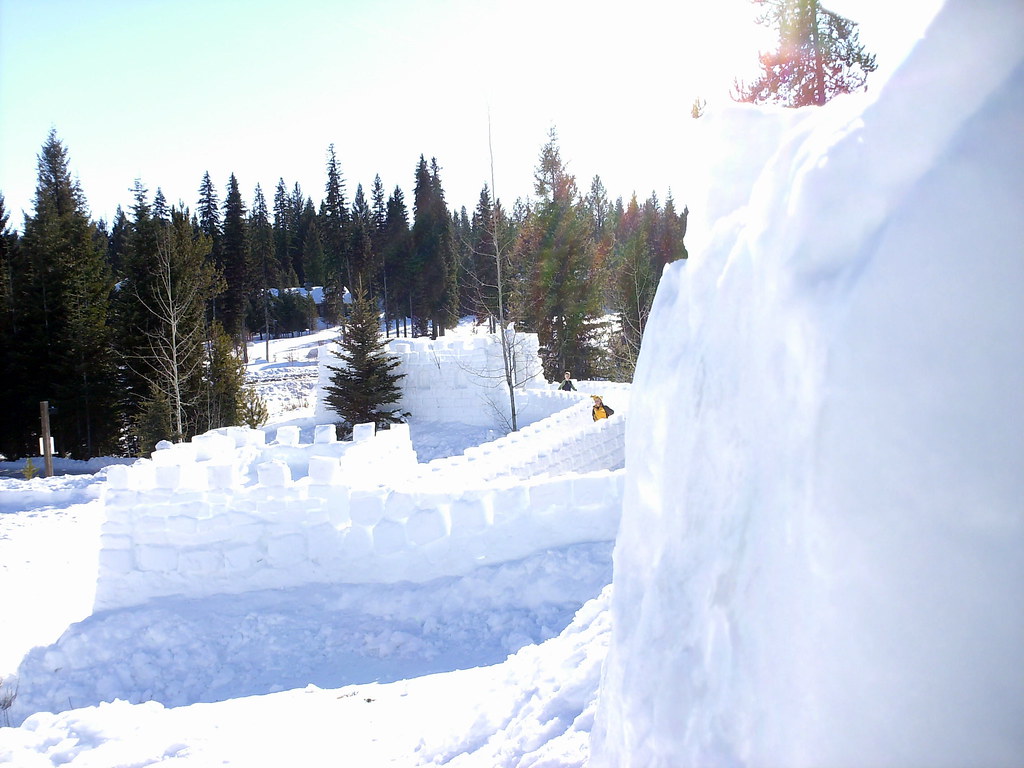 Photo: Stupid Dingo, CC BY 2.0 (via Flickr)
Peninsula Trail
~16 min drive
0.78-mile out-and-back hike in Idaho with 110 ft of elevation gain.
HIKE
Box Lake
~8 min drive
8.06-mile out-and-back trail in Idaho with 1,760 ft of elevation gain.
HIKE
Fall Creek Saddle
~10 min drive
1.97-mile out-and-back trail at Fall Creek Saddle in Idaho with 110 ft elevation gain.
HIKE
Goose Creek Trail
~12 min drive
10.97-mile out-and-back hike in Idaho with 623 ft gain and 2,129 ft loss.
HIKE
Pearl Lake Trail
~3 min drive
0.98-mile out-and-back hike to Pearl Lake in Idaho with 260 ft of elevation gain.
HIKE
Hum Lake
~10 min drive
21.58-mile out-and-back trail to Hum Lake in Idaho with 2,894 ft elevation gain.

