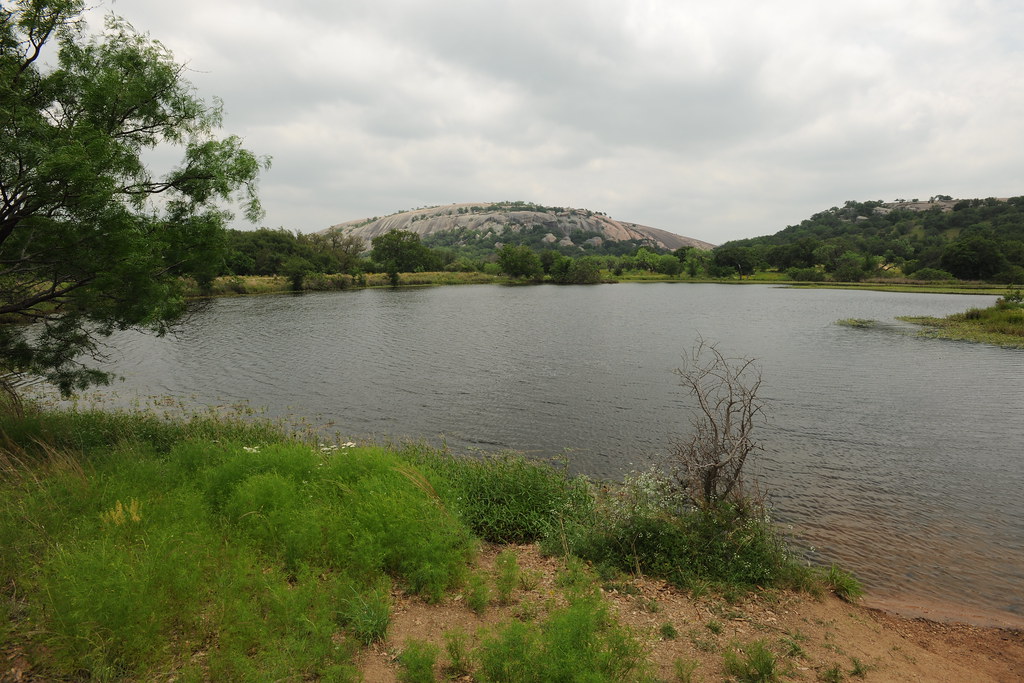
The Kingdom
11 climbing routes in Texas spanning 7 difficulty grades, featuring bouldering pads and trad.
 Photo: gosdin, CC0 (via Wikimedia Commons)
- 11 routes
- V0 – V3
- Bouldering · Trad
Best time to visit The Kingdom
Best months: October–May. Best months have typical highs of 55–85 °F, lows of 30 °F or warmer (32 °F where the station doesn't record snow), at most one snowy day and no more than 12 wet days.
Jan
60° / 34°
7 wet
Feb
64° / 38°
7 wet
Mar
71° / 46°
8 wet
Apr
78° / 53°
7 wet
May
84° / 63°
8 wet
Jun
90° / 69°
6 wet
Jul
93° / 71°
5 wet
Aug
94° / 70°
5 wet
Sep
88° / 64°
6 wet
Oct
79° / 54°
7 wet
Nov
68° / 44°
7 wet
Dec
61° / 36°
7 wet
Typical high / low (°F) and days with rain or snow, 1991–2020. Measured at Fredericksburg, TX, 18.7 mi away at 1,685 ft. This station doesn't record snowfall. Source: NOAA NCEI U.S. Climate Normals 1991–2020.
The Kingdom is a climbing area within Enchanted Rock State Natural Area in Texas, managed by State Park and Recreation. It sits among several other climbing spots, including Sci-Fi wall, Solo Boulder and Kingdom of Zilch, all about 0.1 mile away, and the Interpretive Loop hike, also about 0.1 mile off. The climbing here is mostly bouldering, with 10 boulder routes and one trad route among the 11 listed. The boulders run from V0 to V3 on the V scale, with the hardest being Fatman in Paradise at V3. The trad route is the only one outside that range. Spring and fall are the most comfortable times to visit. Typical averages from a nearby weather station in Fredericksburg show April highs around 78°F and October highs around 79°F, while July and August average in the low 90s. For more time on foot, the Summit Trail is about 0.2 mile away and the Connecting Trail about 0.3 mile. Paddlers can find Sandy Creek and Hickory Creek, both canoeing spots, roughly 8 miles away.
Routes (11)
Keep exploring — more climbs worth the drive
 Photo: Chasqui (Luis Tamayo), CC BY-SA 2.0 (via Flickr)
The Burbs
~0 min drive
Burbs is a Texas climbing crag with 6 routes across 5 grades.
 Photo: David Leo Veksler, CC BY-SA 2.0 (via Flickr)
Redtail Rocks
~0 min drive
Redtail Rocks in Texas has 5 bouldering routes across 4 grades.
Photo: David Leo Veksler, CC BY-SA 2.0 (via Flickr)Flag Pole
~0 min drive
Flag Pole is a bouldering crag in Texas with 1 route.
 Photo: David Leo Veksler, CC BY-SA 2.0 (via Flickr)
The Sopwhip Boulders
~1 min drive
6-route bouldering area in Texas with mixed and trad climbing.
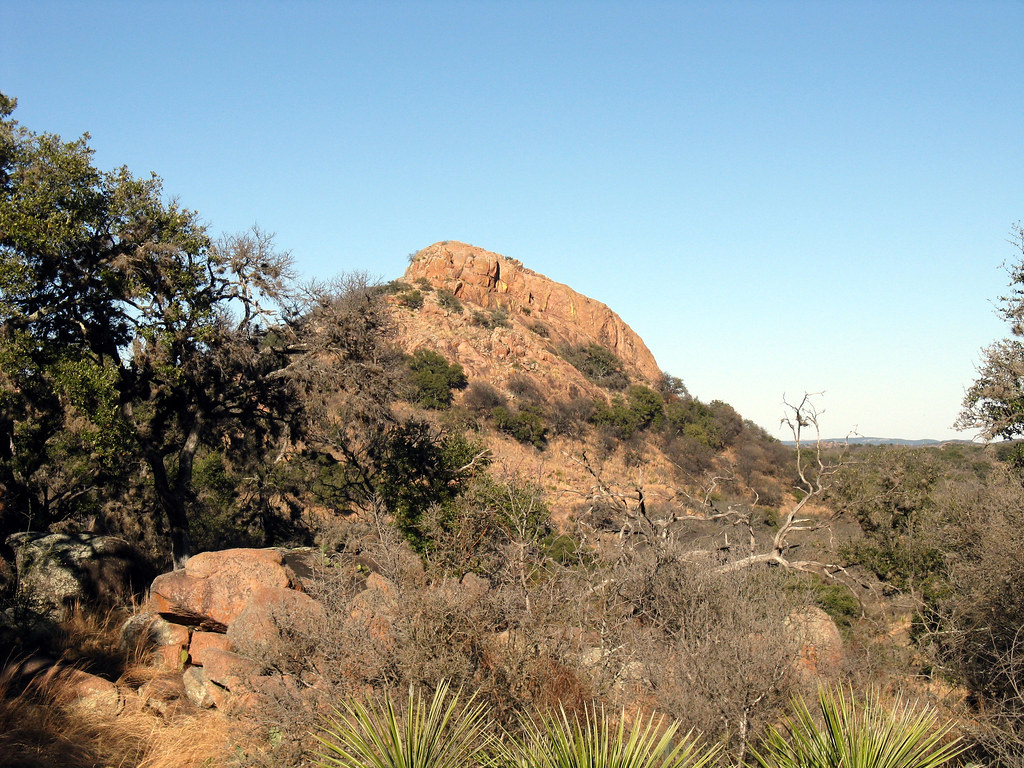 Photo: Joe Passe, CC BY-SA 2.0 (via Flickr)
Carnivore Boulders
~1 min drive
Carnivore Boulders in Texas has 21 routes with bouldering pads, mixed, and trad.
Photo: David Leo Veksler, CC BY-SA 2.0 (via Flickr)Enchanted Rock State Natural Area
~1 min drive
Enchanted Rock State Natural Area in Texas has 5 bouldering routes.
 Photo: Thank You (25 Millions ) views, CC BY 2.0 (via Flickr)
The Frog
~1 min drive
7-route climbing crag in Texas with sport and trad options.
 Photo: David Leo Veksler, CC BY-SA 2.0 (via Flickr)
Main Dome South
~1 min drive
Main Dome South in Texas has 14 climbing routes on 11 difficulty grades.
 Photo: Jujutacular, CC BY 3.0 (via Wikimedia Commons)
The Dairy Farm / Frog Pond Boulders
~1 min drive
34 bouldering routes in Texas with 12 difficulty grades.
 Photo: Thank You (25 Millions ) views, CC BY 2.0 (via Flickr)
Orange Peel Area
~1 min drive
Orange Peel Area in Texas has 10 mixed climbing routes spanning 10 difficulty grades.
Also worth it near here