Aguirre Bouldering
Aguirre Bouldering in New Mexico has 32 bouldering routes spanning 14 difficulty grades.
 Photo: Alex Abair, CC BY 4.0 (via Wikimedia Commons)
- 32 routes
- V0+ – V7
- Bouldering
Best time to visit Aguirre Bouldering
Best months: March–May and October. Best months have typical highs of 55–85 °F, lows of 30 °F or warmer (32 °F where the station doesn't record snow), at most one snowy day and no more than 12 wet days.
Jan
56° / 23°
3 wet
Feb
62° / 26°
2 wet
Mar
69° / 32°
1 wet
Apr
77° / 39°
1 wet
May
85° / 47°
3 wet
Jun
95° / 59°
3 wet
Jul
94° / 66°
9 wet
Aug
91° / 64°
9 wet
Sep
86° / 56°
5 wet
Oct
77° / 42°
3 wet
Nov
66° / 31°
3 wet
Dec
55° / 23°
4 wet
Typical high / low (°F) and days with rain or snow, 1991–2020. Measured at Las Cruces 20 N, NM, 20 mi away at 4,327 ft. The station sits about 1,300 ft lower than this place, so expect it a little cooler here. This station doesn't record snowfall. Source: NOAA NCEI U.S. Climate Normals 1991–2020.
Aguirre Bouldering is a bouldering area in the Organ Mountains Wilderness of southern New Mexico, on land managed by the Bureau of Land Management's Las Cruces District Office. It sits within the wilderness, about 0.2 miles from Aguirre Spring Recreation Area and Campground and the Indian Hollow Trail, and it makes a natural anchor for a day of climbing and hiking in this corner of the Organ Mountains. The area holds 32 bouldering routes, all rated on the V scale from V0+ to V7, with the median grade around V4. The easiest is Ferngully at V0+, and the hardest is Corpseman at V7. Other named routes include Stream Slab at V1, Stoned Ape Theory at V3 and Anoxia at V5. Spring and fall are the most comfortable times to visit. Typical averages from a nearby weather station in Las Cruces show April and October highs around 77°F, while July and August average highs near 94°F and bring the most wet days of the year. That station sits about 1,300 feet lower than the bouldering area, so temperatures up high run cooler. The Flounder and Snake Den are other climbing areas within a third of a mile, and Pine Tree Loop offers a short hike.
Routes (32)
Anoxia Area(1)
Bar Boulder(3)
Cobbler's Knob(4)
Crowbar Boulder(1)
Ferngully Boulder(4)
Go for Broke(1)
Goblin Rocks(3)
Jungle Gym, The(1)
Koybo's Lerp(1)
Lowell's Block(1)
Modern Psychedelia Roof(4)
Solitude Hill(3)
Tony Bennett(2)
Vitruvian man(1)
Warm up Area(2)
Keep exploring — more climbs worth the drive
 Photo: uıɐɾ ʞ ʇɐɯɐs, CC BY-SA 2.0 (via Flickr)
Cactararium
~1 min drive
Cactararium is a New Mexico climbing area with 9 routes.
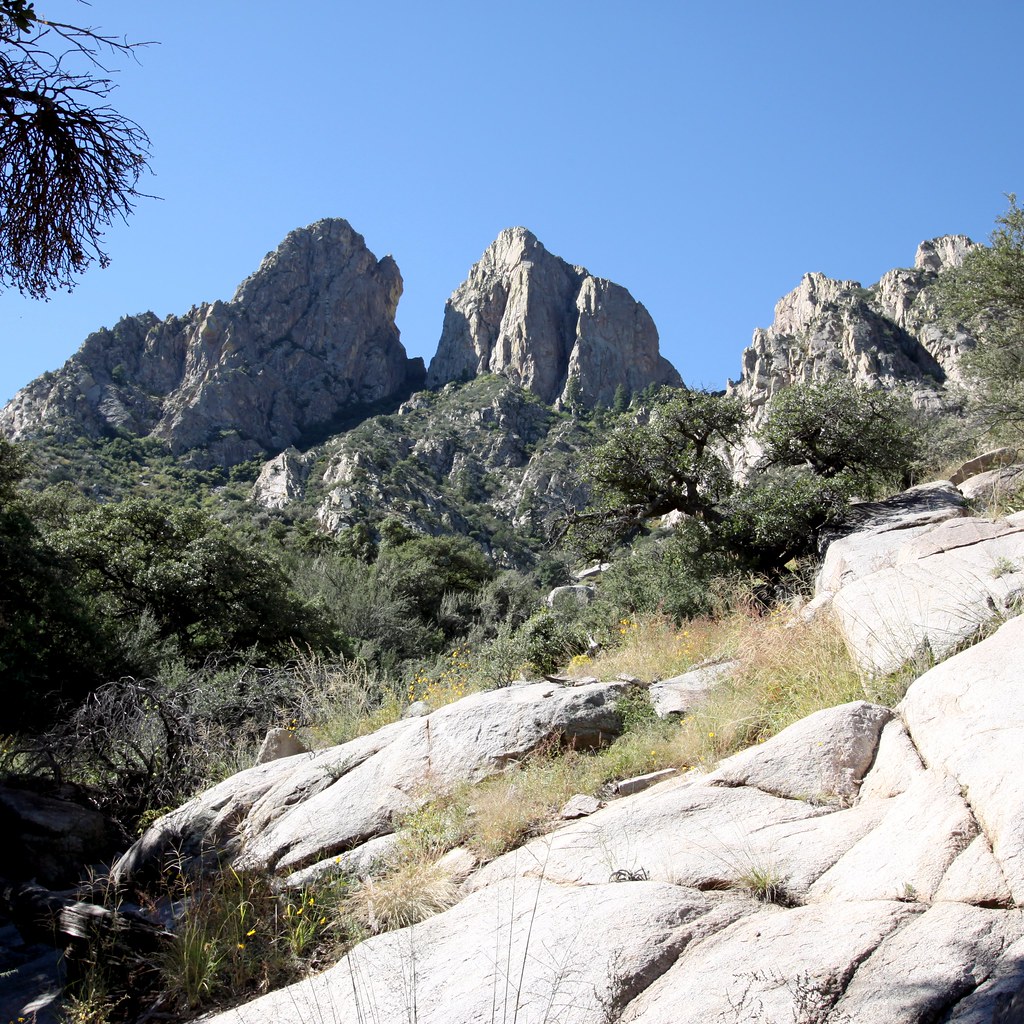 Photo: uıɐɾ ʞ ʇɐɯɐs, CC BY-SA 2.0 (via Flickr)
The Fin
~2 min drive
The Fin in New Mexico has 5 traditional climbing routes across 4 difficulty grades.
Photo: uıɐɾ ʞ ʇɐɯɐs, CC BY-SA 2.0 (via Flickr)North Rabbit Ear
~2 min drive
North Rabbit Ear is a New Mexico climbing crag with 17 traditional routes.
 Photo: uıɐɾ ʞ ʇɐɯɐs, CC BY-SA 2.0 (via Flickr)
The Low Horns
~2 min drive
Low Horns, The in New Mexico has 18 climbing routes with mixed and trad options.
 Photo: Patrick Alexander from Las Cruces, NM, CC0 (via Wikimedia Commons)
The High Horns
~3 min drive
Versatile New Mexico crag with climbing for multiple skill levels.
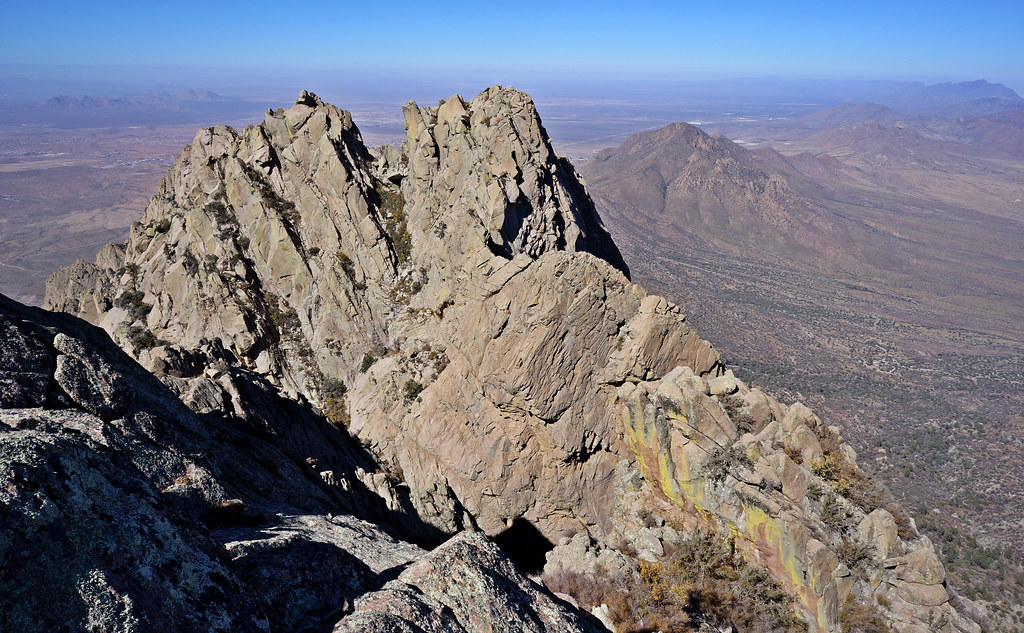 Photo: uıɐɾ ʞ ʇɐɯɐs, CC BY-SA 2.0 (via Flickr)
Little Squaretop Massif
~3 min drive
Little Squaretop Massif in New Mexico has 7 traditional climbing routes across 4 grades.
 Photo: uıɐɾ ʞ ʇɐɯɐs, CC BY-SA 2.0 (via Flickr)
Needle and Squaretops
~3 min drive
Needle and Squaretops in New Mexico has 12 climbing routes.
 Photo: uıɐɾ ʞ ʇɐɯɐs, CC BY-SA 2.0 (via Flickr)
Lesser Spire
~3 min drive
5 traditional climbing routes at Lesser Spire in New Mexico.
Photo: uıɐɾ ʞ ʇɐɯɐs, CC BY-SA 2.0 (via Flickr)Rib Cage
~3 min drive
Distinctive ribbed formations offering varied climbing in New Mexico's high desert.
 Photo: uıɐɾ ʞ ʇɐɯɐs, CC BY-SA 2.0 (via Flickr)
The Tooth
~3 min drive
Tooth, The in New Mexico has 8 climbing routes across 7 grades, offering sport and trad options.

