Hilltop Boulders
Hilltop Boulders in California has 9 bouldering routes across 6 grades.
 Photo: RuggyBearLA, CC BY-SA 2.0 (via Flickr)
- 9 routes
- V0 – V7
- Bouldering
Best time to visit Hilltop Boulders
Best months: March–June and September–November. Best months have typical highs of 55–85 °F, lows of 30 °F or warmer (32 °F where the station doesn't record snow), at most one snowy day and no more than 12 wet days.
Jan
53° / 39°
6 wet
Feb
54° / 39°
7 wet
Mar
57° / 41°
7 wet
Apr
62° / 43°
4 wet
May
69° / 47°
3 wet
Jun
79° / 55°
1 wet
Jul
86° / 62°
1 wet
Aug
86° / 62°
1 wet
Sep
81° / 57°
2 wet
Oct
71° / 50°
3 wet
Nov
60° / 43°
4 wet
Dec
52° / 38°
6 wet
Typical high / low (°F) and days with rain or snow, 1991–2020. Measured at Julian Cdf, CA, 12.7 mi away at 4,215 ft. The station sits about 1,000 ft higher than this place, so expect it a little warmer here. This station doesn't record snowfall. Source: NOAA NCEI U.S. Climate Normals 1991–2020.
Hilltop Boulders is a bouldering area in Anza-Borrego Desert State Park in California, managed by State Park and Recreation. It sits among a cluster of climbing areas, with Marvel at the View and Wakanda each about 0.2 miles away and Windy Boulders North about 0.3 miles off. The Culp Valley Trail starts about 0.4 miles away for anyone who wants to pair a climb with a walk. The boulders here are all boulder problems, and the routes run from V0 to V7 on the V scale. The Mexican Hat is a V3, and Steel Toe is the hardest at V7. The YDS grades for the area's single route, Can't Beat The View, sit at 5.6. Spring and fall are the most comfortable times to visit. Typical averages from a nearby weather station in Julian show May highs around 69°F and October highs around 71°F, while July and August average about 86°F. That station sits roughly 1,000 feet lower than the boulders, so temperatures on the rock run cooler.
Routes (9)
Boot, The(3)
Buena Vista Boulder(3)
Cracked Egg(2)
Mexican Hat Boulder, The(1)
Keep exploring — more climbs worth the drive
Photo: RuggyBearLA, CC BY-SA 2.0 (via Flickr)Marvel at the View area
~0 min drive
3 bouldering routes in California, grades range from moderate to advanced.
 Photo: RuggyBearLA, CC BY-SA 2.0 (via Flickr)
Windy Boulders North
~0 min drive
15 bouldering routes at Windy Boulders North in California.
 Photo: RuggyBearLA, CC BY-SA 2.0 (via Flickr)
Cvpc
~0 min drive
CVPC is a California climbing crag with 13 routes across 9 difficulty grades.
Photo: RuggyBearLA, CC BY-SA 2.0 (via Flickr)Center Mast
~0 min drive
Center Mast is a California climbing area with 6 routes on bouldering pads.
Photo: RuggyBearLA, CC BY-SA 2.0 (via Flickr)Windy Boulders
~1 min drive
Windy Boulders in California has 1 bouldering route rated 5.11a.
Photo: RuggyBearLA, CC BY-SA 2.0 (via Flickr)Culp Boulder
~1 min drive
Culp Boulder is a bouldering crag in California with 5 routes.
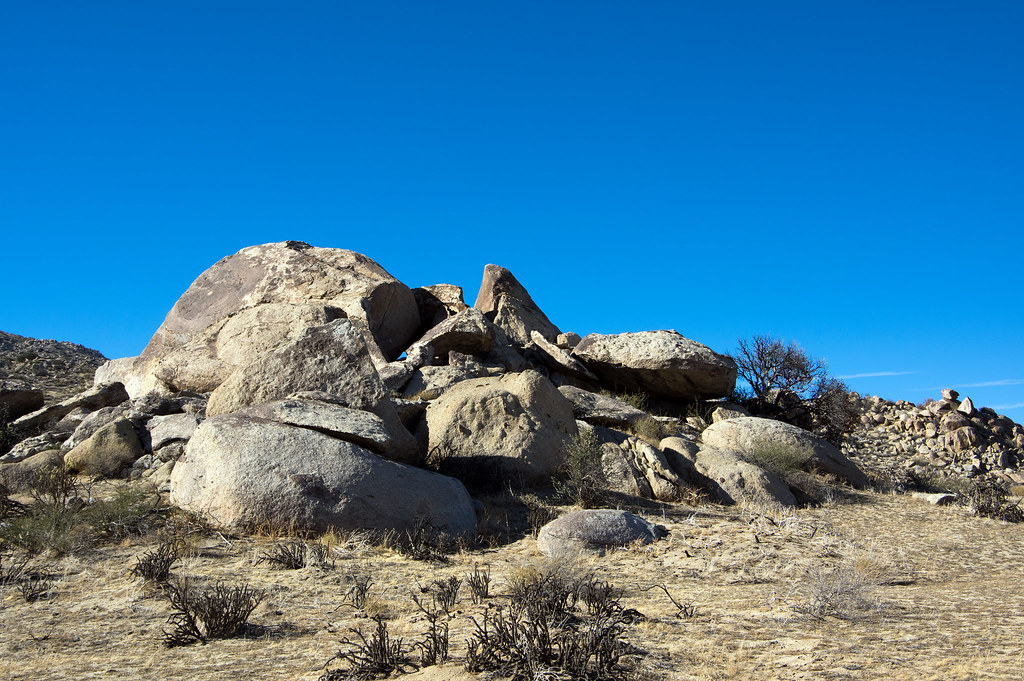 Photo: RuggyBearLA, CC BY-SA 2.0 (via Flickr)
Culp Valley
~1 min drive
Culp Valley in California has 17 climbing routes with 12 difficulty grades, featuring bouldering pads and sport climbing.
 Photo: RuggyBearLA, CC BY-SA 2.0 (via Flickr)
Cupeño Boulder
~1 min drive
Cupeño Boulder in California has 5 bouldering routes across 5 difficulty grades.
Photo: RuggyBearLA, CC BY-SA 2.0 (via Flickr)Culp Tower
~1 min drive
Culp Tower in California has 5 bouldering routes spanning 5 difficulty grades.
Photo: RuggyBearLA, CC BY-SA 2.0 (via Flickr)Windy Boulders South
~1 min drive
Windy Boulders South in California has 8 bouldering routes with 6 difficulty grades.

