Meadow Creek Campground
Campground
Campground · 3.0 mi from the trail
No closures listed
The National Park Service lists no closures for New River Gorge National Park and Preserve.
As of · Source: NPS · New River Gorge National Park and Preserve. Agencies don't list every closure — check before you go.
Sandstone Falls Takeout is a boat launch in New River Gorge National Park and Preserve in West Virginia, about 6 miles from the town of Hinton. The National Park Service manages the land. Fall is the most comfortable time to visit. Typical averages from the nearby Bluestone Lake weather station show October highs around 68°F with lows near 45°F, and September and October bring the fewest wet days of the year. The closest trails are the Island Loop Trail, about 0.7 miles away, and the Sandstone Falls Boardwalk, about 0.8 miles away. Paddlers can also look to Lick Creek, about 6 miles off, and anglers to the New River, about 8.5 miles away.
Meadow Creek Campground
Campground
China Star
Restaurant
 If it rainsCoal town guy, CC BY-SA 3.0 · Wikimedia Commons
Places © OpenStreetMap contributors · Photos: Coal town guy, CC BY-SA 3.0 (commons)
More in Fayetteville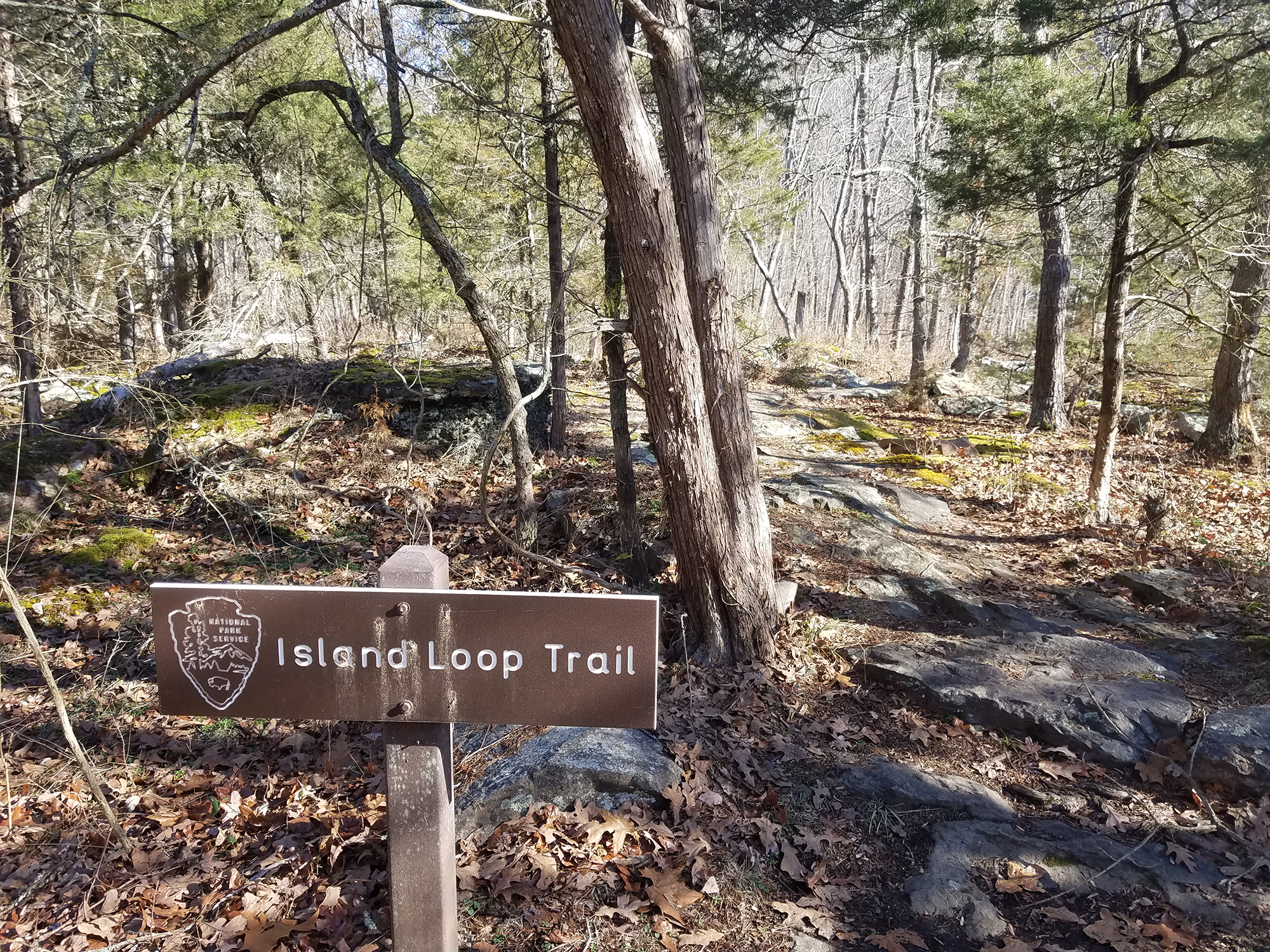 Island Loop TrailHikingPhoto: NPS/Dave Bieri0.7 mi
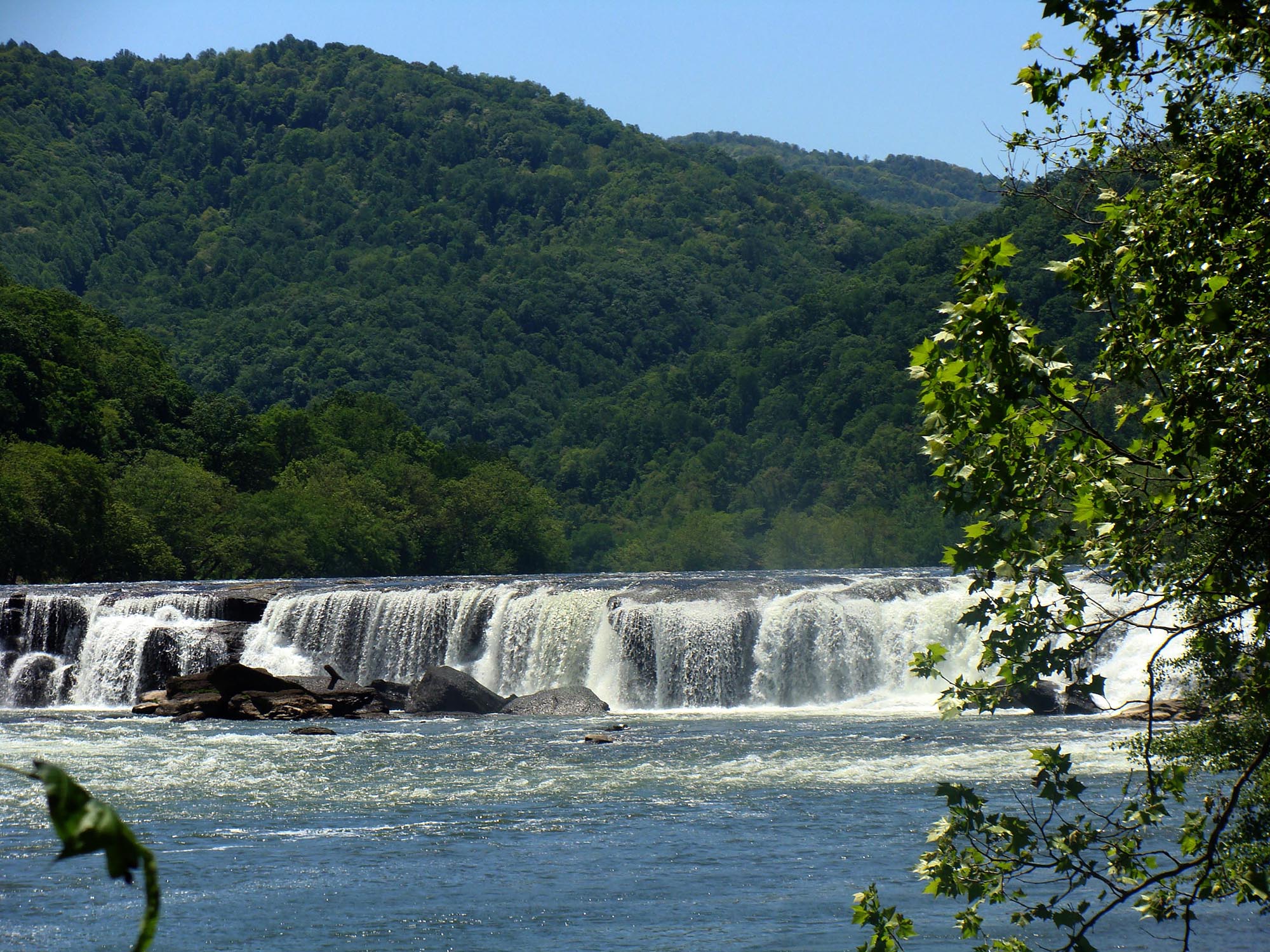 Sandstone Falls BoardwalkHikingPhoto: NPS/Dave Bieri0.8 mi
 Gwinn Ridge TrailHikingPhoto: Lee Paxton, CC BY-SA 4.0 (via Wikimedia Commons)1.5 mi
 Glade CreekCanoeingPhoto: Brian M. Powell (user Bitmapped on en.wikipedia), CC BY-SA 3.0 (via Wikimedia Commons)7.5 mi
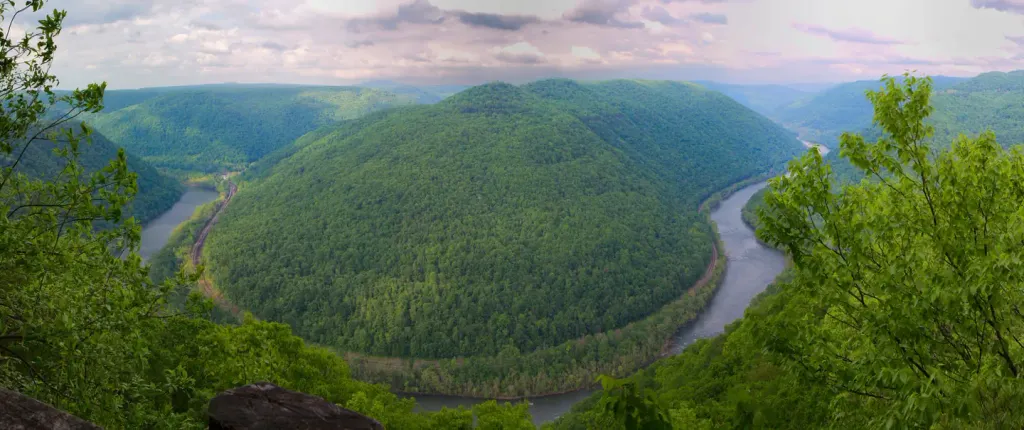 Grandview Playground ShelterCampingPhoto: Recreation.gov (RIDB) / public domain9.5 mi
Source: Roamze catalog (indexable pages within 10 miles, PostGIS distance)
Glade CreekCanoeing · ~13 min drivePhoto: Brian M. Powell (user Bitmapped on en.wikipedia), CC BY-SA 3.0 (via Wikimedia Commons) Greenbrier RiverCanoeing · ~37 min drivePhoto: Tim Kiser (w:User:Malepheasant), CC BY-SA 3.0 (via Wikimedia Commons)
 Paint CreekCanoeing · ~40 min drivePhoto: Tim Kiser (User:Malepheasant), CC BY-SA 3.0 (via Wikimedia Commons)
Best months: March–April and July–November. Best months have typical highs of 55–85 °F, lows of 30 °F or warmer (32 °F where the station doesn't record snow), at most one snowy day and no more than 12 wet days.
Jan
42° / 25°
11 wet · 3 snow
Feb
46° / 27°
11 wet · 3 snow
Mar
56° / 33°
12 wet · 1 snow
Apr
68° / 42°
12 wet
May
76° / 51°
14 wet
Jun
82° / 60°
13 wet
Jul
85° / 64°
12 wet
Aug
84° / 64°
11 wet
Sep
79° / 57°
8 wet
Oct
68° / 45°
8 wet
Nov
56° / 34°
9 wet
Dec
45° / 29°
11 wet · 1 snow
Typical high / low (°F) and days with rain or snow, 1991–2020. Measured at Bluestone Lake, WV, 8 mi away at 1,390 ft. We don't have this place's elevation, so higher spots nearby can run cooler. Source: NOAA NCEI U.S. Climate Normals 1991–2020.
