Paul Bunyan State Forest
- 24.5 mi
- round trip
- 3,296 ft
- climb
- 1,837 ft
- high point
- Out and back
- route
- May–Sep
- best months
Paul Bunyan State Forest in Minnesota is a long, steep out-and-back route of about 49 miles, with an elevation gain of 1,870 feet from the low point of 1,447 feet to a high of 1,837 feet. The trail is managed by the State Department of Natural Resources, and the climb is steady rather than broken into short stretches, with the steepest section at about 2.6 miles in, where the grade reaches 15%. The route is rated expert, and it is not a ride or a ride with pack animals. Bikes and horses are not allowed. Summer is the most comfortable time to go. Typical July averages from the nearby Walker weather station run around 79°F for the high and 59°F for the low, while winter highs there stay in the teens and 20s. Nearby options include the Walker townsite, which is about 15 miles away, and the Paul Bunyan State Forest visitor center, which offers a base for planning and supplies.
- Nearby · Lake Erin Hiking · Star Island Hiking Trail B · Goose Lake Hiking
Best time to go · May–Sep
Best time to visit Paul Bunyan State Forest
Best months: May–September. Best months have typical highs of 55–85 °F, lows of 30 °F or warmer (32 °F where the station doesn't record snow), at most one snowy day and no more than 12 wet days.
Jan
19° / 1°
6 wet
Feb
25° / 4°
6 wet
Mar
38° / 18°
6 wet
Apr
52° / 31°
7 wet
May
66° / 44°
10 wet
Jun
75° / 55°
11 wet
Jul
79° / 59°
10 wet
Aug
77° / 57°
9 wet
Sep
68° / 49°
10 wet
Oct
53° / 36°
9 wet
Nov
37° / 22°
7 wet
Dec
25° / 8°
7 wet
Typical high / low (°F) and days with rain or snow, 1991–2020. Measured at Walker, MN, 14.9 mi away at 1,430 ft. This station doesn't record snowfall. Source: NOAA NCEI U.S. Climate Normals 1991–2020.
Keep exploring — more trails worth the drive
 Photo: Tony Webster — CC BY-SA 2.0 (via Flickr)
Lake Erin Hiking
~32 min drive
1.22-mile loop trail in Minnesota with 157 ft gain.
 Photo: {{{1}}}, No restrictions (via Wikimedia Commons)
Star Island Hiking Trail B
~39 min drive
3.41-mile out-and-back trail in Minnesota with 343 ft elevation gain.
HIKE
Goose Lake Hiking
~49 min drive
14.48-mile out-and-back hike in Minnesota with 721 ft gain.
Photo: {{{1}}}, No restrictions (via Wikimedia Commons)Star Island Hiking Trail G
~40 min drive
0.35-mile out-and-back trail on Star Island in Minnesota with 70 ft of elevation gain.
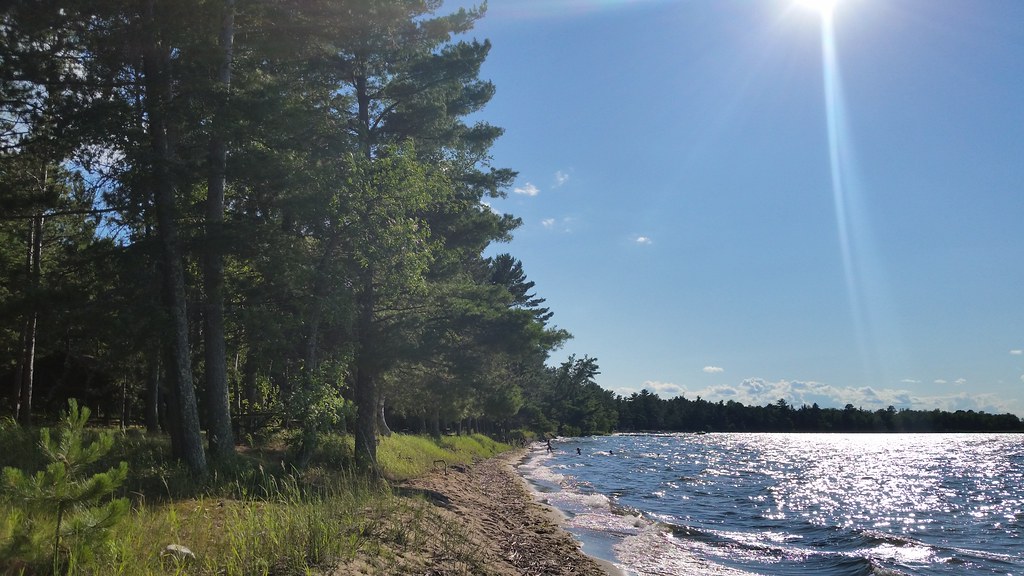 Photo: Joe Passe, CC BY-SA 2.0 (via Flickr)
Norway Beach Nature Trail
~39 min drive
Easy 3.4-mile out-and-back nature trail featuring beach and woodland scenery.
HIKE
Ozawindib Trail
~22 min drive
1.14-mile out-and-back trail in Minnesota with 335 ft gain.
Photo: {{{1}}}, No restrictions (via Wikimedia Commons)Star Island Hiking Trail
~40 min drive
3.24-mile out-and-back trail in Minnesota with 91 ft gain.
HIKE
Cr 50 Hwt
~29 min drive
6.55-mile loop trail through Minnesota countryside with mixed terrain.
HIKE
Nct
~33 min drive
5.84-mile out-and-back trail in Minnesota with 702 ft gain.
HIKE
Cr 50 Hwt Spur C
~30 min drive
0.68-mile out-and-back trail in Minnesota with 38 ft of elevation gain.
