Nevares Springs
- 940 ft
- elevation
- National Park Service
- managed by
- Nov–Mar
- best months
Is Nevares Springs open right now?
No closures listed
The National Park Service lists no closures for Death Valley National Park.
As of · Source: NPS · Death Valley National Park. Agencies don't list every closure — check before you go.
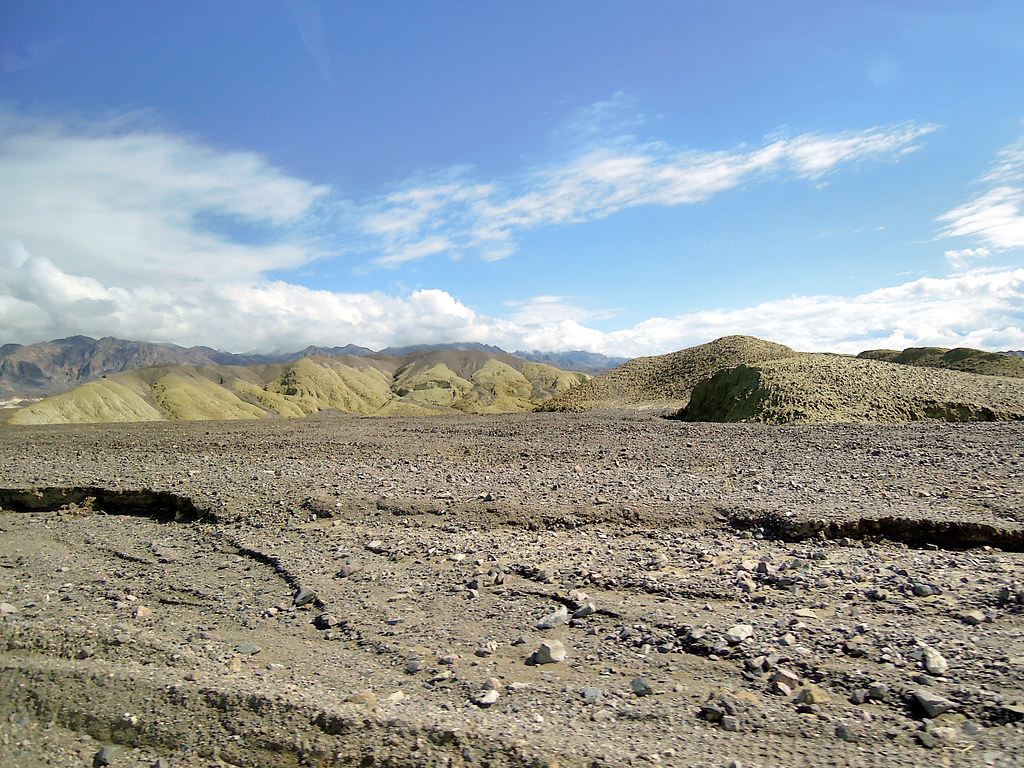
Nevares Springs is a natural hot spring in California, at about 940 feet. The U.S. thermal springs inventory (NOAA) records its water at 102°F. It is on National Park Service land.
- Source temperature
- 102°F
- Land manager
- National Park Service
- Travertine SpringsHot spring · ~8 min drive
- Keane Wonder SpringHot spring · ~22 min drive
- Fairbanks Spring, Soda SpringHot spring · ~46 min drive
- Rogers SpringHot spring · ~47 min drive
- Longstreet SpringHot spring · ~48 min drive
- Parent SpringsHot spring · ~48 min drive
- Crystal PoolHot spring · ~49 min drive
- Scruggs SpringsHot spring · ~50 min drive
- Button SpringsHot spring · ~50 min drive
- Davis Ranch SpringsHot spring · ~51 min drive
Also worth it near here
 Harmony Borax Interpretive TrailHiking · ~6 min drivePhoto: Juhele_CZ, Public Domain Dedication (CC0) (via Flickr)
- Furnace Creek CampgroundCamping · ~7 min drive
 Zabriskie PointSummit · ~11 min drivePhoto: Christian David, CC BY-SA 4.0 (via Wikimedia Commons)
- Death Valley Natural BridgeNatural arch · ~27 min drive
Best time to visit Nevares Springs
Best months: November–March. Best months have typical highs of 55–85 °F, lows of 30 °F or warmer (32 °F where the station doesn't record snow), at most one snowy day and no more than 12 wet days.
Jan
67° / 42°
2 wet
Feb
74° / 49°
3 wet
Mar
83° / 57°
2 wet
Apr
91° / 65°
1 wet
May
101° / 75°
1 wet
Jun
111° / 84°
1 wet
Jul
117° / 91°
1 wet
Aug
116° / 89°
1 wet
Sep
108° / 79°
1 wet
Oct
93° / 64°
1 wet
Nov
77° / 51°
1 wet
Dec
66° / 41°
2 wet
Typical high / low (°F) and days with rain or snow, 1991–2020. Measured at Death Valley Np, CA, 4.3 mi away at -194 ft. The station sits about 1,100 ft lower than this place, so expect it a little cooler here. Source: NOAA NCEI U.S. Climate Normals 1991–2020.
