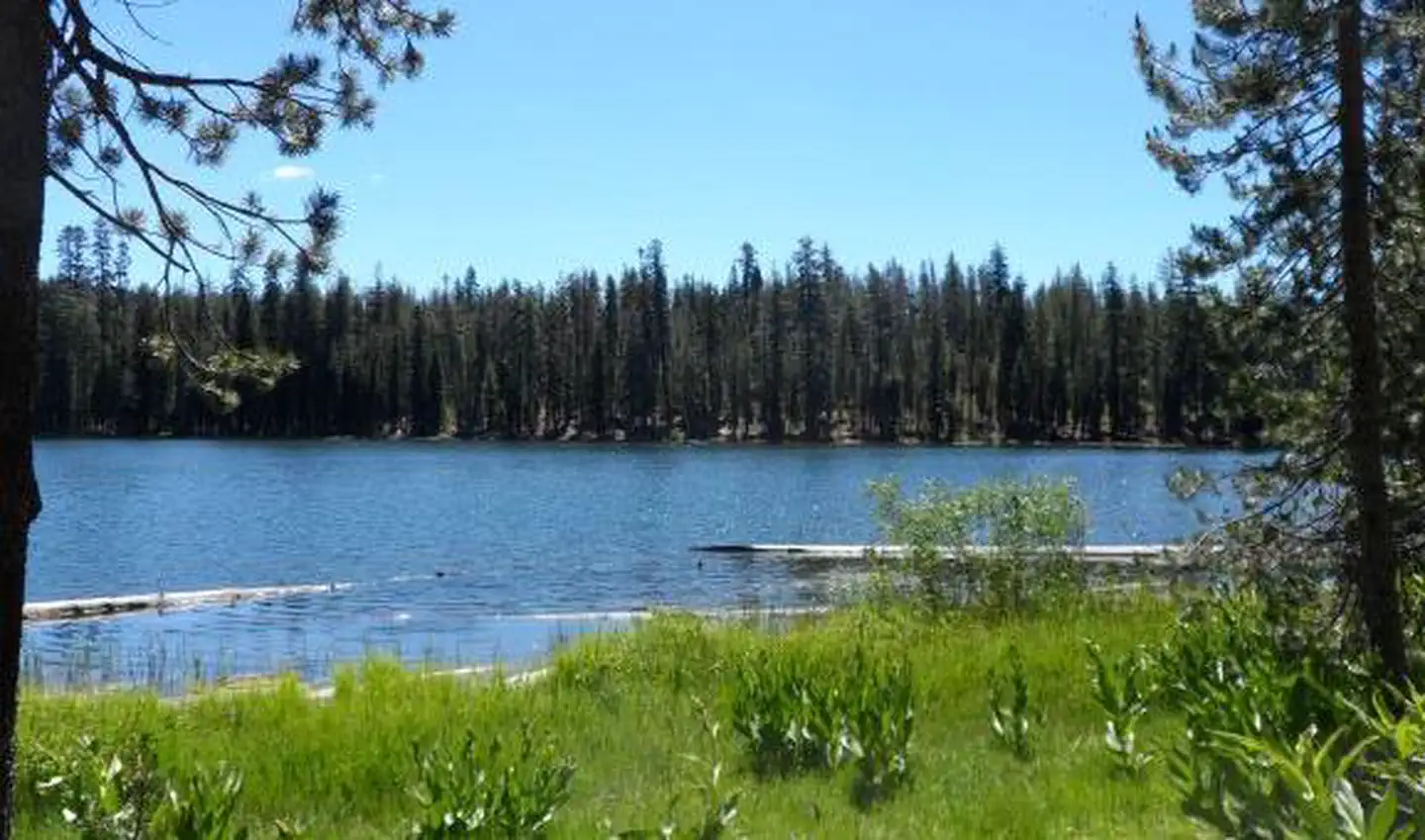
Morena Reservoir
- Oct–Jun
- best months
Is Morena Reservoir open right now?
Closure in the area
There's a closure order in Cleveland National Forest. It doesn't name Morena Reservoir, so check the source for the area it covers.
Airport Fire Burned Area Closure
Agency closure covering Cleveland National Forest · Order 02-26-09 · USFS · Cleveland National Forest
Cedar Creek Falls Visitor Use Permit Area
Agency alert covering Cleveland National Forest · Order 02-26-07 · USFS · Cleveland National Forest
Cedar Creek Falls Cliff Closure Area
Agency alert covering Cleveland National Forest · Order 02-26-06 · USFS · Cleveland National Forest
Cedar Creek Falls Alcohol Prohibition
Agency alert covering Cleveland National Forest · USFS · Cleveland National Forest
As of · Source: USFS · Cleveland National Forest. Agencies don't list every closure — check before you go.
Morena Reservoir is a 328-acre reservoir near Campo, California, at about 3,064 feet.
Local outfitters
- La Jolla Sea Cave Kayaks44 mi away
Not on Roamze yet. Their page has how to reach them.
- Pacific Crest National Scenic Trail #2000Hiking1.1 mi
- GreenhornHiking1.1 mi
- Lake Morena County ParkState park1.2 mi
- Bobcat Meadow CampgroundCamping2.1 mi
- Corral Canyon CampgroundCamping2.7 mi
- The FallsWaterfall3.3 mi
- Cottonwood CreekCanoeing4.6 mi
- Main WallRock climbing5.4 mi
Source: Roamze catalog (indexable pages within 10 miles, PostGIS distance)
Best time to visit Morena Reservoir
Best months: October–June. Best months have typical highs of 55–85 °F, lows of 30 °F or warmer (32 °F where the station doesn't record snow), at most one snowy day and no more than 12 wet days.
Jan
61° / 35°
6 wet
Feb
61° / 35°
8 wet
Mar
65° / 35°
7 wet
Apr
69° / 38°
5 wet
May
76° / 42°
2 wet
Jun
85° / 46°
1 wet
Jul
91° / 53°
2 wet
Aug
93° / 55°
2 wet
Sep
88° / 50°
2 wet
Oct
78° / 43°
2 wet
Nov
69° / 38°
4 wet
Dec
61° / 34°
6 wet
Typical high / low (°F) and days with rain or snow, 1991–2020. Measured at Campo Asos, CA, 5.8 mi away at 2,641 ft. This station doesn't record snowfall. Source: NOAA NCEI U.S. Climate Normals 1991–2020.