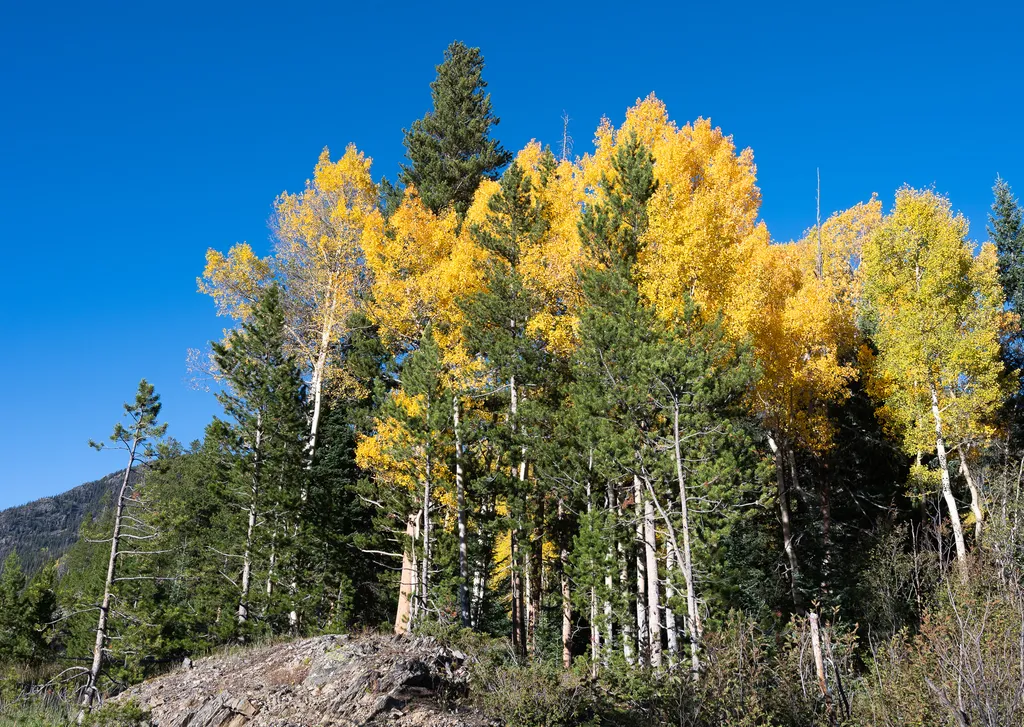
Leaf peeping
Fall colors in Kansas
Typical peak runs Oct 19 – 25. Pick the week, then the place.
Fall color in Kansas typically peaks between Oct 19 and Oct 25, with the middle of the season around Oct 20. Color starts in the high country (Overlook Park around Oct 6) and finishes lower (Timber Hill Park around Oct 22). We track 11 places here: 8 campgrounds, 2 mountain biking trails, and 1 waterfall.
When to go
Week by week
How many places are in their typical peak window each week, with the top pick. Today’s week is highlighted.
Oct 6 – 12
This week
3 placesWhite TrailTop pick · mountain biking trailOct 13 – 19
10 placesButcher FallsTop pick · waterfallOct 20 – 26
Busiest
11 placesTimber Hill ParkTop pick · campgroundOct 27 – Nov 2
8 placesLongviewTop pick · campgroundNov 3 – 9
1 places
This week
In typical peak now in Kansas
Places whose usual window includes today.
Plan ahead
Coming up next
Typical peak starts within the next three weeks.
White Trail
Mountain biking trail
Typical peak Oct 12 – 26
Blue Trail
Mountain biking trail
Typical peak Oct 12 – 26
Longview
Campground
Typical peak Oct 13 – 27
Rock Creek
Campground
Typical peak Oct 13 – 27
Rockhaven Park Campground and Equestrian Area
Campground
Typical peak Oct 13 – 27
Old Town
Campground
Typical peak Oct 14 – 28
Outlet (Pomona Lake)
Campground
Typical peak Oct 14 – 28
Butcher Falls
Waterfall
Typical peak Oct 15 – 29
Camp
Campgrounds in the color
Wake up in it. Check availability and any seasonal closures before you go.
Everything
Map and full list
Every place we track in Kansas, grouped by where it is in its typical window.
- In typical peak now (1)
- Coming up (10)
In typical peak now
Today falls inside the usual peak window for these places.
Coming up
Typical peak starts within the next three weeks.
White Trail
mountain_biking · Kansas
Typical peak Oct 12 – 26
Patches of hardwood forest
Blue Trail
mountain_biking · Kansas
Typical peak Oct 12 – 26
Patches of hardwood forest
Longview
Campground · Kansas
Typical peak Oct 13 – 27
Patches of hardwood forest
Rock Creek
Campground · Kansas
Typical peak Oct 13 – 27
Patches of hardwood forest
Rockhaven Park Campground and Equestrian Area
Campground · Kansas
Typical peak Oct 13 – 27
Patches of hardwood forest
Old Town
Campground · Kansas
Typical peak Oct 14 – 28
Patches of hardwood forest
Outlet (Pomona Lake)
Campground · Kansas
Typical peak Oct 14 – 28
Patches of hardwood forest
Butcher Falls
waterfall · Kansas
Typical peak Oct 15 – 29
Patches of hardwood forest
Downstream Point
Campground · Kansas
Typical peak Oct 18 – Nov 1
Patches of hardwood forest
Timber Hill Park
Campground · Kansas
Typical peak Oct 22 – Nov 5
Mixed hardwood and evergreen forest
Questions
Fall colors in Kansas: FAQ
When is peak fall color in Kansas?
Across the 11 places we track in Kansas, typical peak runs from Oct 19 to Oct 25, with the middle of the season around Oct 20. Where you are in the state matters: higher elevations come earlier and valleys later.
Where do leaves change first in Kansas?
Among the places we track in Kansas, Overlook Park has the earliest typical peak, around Oct 6. The latest is Timber Hill Park, around Oct 22.
What are the best fall hikes in Kansas?
Browse the places below for hikes with strong typical color in Kansas, ranked by forest cover and how consistent the timing has been.
Is this a forecast?
No. These dates are typical timing: when leaves have usually reached peak in past years, from NASA satellite vegetation data from 2017 to 2024 and USGS forest cover. A warm, dry or very wet year can shift them by a week or more, so treat them as a planning window, not a prediction for this year.
Keep going