Kansas · Fishing
Fishing in Kansas
Kansas has more fishable water than most people expect. The state's reservoirs do the heavy lifting — Tuttle Creek Lake near Manhattan, Cheney Reservoir near Pretty Prairie, and Marion Reservoir near Marion all hold solid populations of
143 spots9 townsUpdated dailyFree to access
View on mapFishing · 143 spots
Featured spots
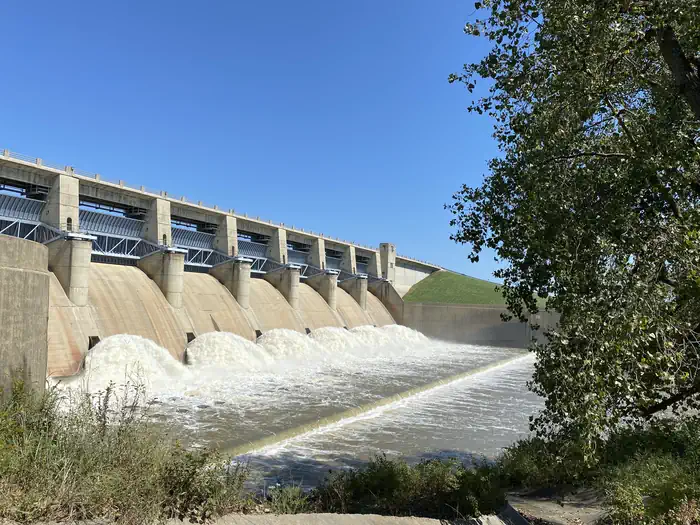
All spots · 143 spots

Lake fishing
2nd Lake
Fort Scott, Kansas

Lake fishing
Altamont Idle Hour Lake
Altamont, Kansas

Lake fishing
Atwood Lake
Atwood, Kansas
Lake fishing
Atwood Lake
Atwood, Kansas
Lake fishing
Auxiliary Make-up Lake
Belvue, Kansas
Lake fishing
Barton Lake
Great Bend, Kansas
Lake fishing
Beech Lake
Wichita, Kansas
Lake fishing
Benningtons Lake
Spivey, Kansas
Lake fishing
Big Hill Lake
Cherryvale, Kansas

Lake fishing
Big Hill Lake
Cherryvale, Kansas
Lake fishing
Bing's Lake
Basehor, Kansas
Lake fishing
Bluestem
El Dorado, Kansas
Lake fishing
Boicourt Lake
Pleasanton, Kansas
Lake fishing
Boyle Lakes
Burrton, Kansas
River fishing
Cedar Ridge
Manhattan, Kansas
Lake fishing
Cheney Reservoir
Pretty Prairie, Kansas
Lake fishing
Cherokee Tank
Cherokee, Kansas
Lake fishing
Cimarron National Grassland
Richfield, Kansas
Lake fishing
Cimarron Recreation Area
Richfield, Kansas
Lake fishing
Cities Service Lake
Hamilton, Kansas
Lake fishing
City Lake
Thayer, Kansas
Lake fishing
City Lake
Thayer, Kansas
Lake fishing
Clay County Park
Wakefield, Kansas
Lake fishing
Clear Creek Lake
Horton, Kansas
Kansas has more fishable water than most people expect. The state's reservoirs do the heavy lifting — Tuttle Creek Lake near Manhattan, Cheney Reservoir near Pretty Prairie, and Marion Reservoir near Marion all hold solid populations of walleye, crappie, channel catfish, and largemouth bass, and most of the access points are rated easy, meaning you don't need a boat to have a productive day. Cheney Reservoir sits at 1,421 feet and is one of the more consistent wiper and white bass fisheries in the state, while the outlet areas at places like Melvern Lake near Lebo and Elk City Lake near Elk City give wade and bank anglers a real shot at channel catfish, smallmouth bass, and crappie moving through current. If you're after something less obvious, Cheyenne Bottoms Wildlife Area near Great Bend fishes differently from anything else on this list — shallow lake habitat at 1,870 feet with carp, catfish, and bass mixed in, and it takes a bit more reading of conditions to fish well. With 153 active listings spread across the state, there's fishable water within a reasonable drive of almost anywhere in Kansas, from the Flint Hills reservoirs to small state lakes like Goodman near Ness City and Knopp Lake near Fort Scott.
Frequently asked questions
Do I need a boat to fish Kansas reservoirs, or is bank access practical?
Bank access is genuinely practical at most of the major reservoirs listed here. Spots like Tuttle Creek Lake's River Pond area, Cheney Reservoir's North Shore, and Marion Reservoir's Cottonwood Point are all rated easy difficulty and designed with bank anglers in mind. Outlet and tailwater areas at Melvern Lake and Elk City Lake are also walk-up fisheries where current concentrates fish near the bank.
What species are realistically catchable for a visiting angler?
Channel catfish and largemouth bass show up across nearly every water type in the state, so they're the most reliable targets regardless of where you end up. Walleye are well represented at Tuttle Creek, Cheney, and Marion reservoirs. Wiper and white bass are worth targeting at Cheney Reservoir specifically. The outlet channel at Elk City Lake is one of the better spots in the southeast part of the state for smallmouth bass, which are less common statewide.
When is the best time of year to fish Kansas reservoirs?
Spring and early summer are the most productive windows overall — walleye and crappie move shallow and become much easier to reach from the bank during the pre-spawn and spawn periods, typically March through May depending on water temperature. Catfishing holds up well through summer and into fall. Wiper and white bass at places like Cheney Reservoir tend to be most active during spring schooling runs and again in fall when water cools.
What time of day should I plan to be on the water?
Early morning and the last two hours before dark are consistently the most productive windows, especially for bass and walleye in warmer months. Catfish at spots like the Melvern Lake outlet and Elk City Lake outlet channel can be caught throughout the day, but night fishing during summer often produces the best numbers. Midday fishing in July and August is generally slow at most Kansas reservoirs.
Do I need a Kansas fishing license, and are there any access fees?
Yes, a Kansas fishing license is required for anyone 16 and older. Licenses are available through the Kansas Department of Wildlife and Parks online or at local retailers. Some access points are within state parks that charge a daily vehicle permit fee, so check whether your specific destination — like River Pond State Park near Manhattan — requires a park pass in addition to your fishing license.
Keep exploring — more waters worth the drive
Hillsboro Cove
~9 min drive
A worthwhile stop near Kansas.
Canning Creek
~1h 5m drive
A worthwhile stop near Kansas.
Cottonwood Point
~11 min drive
A worthwhile stop near Kansas.
Shady Creek
~1h 1m drive
A worthwhile stop near Kansas.
Santa Fe Trail
~1h 5m drive
A worthwhile stop near Kansas.
Richey Cove
~1h 8m drive
A worthwhile stop near Kansas.
Harvey County East Park Lake
~34 min drive
A worthwhile stop near Kansas.
El Dorado Lake
~57 min drive
A worthwhile stop near Kansas.
Bluestem
~59 min drive
A worthwhile stop near Kansas.
Gas Lake
~59 min drive
A worthwhile stop near Kansas.
Cities Service Lake
~1h 7m drive
A worthwhile stop near Kansas.
Saucer Lake
~1h 10m drive
A worthwhile stop near Kansas.
Also worth it near here