Loading…


Arizona · Rock Climbing
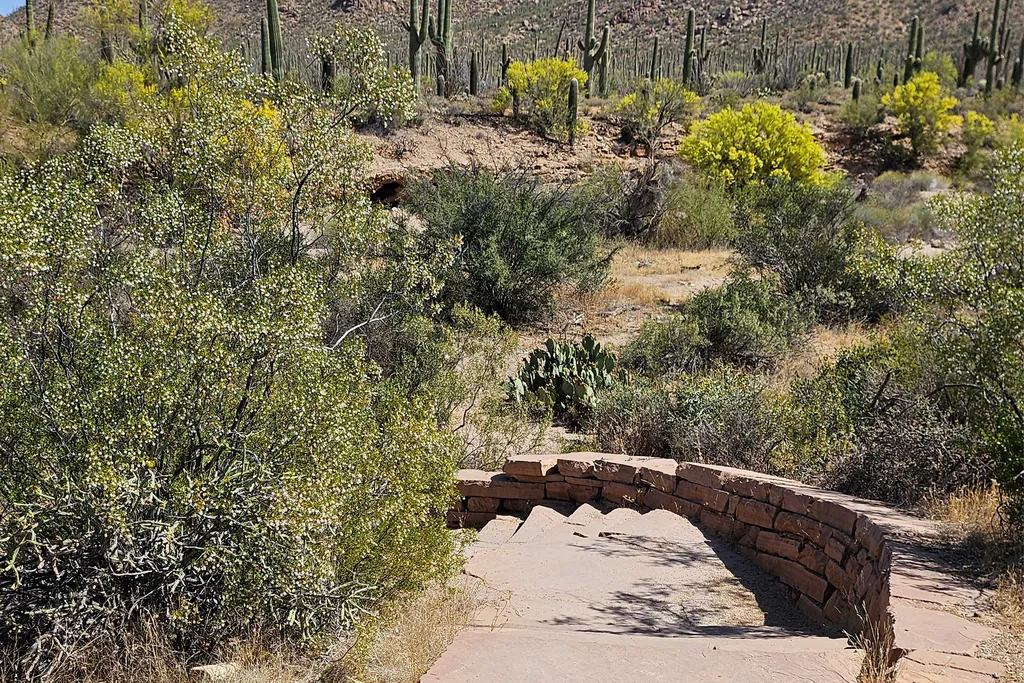
Sells sits in the heart of the Sonoran Desert on the Tohono O'odham Nation, and the rock climbing here reflects that setting — volcanic and sandstone formations rising out of saguaro-studded flats, with routes that reward climbers who do a little homework before showing up.
15 spotsUpdated weeklyFree to access
View on mapRock Climbing · 15 spots
Sells sits in the heart of the Sonoran Desert on the Tohono O'odham Nation, and the rock climbing here reflects that setting — volcanic and sandstone formations rising out of saguaro-studded flats, with routes that reward climbers who do a little homework before showing up. The 15 listed routes and areas around Sells span a real range of styles: crack climbing on routes like Don's Crack, arete work on Southeast Arete and West Face/Southwest Arete, face climbing on Crystal Line and Moonscapes, and multi-pitch or approach-dependent lines like the Forbes Route (East Approach) and the Standard Route aka Forbes-Montoya Route (West Approach). Names like Cloud Man Got Angry, Watcher of the Skies, and I'itoi Dance — the last a nod to the O'odham creator figure associated with nearby Baboquivari Peak — hint at the cultural weight this landscape carries. Baboquivari is sacred to the Tohono O'odham people, and access to climbing there requires explicit permission from the Nation. That's not a formality to skip. If you're coming from Tucson, the drive is roughly an hour southwest, and you'll want to arrive with permits sorted, water for the day, and a realistic read on the desert heat before you rack up.
Yes. The climbing areas around Sells, including Baboquivari Peak where routes like the Forbes-Montoya Route and East Face are located, sit on Tohono O'odham Nation land. You need written permission from the Tohono O'odham Nation before accessing these areas. Contact the Nation's land management office well in advance of your trip — don't assume a day-of call will work.
October through April is the practical climbing season in this part of the Sonoran Desert. Summer temperatures regularly exceed 100°F in the valley, and even at elevation the heat and monsoon storms from July through September make conditions dangerous. Winter days are typically clear and mild, though early morning starts on shaded faces can be cold.
East Face
Desert crag offering varied climbing in an Arizona classic setting.
Forbes Route (East Approach)
The easiest climb at East Face; first ascent by Dr. Robert Humphrey Forbes (1867-1968) and Sr. Lorenzo Montoya, 1898.
Pink Shorty
~45 min drive
One of seven problems at Arivaca Lake, established by Regan Wendell.
West Face/ Southwest Arete
Sun-soaked Arizona crag with arete climbing and varied pitches.
I'itoi Dance
Mid-range climb at West Face/Southwest Arete. FA: Mike Strassman, Jackie Carroll.
I dont Know
~45 min drive
One of seven routes at Arivaca Lake sector. First ascent by Chris Walsh.

Mendoza Canyon (aka Coyote Domes)
~26 min drive
Desert canyon climbing in Arizona with scenic domes and varied routes.
Luca and the Fishes
Mid-range climb among seven routes at East Face, Arizona.
Farstrider Stand
~1h 12m drive
Among the hardest problems at Gate's Pass, which ranges V0 to V10.
Elephant Dome
~27 min drive
Arizona granite dome climbing with varied pitches and desert views.
Standard Route aka Forbes-Montoya Route (West Approach)
Entry-level climb at West Face/Southwest Arete in Arizona.
Broken Rubber
~1h 12m drive
Near the top end of Gate's Pass's 39 catalogued problems.
Rock climbing
Sells, Arizona

Rock climbing
Sells, Arizona
Rock climbing
Sells, Arizona
Rock climbing
Sells, Arizona
Rock climbing
Sells, Arizona
Rock climbing
Sells, Arizona
Rock climbing
Sells, Arizona
Rock climbing
Sells, Arizona
Rock climbing
Sells, Arizona
Rock climbing
Sells, Arizona
The route list includes options across a range of styles — crack routes like Don's Crack, arete lines on Southeast Arete and West Face/Southwest Arete, and more committing objectives like The Fellowship and Watcher of the Skies. That said, approach terrain here is serious desert hiking, so even moderate routes require solid route-finding and self-sufficiency. This is not a sport crag with a paved pullout.
A standard trad rack covers most routes, given the crack and arete character of lines like Don's Crack and Southeast Arete. Bring more water than you think you need — a minimum of 4 liters per person for a full day is a reasonable floor in desert conditions. Sun protection, a paper map or downloaded offline topo, and a first aid kit are non-negotiable given the remoteness.
The listing includes two named climbing areas — West Face/Southwest Arete and East Face — alongside individual routes, which suggests some established infrastructure, but this is not a heavily developed sport climbing destination. Expect adventure-style climbing with route-finding involved, particularly on approach-dependent lines like the Forbes Route (East Approach) and the Standard Route (West Approach). Verify anchor conditions with recent trip reports before committing to a route.