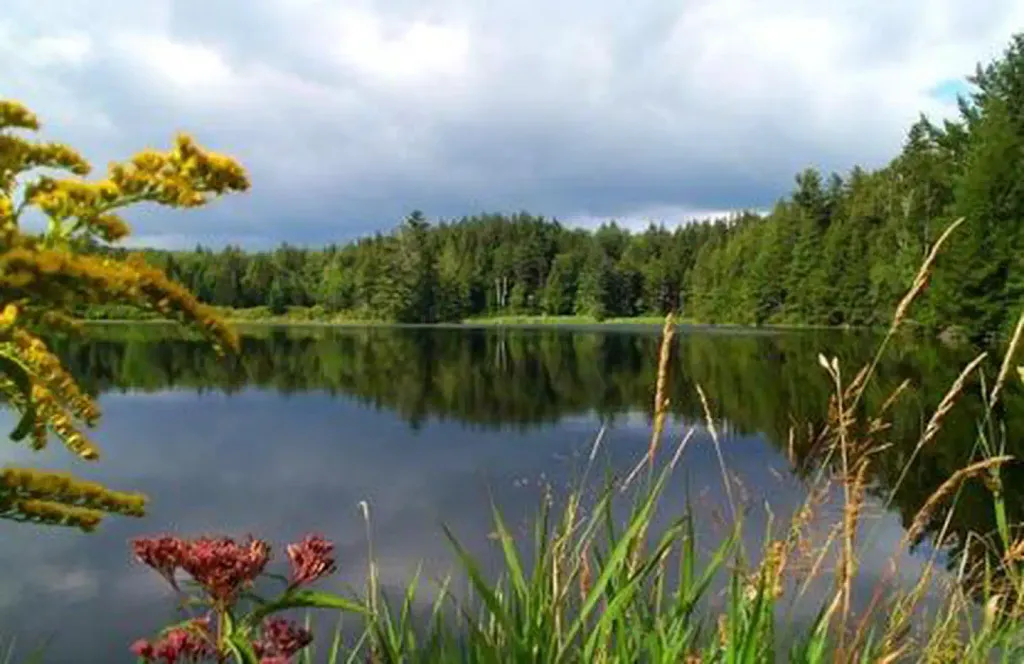
 Photo: Recreation.gov (RIDB) / public domain
Vermont · Fishing
Fishing in Vermont
Vermont has 144 fishing spots in the Roamze database, ranging from small backcountry ponds to large interstate lakes, and the variety is real.
144 spots9 townsUpdated dailyFree to access
View on mapFishing · 144 spots
Featured spots
Photo: Recreation.gov (RIDB) / public domainPier fishing
Hapgood Pond
Peru, Vermont
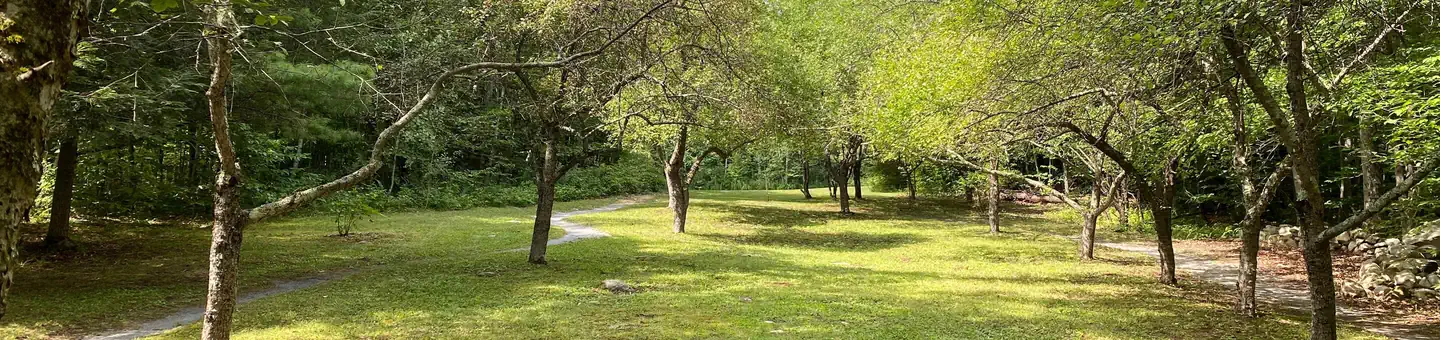
Lake fishing
Moosalamoo Campground
Goshen, Vermont
 riverWild Trout
Fly fishing
Battenkill River - Arlington Access
Arlington, Vermont
brown trout, brook trout
 riverWild Trout
Fly fishing
Nulhegan River - Brunswick Access
Bloomfield, Vermont
brook trout, brown trout
 river
riverFly fishing
Black River - Cavendish Access
Cavendish, Vermont
brook trout, brown trout
All spots · 144 spots
Lake fishing
Abbey Pond
Ripton, Vermont
Lake fishing
Ball Mountain Lake
Jamaica, Vermont
Lake fishing
Bean Pond
Perry, Vermont
Lake fishing
Bean Pond
Barton, Vermont

Lake fishing
Beebe Pond
Hubbardton, Vermont
Lake fishing
Beecher Pond
Brighton, Vermont

Lake fishing
Belding Pond
Johnson, Vermont
Lake fishing
Bernajean Pond
East Thetford, Vermont
Lake fishing
Big Marsh Slough
Highgate, Vermont
Lake fishing
Billings Marsh
West Haven, Vermont
Lake fishing
Black Pond
Hubbardton, Vermont
Lake fishing
Bliss Pond
Calais, Vermont
Lake fishing
Bloodsucker Pond
Springfield, Vermont
Lake fishing
Branch Pond
East Arlington, Vermont
Lake fishing
Burnell Pond
Brandon, Vermont
Lake fishing
Chipman Lake
Tinmouth, Vermont
Lake fishing
Clarks Pond
Glover, Vermont
Lake fishing
Clyde Pond
Newport, Vermont
riverRiver fishing
Clyde River - Newport Access
Newport, Vermont
walleye, northern pike
Lake fishing
Cobb Pond
Newport, Vermont
Lake fishing
Coburn Pond
Groton, Vermont
Lake fishing
Coles Pond
WALDEN, Vermont
 river
riverFly fishing
Connecticut River - Canaan Access
Canaan, Vermont
brown trout, rainbow trout
Lake fishing
Cooks Pond
Shrewsbury, Vermont
Vermont has 144 fishing spots in the Roamze database, ranging from small backcountry ponds to large interstate lakes, and the variety is real. In the Northeast Kingdom you have waters like Coles Pond near Walden, Keiser Pond near Danville, and Marl Pond near Sutton — remote, quiet, and worth the drive. Head south and you find Silver Lake near Leicester, Chipman Lake near Tinmouth, and Reservoir Pond near Ludlow covering the mid-state options. Lake Memphremagog at the Newport City Boat Launch sits at 723 feet elevation on the Canadian border and holds walleye, lake trout, rainbow trout, and brown trout — one of the more species-diverse fisheries on the list. For moving water, the Battenkill River at the Arlington Access (680 ft) is rated expert-level fly fishing for brown trout, brook trout, and rainbow trout, and it earns that rating. Most of Vermont's listed waters are lake or pond fisheries, which makes them accessible to anglers without specialized river-reading skills. Access points vary from developed boat launches to informal shore access, so checking conditions before you go is worth the five minutes it takes.
Frequently asked questions
When is the best time of year to fish Vermont's lakes and ponds?
Late May through June is consistently productive on most Vermont lake and pond fisheries once water temperatures stabilize after ice-out. Fall, particularly September and October, is a strong second window as trout and other species feed aggressively before winter. Summer midday heat pushes fish deeper in shallower ponds, so early morning and evening hours are more reliable from July through August.
Do I need a Vermont fishing license, and where do I get one?
Yes, anyone 15 or older needs a Vermont fishing license to fish any of these waters. You can buy one online through the Vermont Fish and Wildlife Department website or at many local sporting goods stores and bait shops near the fishing areas. Non-resident licenses are available in both annual and short-term formats, which makes sense for a weekend trip.
What species can I realistically expect to catch at Vermont's listed waters?
Lake Memphremagog near Newport is one of the few spots in the database with confirmed species data, holding walleye, lake trout, rainbow trout, and brown trout. The Battenkill River at Arlington lists brown trout, brook trout, and rainbow trout. Many of the smaller ponds across the state hold warm-water species like bass and perch alongside stocked trout, but species data isn't listed for most individual ponds, so checking with Vermont Fish and Wildlife or a local bait shop before your trip will give you the most accurate picture.
Is the Battenkill River suitable for beginner fly fishers?
No. The Battenkill at the Arlington Access is rated expert difficulty, and that reflects both the technical casting required and the fish themselves, which are pressured and selective. Beginners will find Vermont's lake and pond options much more forgiving for getting started. If fly fishing is the goal, building skills on smaller, less pressured waters first is the practical approach.
Do I need a boat to fish most of these Vermont waters?
Not necessarily. Many of the smaller ponds on the list, including spots like Standing Pond near Sharon, Lily Pond near Poultney, and Tiny Pond near Mount Holly, are accessible from shore or suitable for a canoe or kayak. Lake Memphremagog near Newport has a dedicated boat launch, which suggests it's better suited to motorized or larger watercraft. Access details vary by location, so confirming the specific put-in or shore access point before you go will save you a wasted trip.
Keep exploring — more waters worth the drive
Moosalamoo Campground
~38 min drive
A worthwhile stop near Vermont.
Dog River - Northfield Access
~11 min drive
Easy
Mad River - Moretown Access
~26 min drive
Moderate
Winooski River - Bolton Gorge
~45 min drive
Hard
Lamson Pond
~2 min drive
A worthwhile stop near Vermont.
Groton Lake - Groton State Forest
~37 min drive
Easy
Ompompanoosuc River - Union Village Dam
~34 min drive
Moderate
Twin Ponds
~4 min drive
A worthwhile stop near Vermont.
Lower Orange Reservoir
~21 min drive
A worthwhile stop near Vermont.
Nelson Pond
~32 min drive
A worthwhile stop near Vermont.
Standing Pond
~33 min drive
A worthwhile stop near Vermont.
Bliss Pond
~36 min drive
A worthwhile stop near Vermont.